Haleakala Animals and Plants: Nene, Silverswords and What You Actually See
The animal you will actually see is the nene, Hawaii's state goose, which walks through the summit parking lots and along the roadside. Feeding it is against park rules. The park's real signature is a plant, not an animal: the ahinahina, or silversword, which grows only on Haleakala's cinder slopes, lives for years to decades, and flowers once before it dies. If you are timing a visit around sunrise, our Haleakala sunrise hike itinerary covers the reservation and the drive up.
Haleakala Animals You're Likely to See
Most of what people call Haleakala wildlife comes down to one bird. The nene shows up in the summit district's parking lots and along the road shoulder, often walking straight toward cars, because it has lost most of its natural wariness around people who feed it. Haleakala National Park's own safety guidance is direct on this: do not feed any wildlife, nene included, because everything they need is already in their environment. A fed nene becomes a roadside nene, and roadside nene get hit by cars.
The Nene: Don't Feed It, and Watch the Road
The nene is Hawaii's state bird, a goose that nearly went extinct in the twentieth century and has come back through decades of captive breeding and reintroduction, including releases at Haleakala. It still nests and forages inside the park. If one walks toward your car in a parking lot, the right move is to stay in place and let it pass, not to offer food and not to chase it off for a photo. Drive slowly through the summit district for the same reason: nene on the pavement are the most common wildlife hazard on the road up.
Ahinahina: The Haleakala Silversword
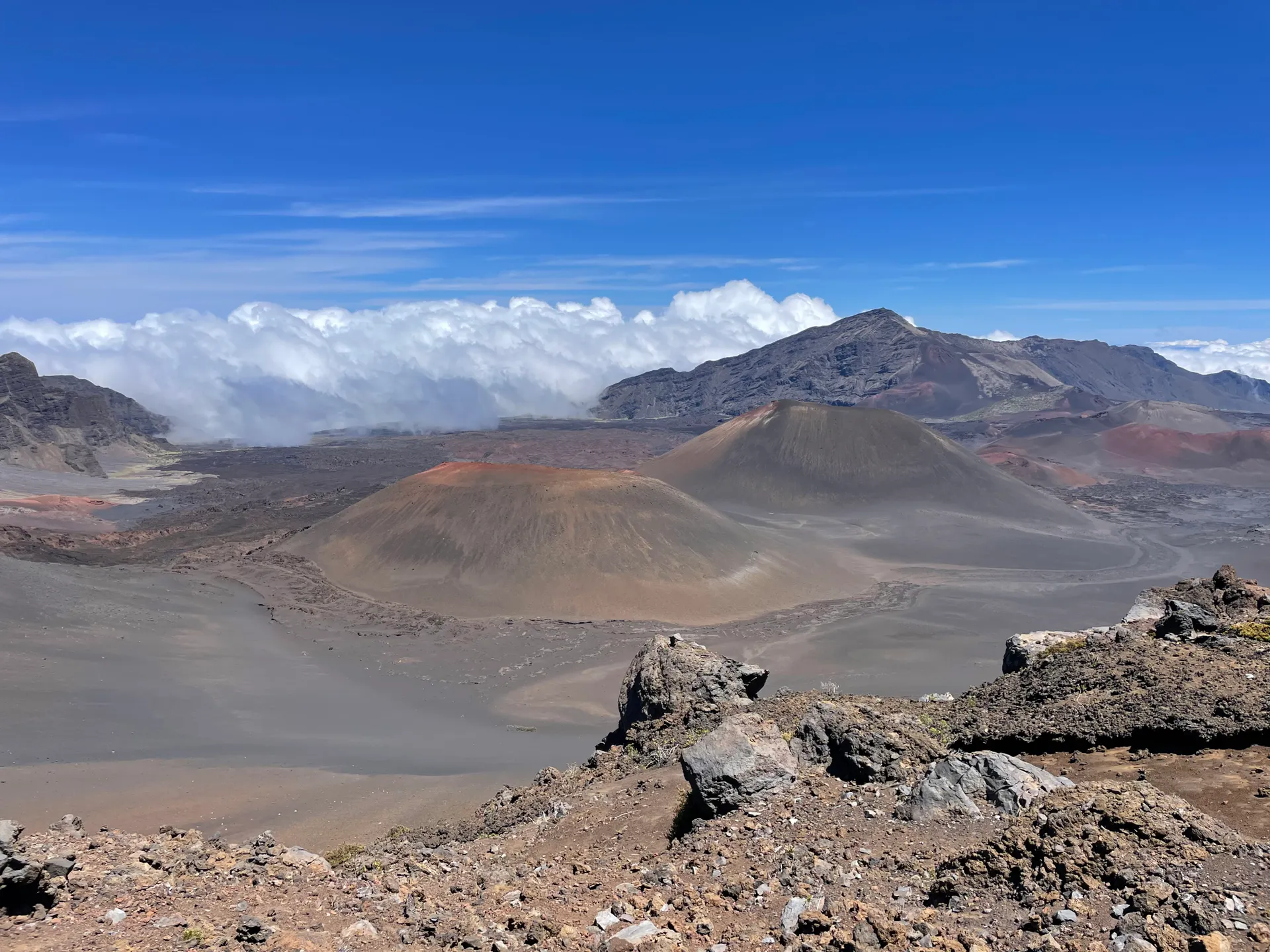
The silversword grows on the cinder desert slopes inside Haleakala's crater and nowhere else in the wild except here and a couple of spots on the Big Island. Silvery hairs cover its fleshy leaves, which is what lets it survive a desert that swings from intense sun to near-freezing nights. A single plant lives anywhere from about 3 to 90 years, and it flowers exactly once, sending up a stalk that can reach chest height, then dies. Visitors used to take them home as souvenirs and nearly wiped the population out; the park now protects them with fencing against grazing animals and asks everyone to stay on the trail, since stepping off it can crush a seedling or its root system without you ever seeing it happen.
Other Wildlife: Petrel and Chukar
The 'ua'u, or Hawaiian petrel, is a seabird that nests in burrows on Haleakala's upper slopes and comes and goes from its nest mostly after dark, which is part of why the park asks visitors near the summit to keep lights pointed down at night. You are far more likely to hear one than see one. Chukar, a partridge introduced from Asia for hunting decades ago, turns up in the same dry, rocky upper elevations and is not native, unlike the nene or the petrel. You will hear its sharp, repeated call before you spot the bird itself, usually somewhere on the rocky ground off the summit road rather than close to the parking areas where the nene gathers.
Where and When to See Them
The summit district, from the Kalahaku overlook up to the visitor center, is where nene and silverswords both concentrate, since that is the cinder desert habitat both depend on. Early morning and late afternoon are the better windows for the nene, when it is out foraging rather than resting. Silverswords do not move, obviously, but the light for photographing them is best within an hour of sunrise or sunset, the same hours the crowds are there for the view rather than the plant. The summit sits above 10,000 feet, so pack a real jacket even in summer; it is common for the temperature there to sit 30 degrees or more below what it was at sea level that same morning.
Plan the Rest of the Visit
Tell us your dates and we will fit the summit district, the sunrise reservation and the drive back down into the rest of your Maui trip. Planning is free, and we earn only if you book through us.
Keep planning with Haleakala Sunrise Reservations and Haleakala Sunset.
Haleakala Animals and Plants: Nene, Silverswords and What You Actually See FAQs
The nene, Hawaii's state goose, is the animal most visitors actually see, usually in the summit parking lots or along the road. The 'ua'u (Hawaiian petrel) also nests on the upper slopes but is rarely seen, since it is active mostly at night.
No. The park's rules prohibit feeding any wildlife, and feeding the nene specifically draws it toward roads and cars, which is how it gets hurt.
The ahinahina, or Haleakala silversword, is a plant that grows only in the crater's cinder desert. It lives for years to decades, flowers exactly once, and then dies.
The nene nearly went extinct in the twentieth century and has recovered through captive breeding and reintroduction programs, including at Haleakala, though it remains a species of conservation concern.
No large predators. The main wildlife risk is a nene or other animal on the roadway, since the summit road has blind curves and animals that are used to cars slowing down for them.
The Kalahaku overlook and the cinder desert near the summit visitor center are the two easiest places to see them without a long hike.
Yes. The worked day-by-day plan is Haleakala Sunrise Hike: A 2-Day Maui Summit Itinerary (2 Days), with the permits, the stays and the drive times already sorted. Tell us your dates and we will put it together for you and confirm what is genuinely open on those days. Asking is free: no card, no deposit, and nothing is held until you say yes.