The Grand Canyon South Rim is open 365 days a year, but the experience changes dramatically with the seasons. At 7,000 feet of elevation, the rim sees snow in winter and pleasant temperatures in summer, while the inner canyon at Phantom Ranch can roast past 110 degrees Fahrenheit in July. Knowing when to go is the single biggest factor in whether your trip is a joy or a struggle. Here is how the year breaks down for hikers.
Spring (March to May): The Sweet Spot
Spring is arguably the best overall time to visit the Grand Canyon South Rim. By mid-April the rim warms into the 60s, the snow has mostly melted from the upper switchbacks of the Bright Angel Trail, and the inner canyon has not yet turned into an oven. Wildflowers appear along the Rim Trail and the desert bighorn sheep are active.
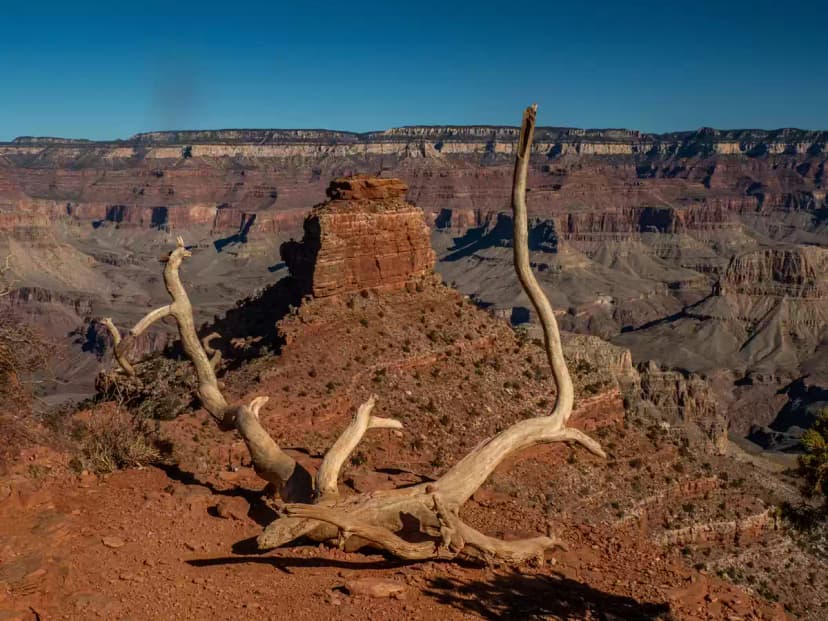
The trade-off is crowds. Spring break in March and the run-up to Memorial Day fill the Mather Point overlooks and the Bright Angel trailhead parking. Arrive before 9 a.m. or use the free Village shuttle. If you want to descend South Kaibab to Ooh Aah Point and Cedar Ridge, spring temperatures make the exposed, shadeless trail far more forgiving than summer.
Summer (June to August): Hot Below, Busy Above
Summer is the most crowded and the most physically demanding season for canyon hiking. Rim temperatures are comfortable in the 80s, but the inner canyon routinely exceeds 100 degrees. The National Park Service posts heat warnings and discourages day hiking below Cedar Ridge or Three-Mile Resthouse between 10 a.m. and 4 p.m.
- Start at sunrise to beat both heat and parking chaos.
- Carry more water than you think you need, and salty snacks to replace electrolytes.
- Watch for monsoon storms from mid-July through August, which bring dramatic afternoon lightning and flash-flood risk in side canyons.
If summer is your only option, plan a sunrise descent and treat the afternoon as overlook and shuttle time.
Fall (September to November): The Quiet Favorite
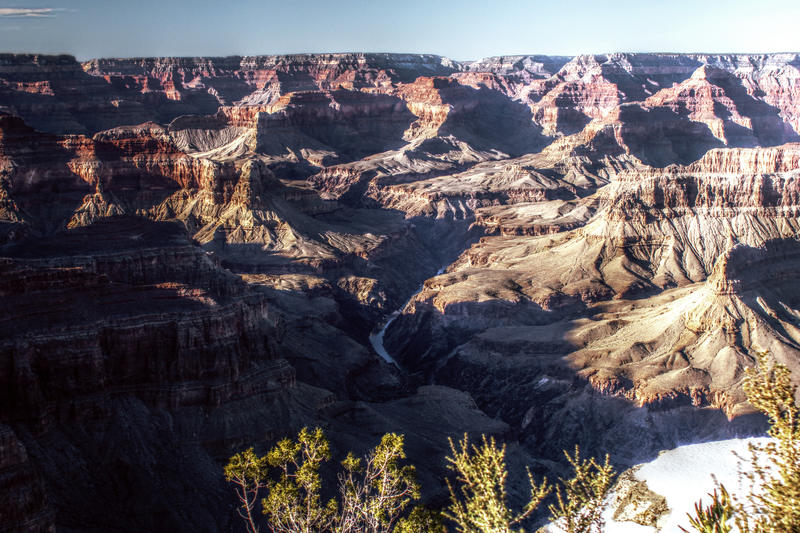
Many seasoned hikers consider September and October the finest months on the South Rim. Crowds thin after Labor Day, the monsoon fades, and inner-canyon temperatures drop back to hikeable ranges. The light is golden and the air is clear, which makes Hopi Point and Yavapai Point spectacular at sunset. Our 3-day Grand Canyon South Rim itinerary is built around exactly these shoulder-season conditions, pairing the Rim Trail with descents on South Kaibab and Bright Angel.
By November the rim cools quickly and the first snow can dust the overlooks, but day-hiking remains excellent with fewer people on every trail.
Winter (December to February): Snow, Solitude, and Savings
Winter transforms the South Rim into a quiet, snow-rimmed landscape. You can stand at Mather Point with almost no one else around and watch snow cling to the red rock layers below. Lodging is cheaper and reservations are easier.
The catch is ice. The shaded upper sections of the Bright Angel and South Kaibab trails can be treacherous, so pack traction devices like microspikes and trekking poles. The East Rim Drive to Desert View stays open, but expect occasional closures after heavy storms. Hermit Road is open to private vehicles in winter, a rare perk since it is shuttle-only most of the year.
How to Choose Your Month
Match the season to your priority:
- Best weather and fewest compromises: late April, May, September, October.
- Fewest crowds: December through February.
- Best for inner-canyon hiking: spring and fall, when both rim and depths are comfortable.
- Avoid if possible: midday summer descents below Cedar Ridge.
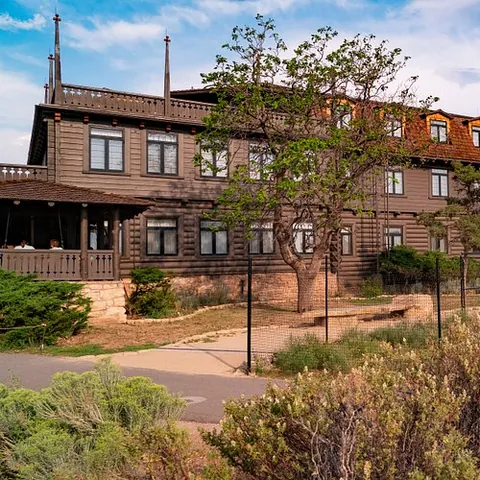
Whatever month you pick, book South Rim lodging inside the park well ahead, as Bright Angel Lodge and El Tovar fill months in advance, especially for sunrise and sunset windows.
Best Time to Visit the Grand Canyon South Rim FAQs
Late September and October offer the best balance of comfortable temperatures, thin crowds, clear skies, and excellent inner-canyon hiking conditions, making them the top pick for most hikers.
Yes, the South Rim is open year-round. Winter brings snow, ice on shaded trail sections, fewer crowds, and lower lodging prices. Bring microspikes and check for storm-related road closures.
From June through August the inner canyon can exceed 100 to 110 degrees Fahrenheit. The Park Service warns against hiking below Cedar Ridge or Three-Mile Resthouse between 10 a.m. and 4 p.m. in summer.