The Short Answer: Spring and Fall

The best time to hike the Grand Canyon rim to rim is during the shoulder seasons, roughly mid May to mid June and mid September to mid October. In these windows the rims are cool and snow free, the inner canyon has not yet hit its summer extremes, and the North Rim facilities are open. Trying to thread the needle between a North Rim that opens late and an inner canyon that overheats early is the central planning challenge of any rim to rim trip, and it is exactly what our rim to rim weekend itinerary is built around.
The North Rim Closure Defines Your Season
You cannot just pick any month. The North Rim is closed to vehicles from roughly mid October to mid May because of snow at its 8,200 foot elevation. Services like the North Rim Lodge, the campground, and the access road typically open around May 15 and shut down October 15, with the road gated entirely once heavy snow arrives. Since most hikers want to start from the higher, cooler North Rim and finish on the South Rim, the North Rim's operating dates set the hard outer edges of the practical rim to rim season.
- Too early (before mid May): the North Rim road may still be gated and trails like the upper North Kaibab can hold snow and ice.
- Mid May to mid June: prime window, cool rims and tolerable inner canyon heat.
- Late June through August: dangerous inner canyon heat over 110 F and monsoon flash flood risk.
- Mid September to mid October: the other prime window, cooling temperatures and stable weather.
- After mid October: the North Rim closes and the crossing becomes a winter expedition.
Grand Canyon Weather by Elevation
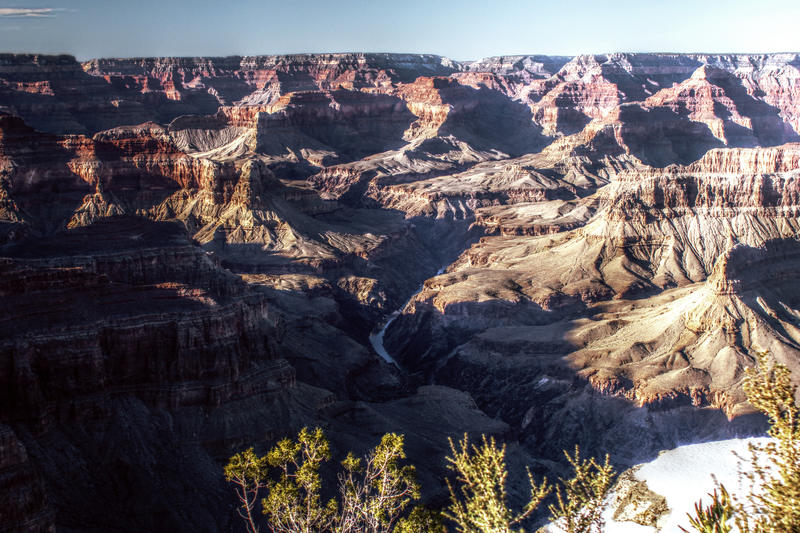
The single most important thing to understand is that the Grand Canyon has three climates stacked on top of each other. The North Rim at 8,200 feet can be 20 to 30 degrees cooler than the river. The South Rim at about 7,000 feet is mild. The inner canyon near Phantom Ranch and the Colorado River bakes, often 20 degrees hotter than the South Rim. A pleasant 75 F morning on the rim can mean 105 F at the river by afternoon, which is why summer crossings are so deadly.
Why Spring Edges Out Fall for Many Hikers
Both shoulder seasons are excellent, but they have different personalities. Spring brings longer daylight, snowmelt running in Bright Angel Creek and Roaring Springs, and wildflowers along the Tonto Platform. Fall offers more stable weather with less chance of late season storms and slightly warmer inner canyon nights for camping. Spring's main risk is lingering snow and ice on the upper North Kaibab and South Kaibab switchbacks, so carry microspikes in May. Fall's main risk is the hard October 15 North Rim closure deadline sneaking up on you.
Avoiding the Heat and the Monsoon
Summer is the season to avoid for the full crossing. From late June through August, inner canyon temperatures regularly exceed 110 F, and the North American monsoon brings afternoon thunderstorms that trigger flash floods in slot canyons and along creek crossings. If your only option is summer, start hiking hours before sunrise, rest through the midday heat in shade at Cottonwood Campground or the Phantom Ranch canteen, and treat any sign of heat illness as a true emergency.
Putting Your Crossing Together
Once you have chosen a shoulder season date, the rest of the plan falls into place: secure lodging or a permit at the bottom, confirm the North Rim is open for your start, and watch the forecast for both rims and the river. A two day crossing with a night at Phantom Ranch is far safer and more enjoyable than a single grueling day. Map the whole thing out, including trail choices and water stops, with the step by step Grand Canyon rim to rim weekend plan.
Seasonal Water and Daylight Considerations
Water availability shifts with the season and directly affects how you plan a crossing. The seasonal water pipelines that feed stations like Cottonwood Campground, Manzanita, and the Bright Angel rest houses are typically turned on only during the warmer months and shut off in winter to prevent freeze damage. Always check the park's current water status before you go, because a pipeline break, common in this aging system, can leave a station dry without warning. In spring, snowmelt keeps Bright Angel Creek and Roaring Springs running strong, while by late fall some side drainages slow to a trickle.
Daylight is the other quiet variable. A May or June crossing gives you roughly 14 hours of usable light, a real safety margin for a 21 to 24 mile day or a two day trip. By mid October the days have shortened noticeably, so an early start and a headlamp become essential, especially if you are climbing the final switchbacks of Bright Angel near dusk.
Reading the Forecast for All Three Zones
Because the canyon stacks three climates, you must read three forecasts before any crossing: the North Rim (Jacob Lake or Bright Angel Point), the South Rim (Grand Canyon Village), and the inner canyon (Phantom Ranch). A mild rim forecast can hide a brutal day at the river, and a clear morning can give way to violent monsoon cells by 2 p.m. in late summer. Build a weather check into your final 48 hours of planning and be willing to shift your start date a day or two to dodge a storm or a heat spike.
Best Time to Hike the Grand Canyon Rim to Rim FAQs
Mid May to mid June and mid September to mid October are the prime windows. The rims are cool and snow free, the inner canyon has not hit summer extremes, and the North Rim is open and accessible.
The North Rim typically opens around May 15 and closes to vehicle access around October 15 due to snow at its 8,200 foot elevation. Heavy snow can gate the road entirely soon after, which sets the practical limits of the rim to rim season.
It is strongly discouraged. From late June through August, inner canyon temperatures regularly exceed 110 F and monsoon storms bring flash flood risk. If you must, start well before dawn and rest through the midday heat in shade.