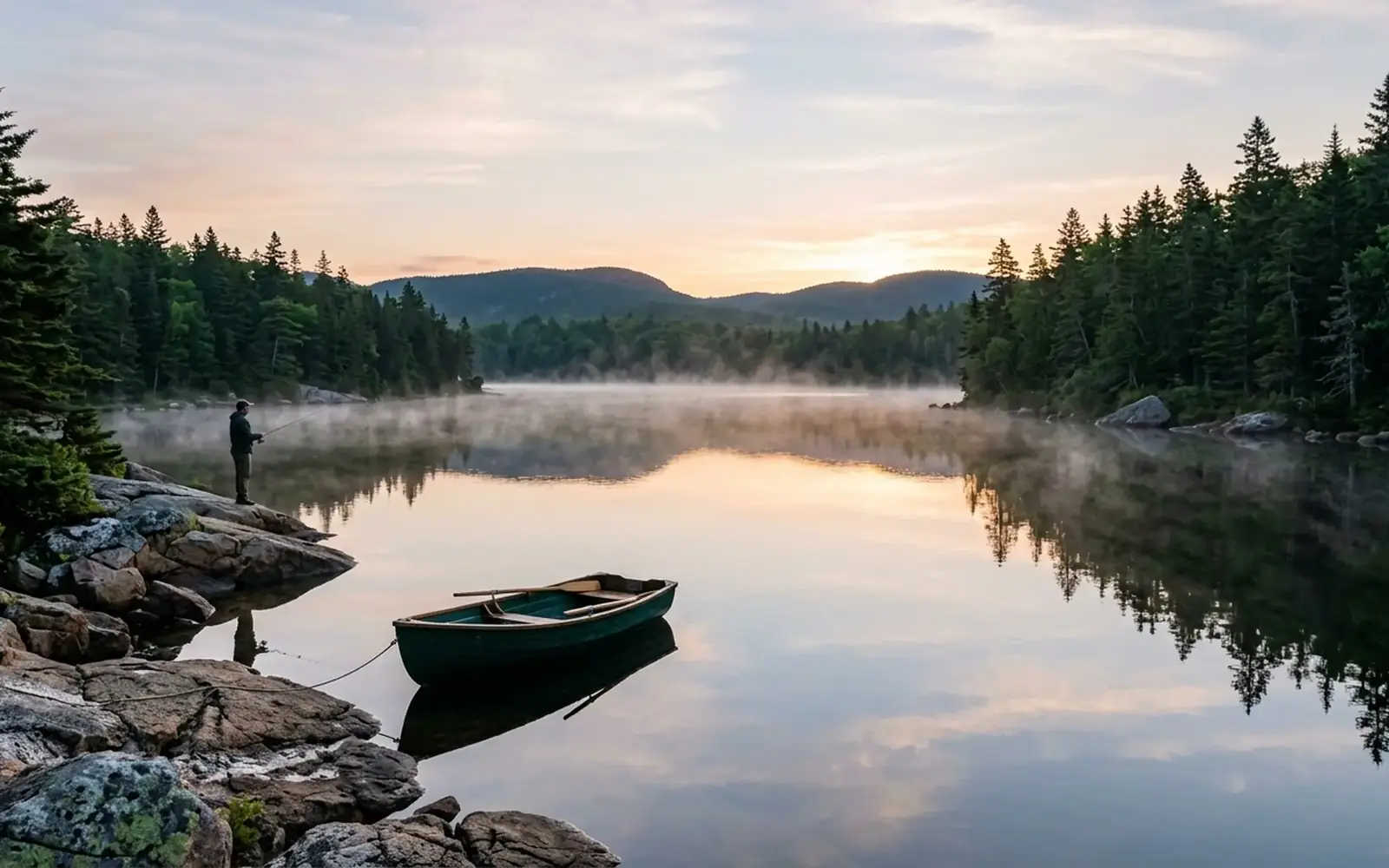
Fishing in Acadia National Park is one of the more overlooked things you can do here, partly because the park is famous for granite and sunrise rather than trout, and partly because the rules are split between two agencies in a way that confuses visitors. This guide sorts out who governs what, what licence you need, and where you can actually cast.
Do you need a license to fish in Acadia?
Yes. A valid Maine fishing license is required to fish in the park, though exceptions may apply. The important exemption for families: children under 16 do not need a license.
There is no separate park fishing permit. You buy a standard Maine licence from the Department of Inland Fisheries and Wildlife, online or from local vendors, and you must comply with Maine state regulations for both freshwater and saltwater fishing while you are inside park boundaries.
This is the part that catches people out: the state sets the fishing rules, not the National Park Service, even on park land. So the regulations booklet you need is Maine's, not Acadia's.
Where you can fish
The park lists 14 freshwater bodies where fishing is permitted, plus a further 15 Great Ponds regulated by the State of Maine rather than the Park Service. The best known of the open waters include:
- Eagle Lake, the largest on Mount Desert Island and a solid landlocked salmon and lake trout water. Boat access, and the carriage road around it makes shore access easy.
- Long Pond, the biggest water body in the park, on the west side. Deep, cold, and the most serious salmon and togue fishing available here.
- Echo Lake, easier to reach and popular with families, with a swim beach at one end.
- Jordan Pond, famously clear water, which cuts both ways: beautiful to fish and the fish can see you coming.
Several of these double as public drinking water supplies for island towns, which is why swimming and body contact are restricted on some of them even where fishing is fine. Read the posted signs at each access point.
Saltwater fishing along the park's coastline is also open under Maine's saltwater regulations, and requires the appropriate state registration.
Seasons and closures
- All freshwater streams on Mount Desert Island are closed to fishing from October 31 to March 31. This is a blanket closure, not water by water. Ponds and lakes are a separate question.
- Lurvey Spring Brook and Upper Hadlock Brook are closed year-round. No exceptions on either.
- Ice fishing typically runs January through March on the larger ponds and lakes, and is one of the genuinely good reasons to be in Acadia in winter.
The rules that catch visitors out
Acadia is stricter than most Maine water, and these are the ones people get wrong:
- Hook and line only, rods closely attended. You cannot set a line and walk away in freshwater.
- Live bait is prohibited. Outright, in fresh water. This is the single most common violation by visiting anglers, who arrive with a bucket of shiners out of habit. Use artificial lures or worms per state rules on specific waters, and check before you go.
- No chumming.
- No commercial fishing.
- 200-foot exclusion zones. No fishing within 200 feet of designated swim beaches, public boat docks, or motor road bridges. Some beaches reopen to fishing off-season, Sand Beach for example from September 9 to June 14.
Practical notes
Shore access on Eagle Lake and Jordan Pond is straightforward because carriage roads and loop trails run right along the water, so you can walk in with a rod and no boat. Long Pond rewards a canoe or kayak, and the west side generally sees a fraction of the traffic that the Park Loop Road corridor does.
Parking is the same constraint it is everywhere in Acadia: the popular lots fill by 9am in summer, so an early start helps as much for the space as for the fish. In peak season the Island Explorer shuttle runs to several of these waters, which sidesteps the problem entirely if you are travelling light.
Since regulations change annually and vary water by water, confirm current rules with Maine Inland Fisheries and Wildlife and the park's fishing page before you go.
If you are building fishing into a wider trip, our Acadia National Park 3 day itinerary covers the rest of the island, and Eagle Lake and Jordan Pond both sit directly on the day-by-day route.
Fishing in Acadia National Park: Licenses, Waters and Rules FAQs
Yes, a valid Maine fishing license is required to fish in the park, although exceptions may apply. Children under 16 do not need one. There is no separate park permit, and you must follow Maine Department of Inland Fisheries and Wildlife regulations for both freshwater and saltwater fishing.
The park lists 14 freshwater bodies open to fishing, plus 15 additional Great Ponds regulated by the State of Maine. The best known are Eagle Lake, Long Pond, Echo Lake, and Jordan Pond. Saltwater fishing along the park coastline is also permitted under Maine's saltwater rules.
All freshwater streams within Acadia on Mount Desert Island are closed from October 31 to March 31. Lurvey Spring Brook and Upper Hadlock Brook are closed year-round. Ice fishing on the larger ponds and lakes typically runs January through March.
No. Live bait is prohibited in fresh water, along with chumming and commercial fishing. Only hook-and-line fishing with closely attended rods is permitted. This is the most common mistake visiting anglers make, since live bait is allowed on many other Maine waters.
Yes. Ice fishing typically takes place from January through March on the larger ponds and lakes, and you still need a valid Maine fishing license. Note that all freshwater streams are closed October 31 to March 31, so winter fishing means ponds and lakes only.
Yes. Fishing is prohibited within 200 feet of designated swim beaches, public boat docks, and motor road bridges. Some beaches do reopen to fishing off-season, such as Sand Beach from September 9 to June 14. Lurvey Spring Brook and Upper Hadlock Brook are closed to fishing all year.