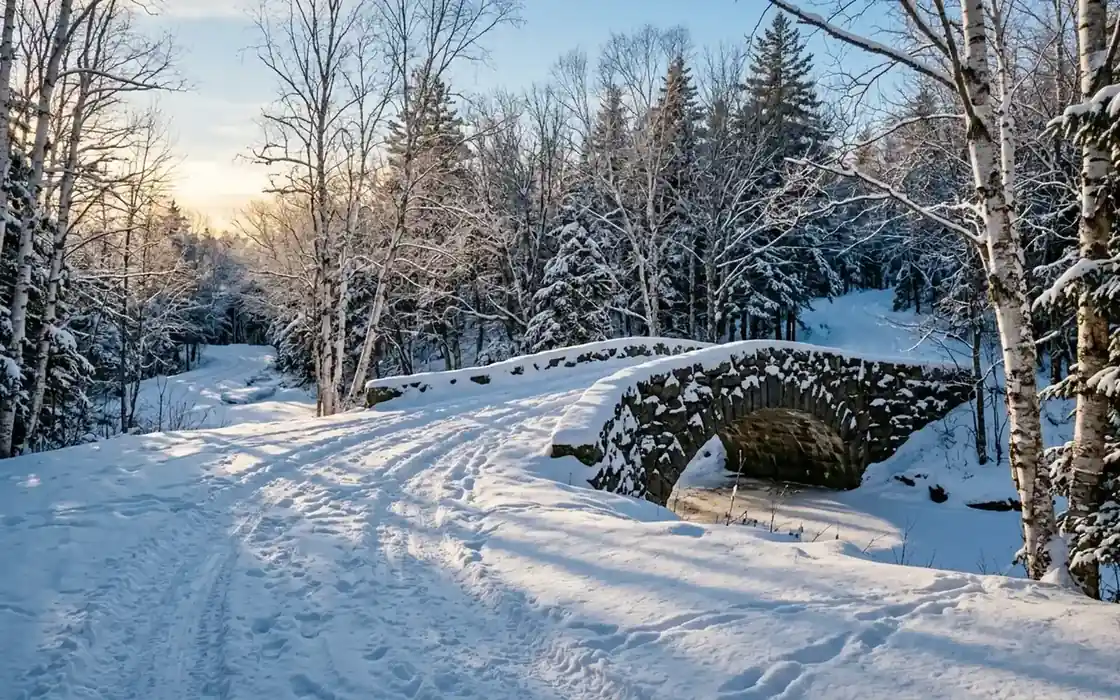
Acadia National Park in winter is open, free of crowds, and about half inaccessible by car. Both things are true at once, and understanding which half is which is the difference between a spectacular quiet trip and driving four hours to find a gate across the road.
The park never actually closes. What closes is most of the driving.
What closes, and exactly when
- Park Loop Road: closed to motor vehicles December 1 to April 14. This is the big one. It is the road that connects Sand Beach, Thunder Hole, Otter Cliff, and the Cadillac turnoff.
- Cadillac Summit Road: closed for the winter. Vehicle reservations only run May 20 to October 25, so there is no driving to the summit and no sunrise from the top by car.
- Island Explorer shuttle: stops running after Columbus Day. Everything in winter is your own vehicle or your own legs.
- Most facilities and campgrounds: closed for the season, including Blackwoods. Jordan Pond House closes too, so no popovers.
- Carriage roads: open in winter, but they close during spring mud season while the surface is thawing and vulnerable. Respect those closures, they exist to stop the roadbed being churned up.
What stays open
More than people expect. Two sections of the Park Loop Road stay open to cars year-round:
- A one-mile ocean section past Sand Beach and Thunder Hole, reached via Schooner Head Road. So you can still drive to the two most famous coastal stops in the park in January.
- Jordan Pond, via Jordan Pond Road from Seal Harbor.
The closed sections of the Park Loop Road remain open to pedestrians, cyclists, and skiers. That is the winter secret: 27 miles of scenic road with no traffic on it. Snowmobiles are also permitted on the closed sections and on the unplowed lane between the Sand Beach Entrance Station and Otter Cliff Road.
Bar Harbor stays open, though it runs at a fraction of summer capacity. Expect a handful of restaurants rather than the full strip, and check hours before you drive in for dinner.
The best things to do in Acadia in winter
Cross-country ski the carriage roads
This is the headline activity. Forty-five miles of crushed-stone carriage road, no motor vehicles ever, gentle grades built for horse-drawn carriages, which turns out to be close to ideal for skiing. The Eagle Lake and Witch Hole Pond loops are the usual starting points. Friends of Acadia and local volunteers groom some sections after storms, but treat it as backcountry: conditions vary wildly with the freeze-thaw cycle.
Snowshoe the lower trails
Jordan Pond Loop, Ocean Path, and the Bubbles are all reasonable on snowshoes. Avoid the iron-rung routes entirely. The Precipice and Beehive are genuinely dangerous in ice, the rungs glaze over, and there is nothing to stop a slide. Save those for September.
Walk the Park Loop Road
Walking or skiing the closed road past Otter Cliff with the Atlantic on one side and no cars at all is the single most striking winter experience in the park, and almost nobody does it.
Watch the sea smoke
On the coldest mornings, when air temperature drops far below the ocean's, sea smoke rises off the water in drifting sheets. Thunder Hole and Otter Point are the places to catch it, and it happens early, so be there at first light.
Ice fish the ponds
Ice fishing typically runs January through March on the larger ponds and lakes. You need a valid Maine fishing license and you must follow state regulations. All freshwater streams on Mount Desert Island are closed to fishing from October 31 to March 31, so it is ponds and lakes only.
Winter conditions, honestly
Coastal Maine winter is wet as well as cold. Temperatures hover around freezing far more than they sit deep below it, which means ice rather than powder. Trails become boilerplate after a thaw-freeze cycle, and granite slabs turn into skating rinks.
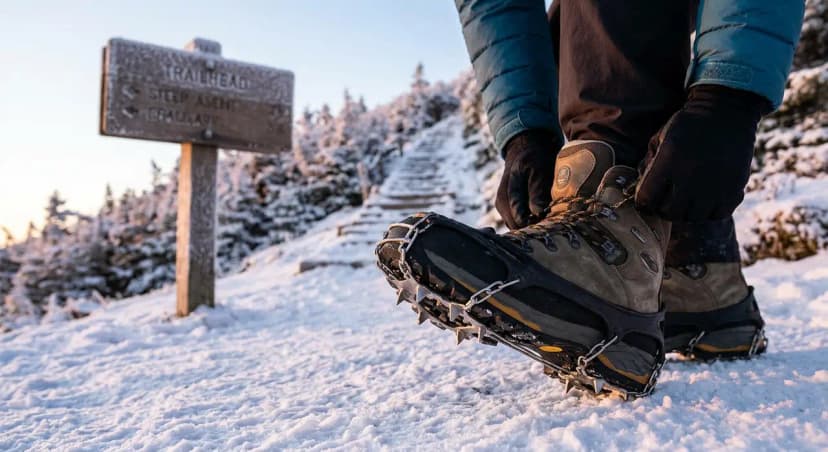
Bring microspikes. Not optional, not a nice-to-have. Most winter injuries in Acadia are slips on iced rock a few hundred metres from a trailhead. Add insulated boots, real layers, and a headlamp, because sunset comes around 4pm in December.
Snowfall is unreliable. Some winters give you a metre of base on the carriage roads, others give you frozen gravel. Check conditions in the week before you commit to bringing skis.
Is winter a good time to visit Acadia?
Yes, if you want solitude and you are equipped for ice. You will have Thunder Hole to yourself, lodging in Bar Harbor costs a fraction of July, and the light on snow-covered granite is extraordinary.
No, if it is your first visit. Without the Park Loop Road and Cadillac, you are missing the two experiences that define the park, and a first-timer is better served by late September, when everything is open, the crowds have gone, and the foliage is turning. Our Acadia National Park 3 day itinerary is built around exactly that shoulder-season window.
Road status changes with conditions and weather. Confirm current closures with the park's conditions page before you drive up.
Acadia National Park in Winter: What's Open and What's Not FAQs
Yes, the park is open year-round, but most of the driving is not. The Park Loop Road closes to motor vehicles from December 1 to April 14 and the Cadillac Summit Road closes entirely for the season. Two short sections of the Park Loop Road stay open to cars: a one-mile ocean stretch past Sand Beach and Thunder Hole via Schooner Head Road, and Jordan Pond via Jordan Pond Road.
No. The Cadillac Summit Road is closed for the winter season. Vehicle reservations only run from May 20 to October 25, so there is no driving to the summit and no sunrise from the top by car during winter.
Yes. The one-mile section of the Park Loop Road past Sand Beach and Thunder Hole stays open to vehicles year-round, reached via Schooner Head Road. It is one of the best winter stops in the park, especially on very cold mornings when sea smoke rises off the water.
Yes, and the 45 miles of carriage roads are the main draw. They carry no motor vehicles at any time of year and their gentle carriage-era grades suit skiing well. The Eagle Lake and Witch Hole Pond loops are the usual starting points. Closed sections of the Park Loop Road are also open to skiers.
Yes, on the closed sections of the Park Loop Road and on the unplowed lane between the Sand Beach Entrance Station and Otter Cliff Road. They are not permitted on the carriage roads or hiking trails.
Microspikes above everything else. Coastal Maine hovers near freezing rather than well below it, so trails ice over rather than holding powder, and most winter injuries here are slips on iced granite close to trailheads. Add insulated waterproof boots, proper layers, and a headlamp, since sunset falls around 4pm in December.
The iron-rung routes: the Precipice Trail and the Beehive. Their rungs and ladders glaze with ice and the exposure means a slip has nothing to stop it. Stick to the lower trails such as Jordan Pond Loop, Ocean Path, and the carriage roads.
Not really. Without the Park Loop Road and Cadillac Mountain you miss the two experiences that define the park, plus the Island Explorer shuttle, most campgrounds, and Jordan Pond House are all closed. Late September to early October gives you everything open, thin crowds, and peak foliage.