Why This One and Not the Others
Seattle has several ferry day trips. Bainbridge is the one that works without a car, because the boat docks a five-minute walk from the middle of town. Bremerton takes an hour on the water. Vashon leaves from West Seattle and drops you nowhere near anything.
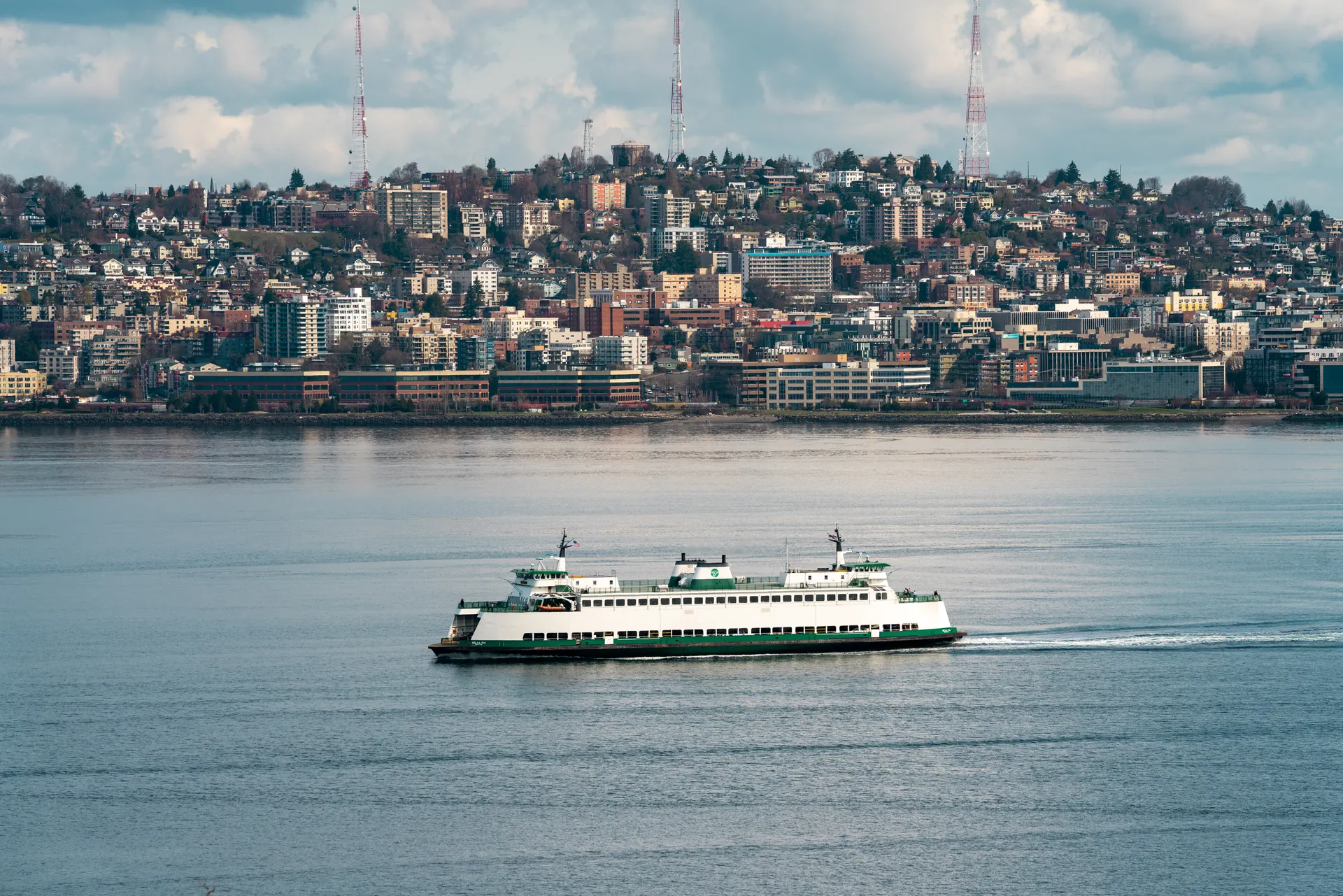
Bainbridge is 35 minutes from Pier 52, and the island is small enough that ten miles of driving covers the length of it.
The Ferry Detail Nobody Tells You
Fares on the Seattle to Bainbridge route are collected westbound only. You pay leaving Seattle. You do not pay coming back. Walk-on passengers just board in Winslow and find a seat.
There are no vehicle reservations on this route. It is first come, first served, and on a July Saturday afternoon the car line at Colman Dock can be one or two sailings deep. Walk-ons always get on. This is the argument for leaving the car in Seattle.
Sailings run roughly every 50 to 70 minutes. Check the day's timetable before you go, because the gaps stretch in the evening and missing the last useful boat means a long wait on a windy dock.
Winslow, on Foot
Walk off the boat, up the hill, and you are on Winslow Way. The whole commercial strip is about four blocks.
- Bainbridge Island Museum of Art sits at the top of the hill by the ferry. Admission is free. Regional contemporary work, three floors, and it takes about an hour.
- Eagle Harbor Book Company and the shops along Winslow Way fill the middle of a day easily.
- Mora Iced Creamery has the line outside it. That is the one.
- Waterfront Park is two blocks off the main street, with a small marina, a boardwalk and a kayak launch.
The Japanese American Exclusion Memorial
About a mile south of the ferry terminal, at the north end of Pritchard Park, a 276-foot cedar wall curves down toward the water where the dock used to be.
On March 30, 1942, 227 Japanese American residents of Bainbridge Island were marched onto a ferry at that spot and removed. They were the first in the country. The names are carved into the wall, and the site is now part of Minidoka National Historic Site.
It is free, it is outdoors, it takes twenty minutes, and it is the most serious thing on the island. Go.
Where to Walk
Grand Forest
Roughly 240 acres in three separate blocks in the middle of the island, linked by the Hilltop trail corridor. Second-growth Douglas fir and cedar, wide soft trails, minimal elevation. The east and west blocks each give you a loop of a mile or two. Muddy from November through April, which is most of the year.
Gazzam Lake Nature Preserve
Around 445 acres on the west side, with a small lake, no swimming, and a trail down to a stretch of beach at Fletcher Bay. Quieter than the Grand Forest on a weekend.
Fort Ward Park
South end, on Rich Passage. An old coastal artillery battery from 1903, concrete emplacements you can walk into, and a flat shoreline trail with ferries and freighters passing close. Good birding, particularly in winter.
Battle Point Park
Ninety acres of former Navy radio station, now flat paved loops, playing fields and the Ritchie Observatory, which the local astronomical society opens to the public on scheduled nights. The loop path is the island's easiest walk with a stroller.
The Beaches
Fay Bainbridge Park at the north end has the view: driftwood, a long pebble beach, and on a clear day Mount Baker and the Cascades across the sound. It also has campsites, which is unusual this close to Seattle.
Point White Pier on the west side is a long public fishing pier over Rich Passage, and one of the better places on the island to put a kayak in.
Blakely Harbor Park covers the ruins of what was once the largest sawmill in the world. Stone foundations, a millpond and a quiet gravel beach.
Water temperature in Puget Sound runs around 50°F year round. People swim. They do not swim for long.
Bloedel Reserve
A former private estate on the north end, 150 acres of designed landscape: a moss garden, a reflection pool, a Japanese garden, second-growth forest and a bird marsh, all linked by a two-mile walking route.
Book a timed ticket in advance. It is not free, it is not open every day of the week, and it does sell out on good weekends. Allow two hours. It is the single best reason to bring a car.
Doing It Without a Car
Winslow, the art museum, the waterfront and the Exclusion Memorial are all walkable from the dock. That is a solid half day.
For anything further, take a bike on the ferry. The island roads have shoulders in most places and drivers are used to cyclists. Kitsap Transit runs buses from the terminal, but the frequency is built around commuters, not visitors, so check the timetable before you rely on it.
When to Go
July through September is the dry season and the only stretch where the mountain views are reliable. May and June are green and wet. The forest trails are best in shoulder season when nobody is on them, worst in February when they are ankle-deep mud.
Go on a weekday if you can. The car ferry line, the Bloedel tickets and the Winslow parking all stop being problems.
A Workable Day
- Walk on the 9am-ish ferry from Colman Dock.
- Coffee on Winslow Way, then the art museum.
- Walk south to the Exclusion Memorial and back, about two miles round trip.
- Lunch in Winslow.
- Afternoon: with a car, Bloedel Reserve or Fay Bainbridge. Without, the Waterfront Park loop and the shops.
- Catch a boat back and watch the skyline come at you. That view is the reason people do this trip.
Things to Do on Bainbridge Island: The Best Day Trip From Seattle FAQs
Washington State Ferries run from Colman Dock at Pier 52 in downtown Seattle to Winslow on Bainbridge Island. The crossing takes 35 minutes and sailings run roughly every 50 to 70 minutes through the day.
Not outbound. Walk-on passengers and vehicles pay westbound only, on the Seattle to Bainbridge leg. Coming back to Seattle you are not charged again, which is why the fare looks like a round trip.
No, if you stay in Winslow. The ferry terminal is a five-minute walk from the shops, the art museum and several restaurants. You need a car or a bike to reach the Grand Forest, the beaches at either end of the island and Bloedel Reserve.
Four to five hours covers Winslow on foot plus one forest walk or beach. A full day lets you drive the length of the island, which is about 10 miles top to bottom.
Yes. Bikes board ahead of car traffic and the surcharge is small. The island has been a cycling destination for decades, and the Chilly Hilly ride every February covers a 33-mile loop of it.
The Japanese American Exclusion Memorial at Pritchard Park. Admission is free, and the 276-foot cedar wall carries the names of the 227 islanders removed in March 1942, the first forced removal of Japanese Americans in the country.
Yes. The worked day-by-day plan is Orcas Island Itinerary: What to Do in 3 Days (3 Days), with the permits, the stays and the drive times already sorted. Tell us your dates and we will put it together for you and confirm what is genuinely open on those days. Asking is free: no card, no deposit, and nothing is held until you say yes.