A Park You Can Enjoy on Wheels
Most things to do in Saguaro National Park don't need a long hike. The park is split by the city of Tucson into the East (Rincon Mountain) and West (Tucson Mountain) districts, and the park says the drive between them takes 30 to 60 minutes depending on route and traffic. Between the two you get scenic drives, ancient rock art, dark sky stargazing, short trails and easy family stops. If you do want to add trail time, our Saguaro National Park hikes itinerary lays out the best routes in both districts to fold into the ideas below.
Drive the Two Scenic Loops
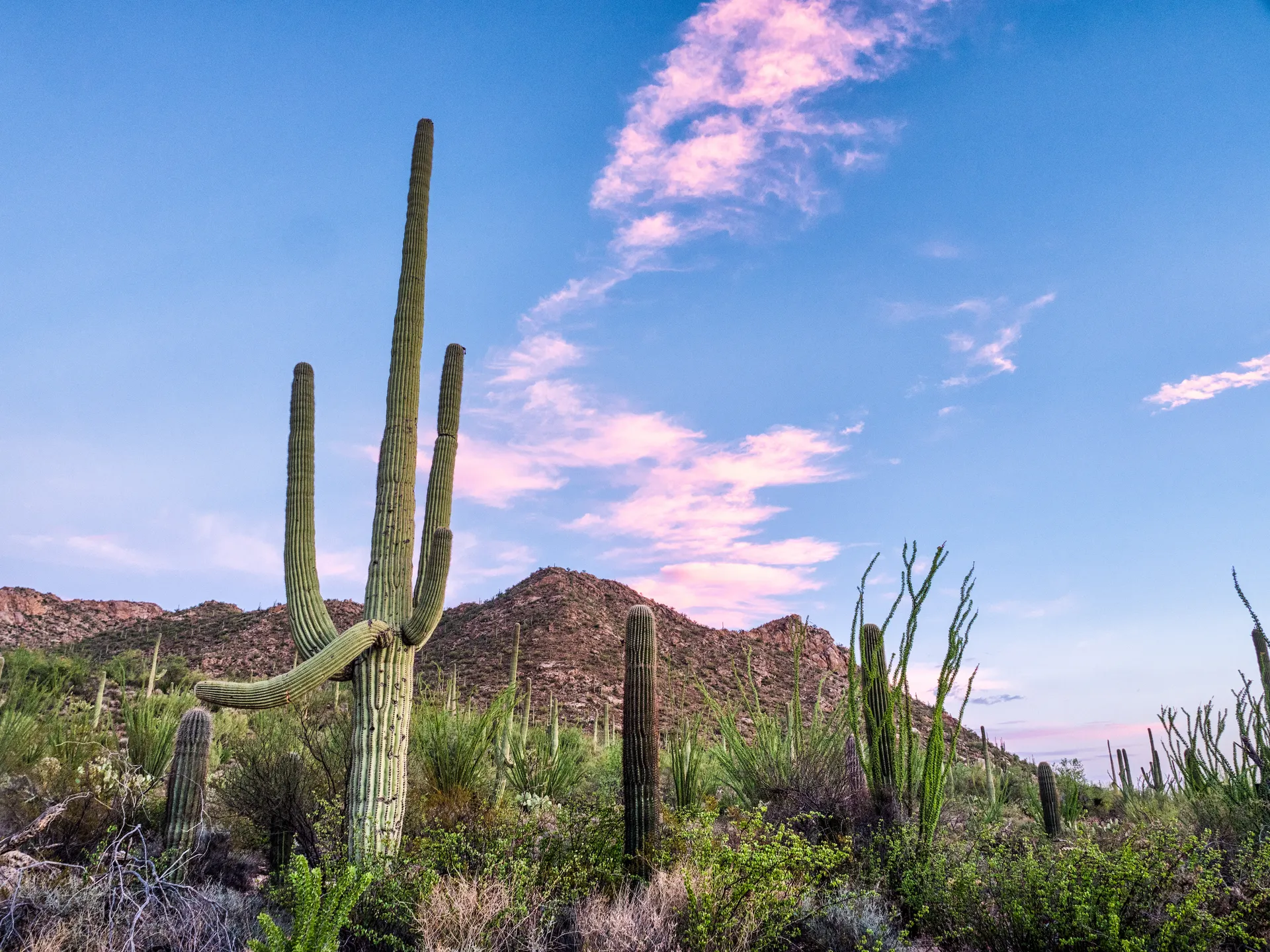
The single best non-hiking activity is simply driving the park's two loop roads, each a different mood of desert.
- Cactus Forest Drive (East): an 8-mile paved one-way loop through dense saguaro stands with frequent pullouts and short interpretive walks.
- Bajada Loop Drive (West): a 6-mile graded dirt loop, washboarded but passable for most cars, winding through some of the thickest cactus forest anywhere.
Both loops put you within steps of giant saguaros without a long hike, and they are perfect for sunrise or sunset when the light turns the cactus ribs gold.
See the Signal Hill Petroglyphs
In the West district, a short, easy trail leads up to Signal Hill, where boulders are covered in petroglyphs carved by the Hohokam people roughly 800 years ago. The spiral designs and animal figures are some of the most accessible ancient rock art in southern Arizona, and the quarter-mile walk is doable for almost anyone. Go early or late to photograph the carvings without harsh midday glare.
Saguaro National Park Dark Sky Stargazing
In November 2023 DarkSky International certified Saguaro as an Urban Night Sky Place, the ninth in the world and the second National Park Service unit to earn it. The label goes to places next to big cities that still keep a usable night sky, so expect a glow from Tucson low on the horizon and a darker sky overhead. On a moonless night you can see the Milky Way arc over the saguaro silhouettes. The park runs public night sky programs through the year (check the park calendar for dates), and the West district pullouts along Bajada Loop make fine informal stargazing spots once the gates allow. Bring a red-light headlamp to protect your night vision.
Visit the Arizona-Sonora Desert Museum
Just outside the West entrance sits the Arizona-Sonora Desert Museum, a combined zoo, botanical garden, and natural history museum. You can see desert bighorn, a hummingbird aviary, javelina, and a raptor free-flight demonstration, all of which make the surrounding wild park come alive. It pairs naturally with a morning in the West district and is an easy win on a hot afternoon.
Biking the Cactus Forest Loop
The East district's Cactus Forest Drive is a favorite with cyclists, who can ride the paved one-way loop among the saguaros without committing to a steep climb. There is also the Cactus Forest Trail, an unpaved route open to mountain bikes that cuts through the heart of the cactus stands. Riding at dawn means cooler air, low traffic, and the chance to spot quail, javelina, and Gila woodpeckers nesting in the giant cacti. Bring your own bike, since there are no rentals inside the park.
Wildlife Watching in the Sonoran Desert
Saguaro protects one of the richest desert ecosystems in North America, and patient travelers see a lot from the road and short trails. Early morning and dusk are best:
- Javelina: pig-like peccaries that travel in family groups near washes.
- Gila woodpeckers and elf owls: both nest in cavities inside the saguaros.
- Roadrunners, quail, and jackrabbits: common along the loop drives.
- Coyotes and desert tortoise: seen at dawn or after summer rains.
Keep your distance, never feed wildlife, and watch the trail edges for rattlesnakes in warm months.
Saguaro National Park Hiking: Short Trails to Add
If you want some trail time, these are the park's own recommendations for day hikes, with the distances the park lists. All of them fit around a loop drive.
- Freeman Homestead Trail (East, 1 mile): an easy walk to an old homestead foundation, a grove of large saguaros and a desert wash. Great horned owls are often seen in the cliff above the wash, and the signs include activities for kids.
- Loma Verde Loop (East, 3.8 miles, 60 feet of gain): nearly flat, through mesquite and up onto the bajada, with a spur to an overlook of the cactus forest and Tanque Verde Ridge.
- Hope Camp and Ridge View Trail (East, 2 miles, 400 feet): from the Loma Alta trailhead, a short climb to views of Rincon Peak and down into Box Canyon.
- King Canyon and Gould Mine Loop (West, 2.4 miles, 380 feet): up a sandy wash with a few stair-step rock sections and back on an old mining road.
- Wild Dog Trail (West, 1.8 miles): a one-way walk that ends near the Signal Hill picnic area turnoff, so non-hikers in your group can drive the loop and pick you up.
- Sendero Esperanza to Wasson Peak (West, 3.4 to 8 miles): flat for a mile, then switchbacks to the ridge. Keep going on the Hugh Norris Trail to reach Wasson Peak, at 4,687 feet the highest point in the West district.
For full routes and a day-by-day plan, see our Saguaro National Park hikes itinerary.
Easy Stops for Families and First-Timers
If you are traveling with kids or short on energy, build the day from low-effort highlights:
- Rincon Mountain Visitor Center: exhibits, a short nature trail, and the start of Cactus Forest Drive.
- Red Hills Visitor Center (West): a desert-view patio and the Junior Ranger program.
- Desert Discovery Nature Trail: a flat, paved, shaded half-mile loop in the West district with interpretive signs.
- Picnic at Mam-A-Gah or Signal Hill: shaded tables among the cactus for a midday break.
Cap the day by chasing sunset from a high pullout, when the saguaros stand black against a burning desert sky. Even without a single long hike, that view makes the trip.
Visiting Saguaro National Park: Passes and Timing
A private vehicle pass costs $25 (motorcycles $20) and is good for 7 days in both the Tucson Mountain District (West) and the Rincon Mountain District (East), so you pay once. The park doesn't take cash. Buy with a card at the Red Hills or Rincon Mountain visitor centers or the Rincon Mountain fee kiosk.
Ranger programs run all year, but January through April is the park's busy season and has the widest choice. In summer the park offers only a few programs a week because of the daytime heat. The saguaros bloom from late May into July, which is the one reason to put up with a hot visit. Our guide to the best time to visit Saguaro National Park goes month by month, and if you want to stay the night, see camping near Saguaro National Park.
A One-Day Saguaro National Park Itinerary for Both Districts
With Tucson sitting between the two districts, ambitious travelers can sample both in a single day, though it makes for a full schedule. A practical loop is to start at sunrise on the West district's Bajada Loop Drive and Signal Hill petroglyphs while the air is cool, break midday at the Arizona-Sonora Desert Museum, then cross town in the afternoon to the East district for the Cactus Forest Drive and a sunset pullout in the Rincon foothills. The park puts the cross-town drive at 30 to 60 minutes depending on route and traffic, so don't underestimate it. Pack water, snacks, and fuel up before you start, because services inside the park are minimal. If that feels rushed, give each district its own day and slow down, which the desert rewards.
Things to Do in Saguaro National Park: Drives, Hikes and Dark Skies FAQs
Drive the Cactus Forest and Bajada Loop scenic roads, see the Signal Hill petroglyphs, stargaze in certified dark skies, walk short interpretive trails, and visit the nearby Arizona-Sonora Desert Museum just outside the West entrance.
Yes. The Junior Ranger program, the flat paved Desert Discovery Nature Trail, the short Signal Hill petroglyph walk, and the scenic drives all work well for kids and require little effort.
Yes. In 2023 DarkSky International certified Saguaro as an Urban Night Sky Place, a designation for parks near big cities that still protect a dark sky. Tucson adds a glow on the horizon, but on moonless nights the Milky Way is visible over the saguaros. The park runs public night sky programs through the year. Bring a red-light headlamp to protect your night vision.
The Lime Kiln Trail is a short out-and-back in the Rincon Mountain District (East) leading to two 19th-century limestone kilns once used to make mortar and plaster. It is about 2 miles round trip from the North Cactus Forest trailhead, or about 3 miles from the south trailhead. Do not climb on the kilns themselves, the tops and walls are fragile.
Start at sunrise in the West district on the Bajada Loop Drive and the Signal Hill petroglyphs, take a midday break at the Arizona-Sonora Desert Museum, then cross Tucson to the East district for the Cactus Forest Drive and a sunset pullout. The park puts the drive between districts at 30 to 60 minutes, so leave room for it.
The park recommends the 1-mile Freeman Homestead Trail and the 3.8-mile Loma Verde Loop in the East district, and the 2.4-mile King Canyon and Gould Mine Loop in the West. For a bigger day, the Sendero Esperanza and Hugh Norris trails lead to Wasson Peak (4,687 feet), the high point of the West district.
A private vehicle pass is $25 and covers both districts for 7 days. Motorcycles are $20. The park is cashless, so bring a credit or debit card, or use an America the Beautiful pass.
Yes. The worked day-by-day plan is Saguaro National Park Hikes: 3-Day Best Hikes Itinerary (3 Days), with the permits, the stays and the drive times already sorted. Tell us your dates and we will put it together for you and confirm what is genuinely open on those days. Asking is free: no card, no deposit, and nothing is held until you say yes.