Three Days of Saguaro's Best Desert Hikes
One park, two desert districts, the giant saguaro everywhere.
The best Saguaro National Park hikes across both districts from Tucson, Valley View Overlook and Signal Hill in the West, Wasson Peak on the ridgeline, and the Cactus Forest Loop and Bridal Wreath Falls in the East.
“I’ve requested to book a Chain Lakes Loop guide on ExplorOFF, and it was the best idea ever! I highly recommend going with their guided option since you get a real human connection on the trail and don’t have to worry about a thing. Yulia was great to talk to!”

 15 stops on a real mapEvery stop pinned in order→
Saguaro: every stop pinned in order.
Saguaro East & West · Tucson, Arizona
Every stop on this trip, in order, opens as one driving route in the Google Maps app. No copying addresses across one at a time.
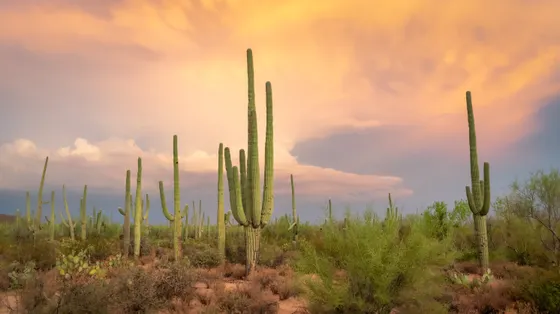
Saguaro in photos: 5 of the stops.

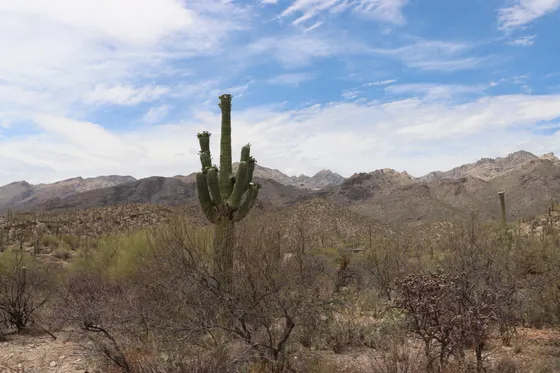


Plan and book your 3 days in Saguaro, one step at a time
- Most of the Bajada Loop Drive is closed after flash flooding damaged the road: Hohokam Road between the Hugh Norris Trailhead and Golden Gate Road, and Golden Gate Road between Signal Hill Junction and Sandario Road. It reopens when repaired, so day 1 drives only the open ends. Source
- Vehicle break-ins have been reported at the King Canyon Trailhead (the day 2 Wasson Peak start) and other trailheads, so take valuables with you. Source
How 3 days in Saguaro split up
Plan 3 days for Saguaro. Districts: East & West. Difficulty: Easy–Strenuous. Entrance fee: $25/vehicle. Saguaro National Park protects the densest stands of the giant saguaro cactus on Earth, the towering, many-armed symbol of the American Southwest. Unusually, the park comes in two separate halves that flank the city of Tucson: the Tucson Mountain District (West) and the Rincon Mountain District (East), roughly 30 to 45 minutes apart across town.
Day 1: West District · Valley View Overlook, Signal Hill & the Bajada Loop
6 stops · Day one
Day 2: West District · Wasson Peak via King Canyon
3 stops · Day two
Day 3: East District · Cactus Forest Loop & Bridal Wreath Falls
6 stops · Day three
West District · Valley View Overlook, Signal Hill & the Bajada Loop
Start in the Tucson Mountain District (West), where the saguaro forest is at its thickest. Drive the scenic Bajada Loop Drive, a graded dirt loop that threads through the densest cactus stands, and walk the short Desert Discovery Nature Trail (about 0.5 mile, paved and easy) for a gentle introduction to Sonoran Desert plants.
Not the order you want? Drag a stop, or use the arrows beside it. Stops move between days too.
- Drive from
~30 min · to the West district · DriveBase in Tucson and drive about 30 minutes west to the Tucson Mountain District, where the saguaro forest is at its thickest. Pay the $25 vehicle fee (or use an America the Beautiful pass) at the entrance.
 Sunrise hot air balloon over the Sonoran Desert
Optional · 45–60 min aloft · 4.96 from 27 reviews · activityStart the West District day in the air: the balloon launches at dawn from Marana Airport, about 30 minutes north of the Bajada Loop, and floats 2,000 to 5,000 feet over the Sonoran Desert for 45 minutes to an hour. Champagne and breakfast follow the landing, and you are driving into the park by late morning. Launch time moves with sunrise, around 6:30am in winter.
Book this → Bajada Loop Drive
Mostly closed after flood damage (NPS) · drive what is open, check signs · DriveDrive the Bajada Loop, a graded dirt scenic loop threading through the densest saguaro stands, with pullouts and trailheads along the way. Passable in most cars when dry, but slow and washboarded, allow extra time.
- Valley View Overlook Trail
~0.8 mi RT · easy · Avra Valley view · HikeA short, easy trail of about 0.8 mile round trip that ends at a sweeping view across Avra Valley, framed by giant saguaros. One of the best quick payoffs in the West district.
- Signal Hill Petroglyphs
~0.5 mi RT · ancient Hohokam rock art · ViewpointA short half-mile walk up to a cluster of ancient Hohokam petroglyphs pecked into the rocks. Best in late-afternoon light, when the low sun makes the carvings and the Tucson Mountains glow.
 Michael Barera / CC BY-SA 4.0Stay in Tucson
Second night in Tucson · lodgeSecond night back in Tucson. Tomorrow you cross town to the East district, so an in-town base keeps the drive short either way.
West District · Wasson Peak via King Canyon
Today is the big one. Wasson Peak (4,687 ft) is the high point of the Tucson Mountains and the best summit hike in the West district. The most direct route climbs the King Canyon Trail to the summit, roughly 7 miles round trip with about 1,800 feet of gain, strenuous, passing an old mine and rising through saguaro-studded slopes to a 360-degree view over Tucson, Avra Valley, and the surrounding ranges.
Not the order you want? Drag a stop, or use the arrows beside it. Stops move between days too.
- Wasson Peak via King Canyon
~7 mi RT · ~1,800 ft · strenuous · HikeWasson Peak (4,687 ft) is the high point of the Tucson Mountains. The King Canyon Trail is the most direct route to the summit, about 7 miles round trip with roughly 1,800 feet of gain, strenuous, passing an old mine and rising through saguaro-studded slopes to a 360-degree view. Start at first light: there is little shade.
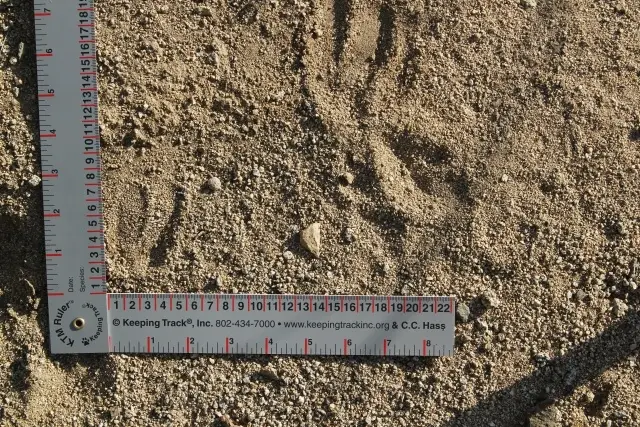 Saguaro National Park / CC BY 2.0Hugh Norris Trail (alt)
~10 mi RT · ridgeline to the summit · HikeFor a longer, more scenic line to the same summit, the Hugh Norris Trail follows the ridgeline with near-constant views, about 10 miles round trip. Either route demands an early start and at least a gallon of water per person.
- Michael Barera / CC BY-SA 4.0Stay in Tucson
Second night in Tucson · lodgeSecond night back in Tucson. Tomorrow you cross town to the East district, so an in-town base keeps the drive short either way.
East District · Cactus Forest Loop & Bridal Wreath Falls
Cross Tucson to the Rincon Mountain District (East), a 30 to 45 minute drive depending on traffic. Begin with the Cactus Forest Loop Drive, an 8-mile paved one-way scenic loop through classic saguaro forest with pullouts, picnic spots, and short trailheads. Warm up on the easy Freeman Homestead Trail (about 1 mile loop) or the flat Cactus Forest Trail near the Mica View area.
Not the order you want? Drag a stop, or use the arrows beside it. Stops move between days too.
- Cross to the East district
~30–45 min across Tucson · DriveCross Tucson to the Rincon Mountain District (East), roughly 30 to 45 minutes depending on traffic. This larger, higher half of the park has the paved Cactus Forest Loop Drive and longer trails toward the Rincon Mountains.
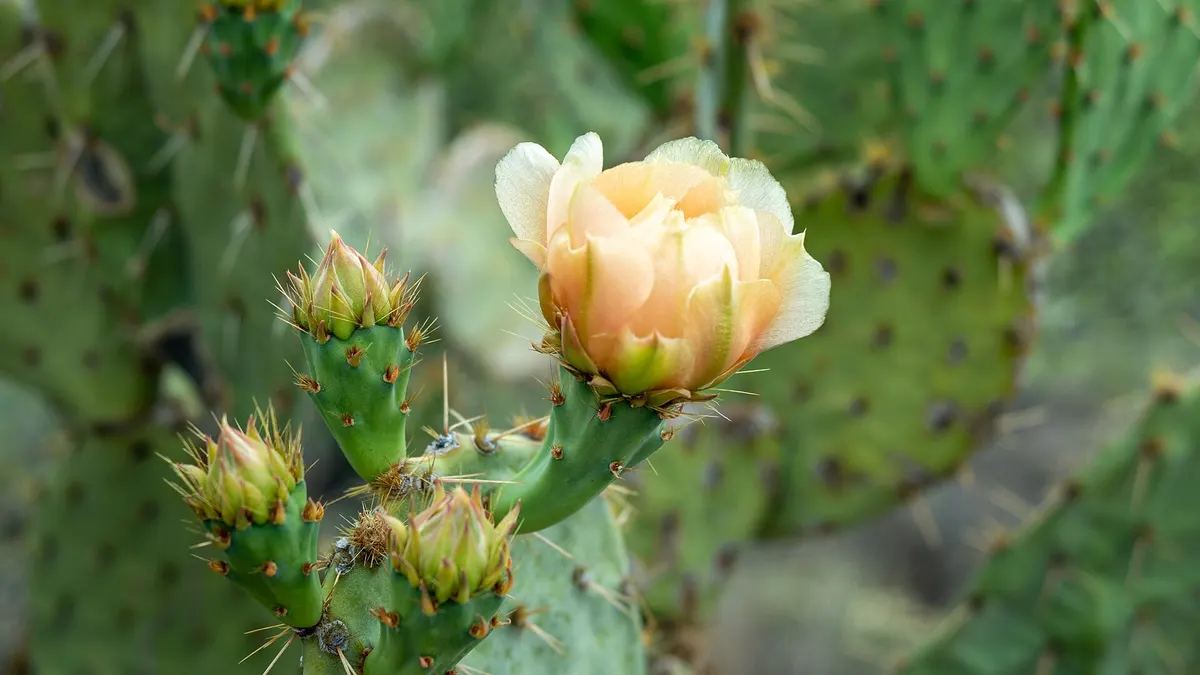 Alexander Hatley / CC BY 2.0Cactus Forest Loop Drive
8 mi paved one-way scenic loop · DriveThe Cactus Forest Loop Drive is an 8-mile paved one-way scenic loop through classic saguaro forest, with pullouts, picnic spots, and short trailheads. A relaxed way to see the East district before the day's hike.
 Guided e-bike ride through Saguaro East
Optional · 2.5 hr · 4.79 from 356 reviews · activityInstead of driving the Cactus Forest Loop, ride it. This is the only e-bike tour allowed in the park, and the guide takes the group around the East District on Pedego pedal-assist bikes, so the hills of the loop are easy and you stop wherever the saguaros are best. It meets at Saguaro Corners, just outside the park entrance; take the 10am weekday ride and the afternoon stays free for Bridal Wreath Falls.
Book this →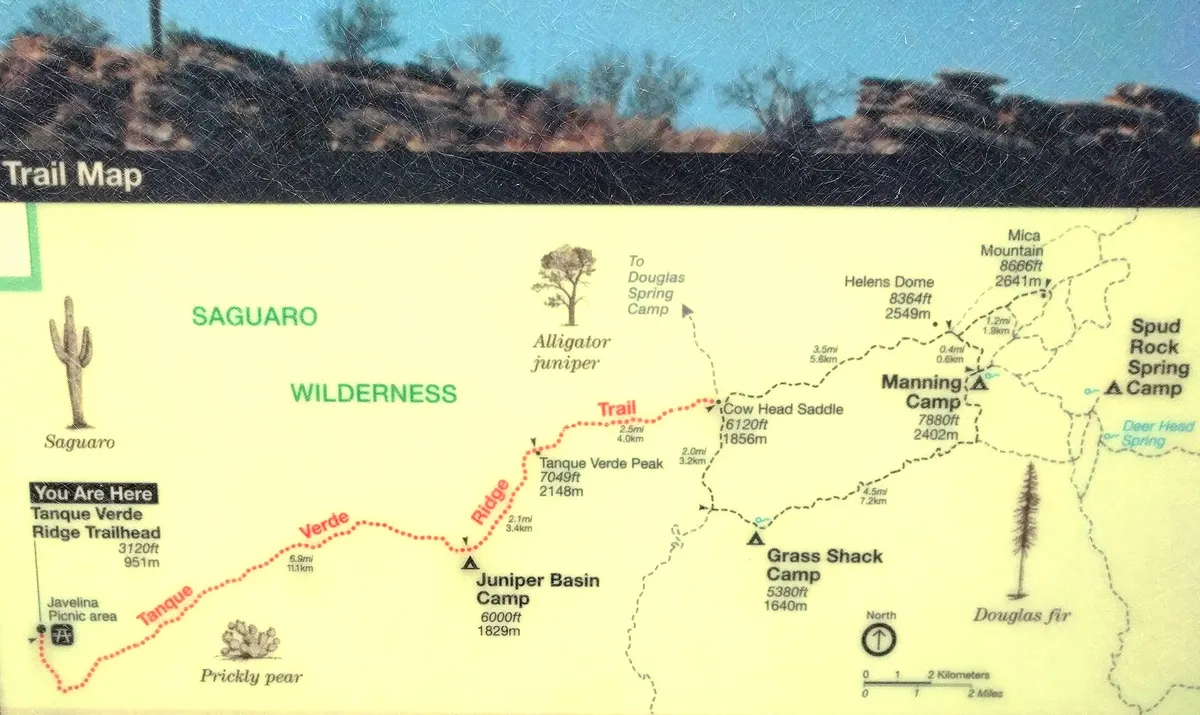 brewbooks from near Se / CC BY-SA 2.0Freeman Homestead Trail
~1 mi loop · easy · interpretive walk · HikeWarm up on the easy Freeman Homestead Trail, about a 1-mile interpretive loop through the desert past the site of an old homestead. A gentle introduction to the East district's saguaro forest.
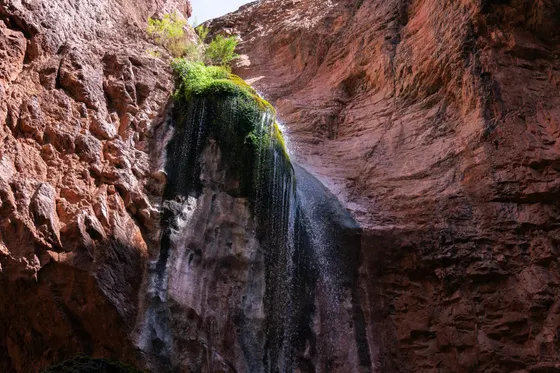 Douglas Spring → Bridal Wreath Falls
~5.8 mi RT · moderate · seasonal falls · HikeThe day's feature hike: the Douglas Spring Trail to Bridal Wreath Falls, about 5.8 miles round trip, moderate, climbing gently to a seasonal desert waterfall. The falls run best after winter rains or snowmelt and can be bone-dry in summer.
- Getting home: Tucson airport (TUS)
~30 min from the East district · DriveTucson International Airport (TUS) is about 30 minutes from the East district, an easy departure-day drive. If you have extra time, the steeper Tanque Verde Ridge Trail offers long views; the full Mica Mountain hike is a serious backcountry day, beyond this trip.
Book the 2 nights
Beds near the trailheads are the one thing on this trip that genuinely runs out. Everything else can be decided later.
Tell us your dates and we will do the checking. We find what is still open near each trailhead and email you this plan back with a booking link for each night. Nothing is charged and you decide at the end.
Request to bookWhat to pack for Saguaro
Built from this route, not a generic list. Every line says why it is here.
On every day of this trip
On your feet
Because you are sleeping indoors
For the driving days
Specific to Saguaro
What we actually learned in the desert.
Hike November through March
The cool season brings mild days and comfortable mornings. From late spring into summer, highs regularly top 105°F and longer hikes become genuinely dangerous, start any real hike at dawn and be off the trail by late morning.
Carry far more water than you think
There is little to no shade and no water on most trails. Bring at least a gallon per person for a hike like Wasson Peak, sip steadily, and turn around if you drop below half. Salty snacks help with electrolytes.
The two districts are 30–45 minutes apart
Saguaro East (Rincon Mountain) and Saguaro West (Tucson Mountain) flank opposite sides of Tucson. You can't see both in a single morning without a long cross-town drive, plan a full day for each side.
Watch for rattlesnakes and cactus
Rattlesnakes are active March through October, watch where you step and never reach onto rocks you can't see. Never grab a cactus for balance; cholla spines in particular are miserable to remove. Carry tweezers.
There is no lodging inside the park
Both districts are day-use only with no hotels or developed campgrounds at the road, so you base in Tucson and drive in. The city has plentiful lodging and sits between the two districts.
Pair the West with the Desert Museum
The Arizona-Sonora Desert Museum sits right beside the Tucson Mountain District and is one of the best desert zoos and botanical gardens anywhere. It pairs naturally with a West-district day if you want a non-hiking add-on.
Saguaro: questions before you go
Saguaro national park hikes: the questions people ask most.
The best Saguaro National Park hikes split across two districts. In the West (Tucson Mountain), the standouts are the short Valley View Overlook Trail (about 0.8 mi), the Signal Hill petroglyphs walk (about 0.5 mi), and the strenuous climb to Wasson Peak via King Canyon (about 7 mi) or the longer Hugh Norris ridgeline (about 10 mi). In the East (Rincon Mountain), drive the Cactus Forest Loop and hike Douglas Spring Trail to Bridal Wreath Falls (about 5.8 mi). This itinerary strings the best of both together over three days.
Saguaro has two separate halves flanking Tucson. The Tucson Mountain District (West) has the densest saguaro forest, short scenic trails, Signal Hill's petroglyphs, and the climb to Wasson Peak. The Rincon Mountain District (East) is larger and higher, with the paved Cactus Forest Loop Drive and longer trails climbing toward the Rincon Mountains and Mica Mountain. They are roughly 30 to 45 minutes apart across town.
November through March is the best time, with mild days and cool mornings. From late spring into summer, highs regularly exceed 105°F and longer hikes become genuinely dangerous. If you visit in the warm months, start at dawn, stick to short trails, and be off the trail by late morning.
Yes, it is strenuous. The shortest common route, via the King Canyon Trail, is about 7 miles round trip with roughly 1,800 feet of gain; the Hugh Norris ridgeline route is about 10 miles. There is almost no shade the whole way, so start at first light and carry at least a gallon of water per person. The summit gives a 360-degree view over Tucson and the surrounding desert.
Yes. The entrance fee is about $25 per vehicle and covers both districts for 7 days, or you can use an America the Beautiful annual pass. There is no lodging inside either district, so you base in Tucson and drive in each day.
It depends on the season. Bridal Wreath Falls, reached via the Douglas Spring Trail (about 5.8 miles round trip), is a seasonal desert waterfall that runs best after winter rains or snowmelt. In summer and dry spells it can be bone-dry, so don't count on it for water and carry your own.
Two to three days lets you do both districts justice. This itinerary uses three days from Tucson: two in the West (short trails plus the Wasson Peak summit) and one in the East (the Cactus Forest Loop and Bridal Wreath Falls). With only a day, pick one district, the West for dense cactus and quick trails, the East for the scenic loop drive.
Yes. Rattlesnakes are active March through October, watch where you step and never reach onto rocks or ledges you can't see. Never grab a cactus for balance; cholla spines are especially miserable to remove, so carry tweezers. The biggest hazard, though, is heat: underestimating the sun and water needs is what gets most hikers in trouble here.
More than you expect. Walking among the saguaros gives you almost zero tree shade, and outside winter temperatures routinely top 100F. A good rule is at least 1 liter of water for every hour you plan to be on trail, and a full gallon per person for a longer climb like Wasson Peak. Try to avoid hiking between about 11 AM and 4 PM when the sun is at its worst, sip steadily, add salty snacks for electrolytes, and turn back if you drop below half your supply.
Three days from Tucson covers it well: a first day in the West district for Valley View Overlook, Signal Hill, and the Bajada Loop, a second day for the strenuous Wasson Peak summit, and a third day across town in the East district for the Cactus Forest Loop and Bridal Wreath Falls. With only one day, pick a single district rather than trying to cross town.
Yes. Tell us your dates and we check what is still open for the plan on this page, then send it back with a booking link for each night and the total. Nothing is charged and nothing is held, and you pay the normal rate.
Pick how you want to go.
Same 3-day route. Same 8 stops.
- 2 nights, a campsite near Tucson
- $44
- Sunrise hot air balloon over the Sonoran Desert
- $678
- Guided e-bike ride through Saguaro East
- $338
- Rental car, 3 days
- $180
- Gas, about 64 miles
- $10
- Park entry, one car
- $25
- 2 nights, a room in Tucson
- from $126
- Sunrise hot air balloon over the Sonoran Desert
- $678
- Guided e-bike ride through Saguaro East
- $338
- Rental car, 3 days
- $180
- Gas, about 64 miles
- $10
- Park entry, one car
- $25

- A private local guide, rooms and campsites booked
- Included
- Airport pickup and every drive
- Included
- Park, permit and campsite fees paid
- Included
- All the gear and the trail meals
- Included

Written and walked by Yulia Vasilyeva · Co-founder · Lead planner and guide
Three years leading guided hikes in the Pacific Northwest, rated 5.0 by 20+ verified guests, and she builds every custom itinerary herself. Based in Seattle.
Last checked September 2026
You might also love these
Other itineraries near this one.

Best National Parks to Visit in April: 6 Top Picks
The best national parks to visit in April: Joshua Tree wildflowers, Death Valley super blooms, Saguaro cactus flowers, Zion spring…

Chiricahua National Monument: A 2-Day Hiking Itinerary
Two days of Chiricahua National Monument hiking: the classic Echo Canyon Loop through Wall Street and the Grottoes, the big Heart of…
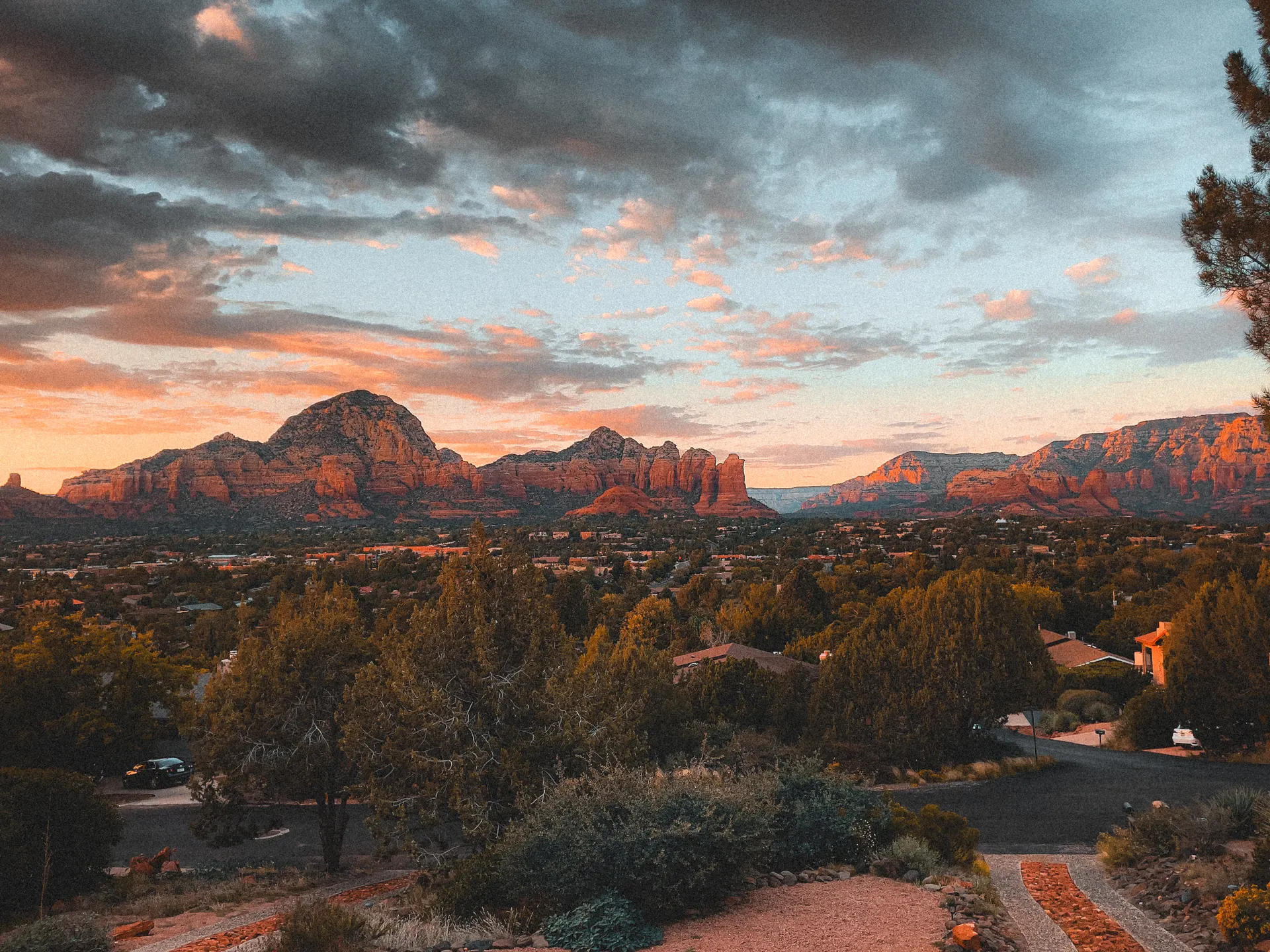
Sedona Hiking: Devil's Bridge, Cathedral Rock and the Best Red-Rock Trails (3-Day Itinerary)
Three days hiking in Sedona: hiking Devil's Bridge Sedona to the largest sandstone arch, hiking Cathedral Rock Sedona up the iconic…
Guides for this tripBest Time to Visit Saguaro National ParkCamping Near Saguaro National ParkThings to Do in Saguaro National Park Beyond HikingThings to Do in Sedona, Arizona
What adventurers say about us.
All reviews are from verified guests. ★★★★★ 5.0 average from 20+ bookings.
"Felt like going out with a really knowledgeable friend who just happens to know everything about the area. No awkward tour-guide energy, just a magnificent day."
"Yulia is an incredible guide. She knew every trail, every viewpoint, and exactly how to pace the day for our group. The photos she took of us were stunning. 100% booking again."
"I was visiting Seattle solo and this was the best decision I made on the trip. Yulia picked me up, had snacks, and took us to a trail I never would have found on my own. Absolute must-do."
"We did this as a couple's trip and it was perfect. Yulia adapted everything to us, our pace, our interests, our photo obsession. The mountain views were unreal."
"Phenomenal experience. Yulia has deep local knowledge and a real passion for the outdoors. She went out of her way to show us the hidden gems tourists never see. Will remember this forever."
"I've done a few guided hikes and this was by far the best. Yulia is warm, funny, and genuinely expert. The trail she chose had the most insane wildflower bloom, we got so lucky."
Fees, reservation windows, shuttle dates and trail closures are planning estimates. Confirm hours, road status and any reservations with the land manager before you go.
What other travelers are saying
Be the first to leave a tip or question for the next traveler.
Was this helpful?
One tap. It goes straight to Yulia and Margarita.
You can't hike it if you can't get the permit.
The best hikes in America run on lotteries that open once a year and sell out in minutes. Every trail runs on its own calendar. Pick the ones you want and we do the watching.
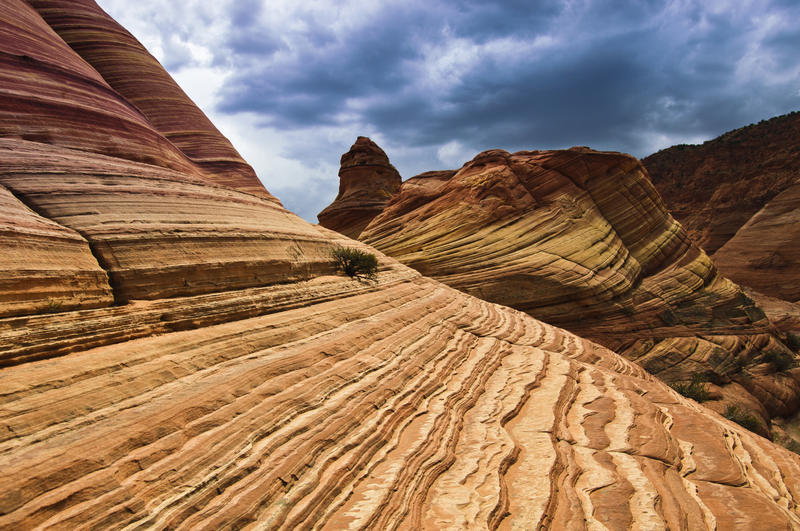 The WaveCoyote Buttes North · Arizona / UtahPermitLotterybrutal odds
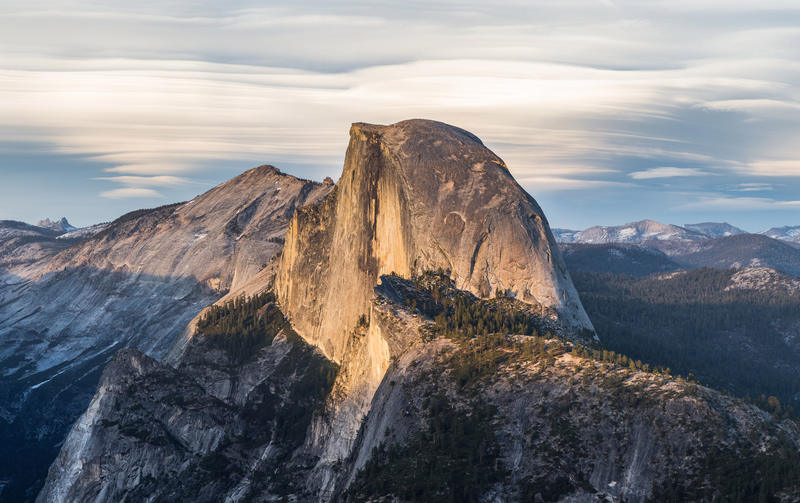 Half Dome CablesYosemite NP · CaliforniaPermitOpens Mar 1fair odds
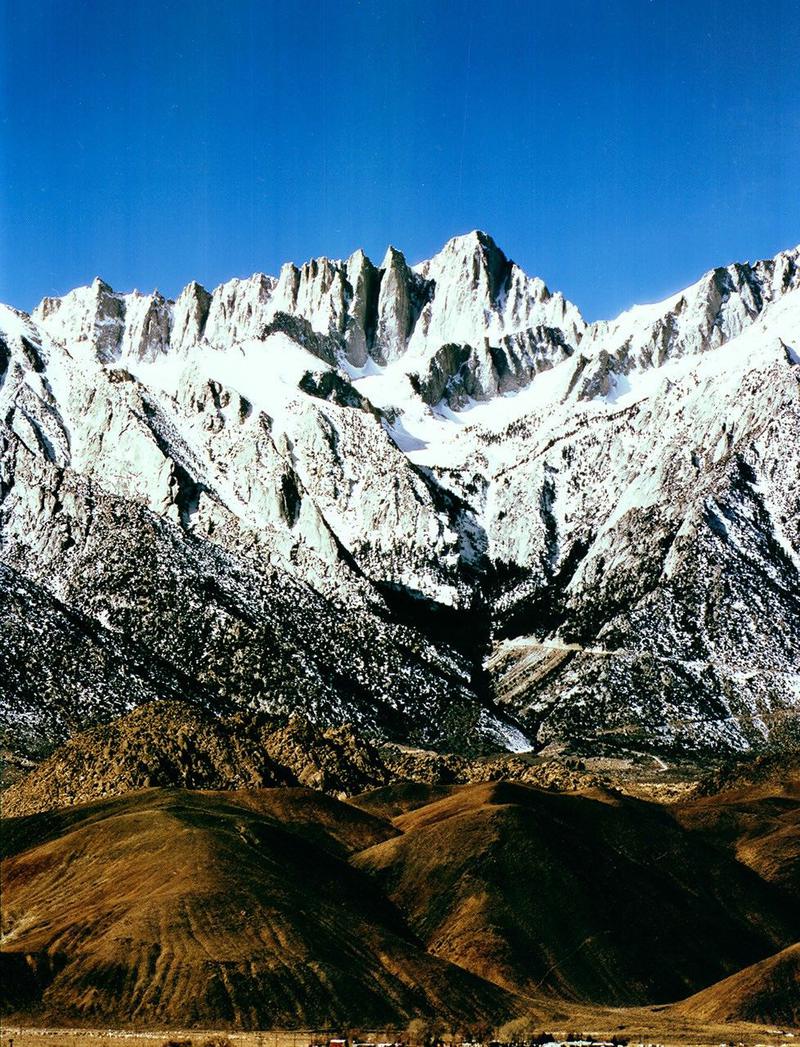 Mt. WhitneyInyo NF · CaliforniaPermitOpens Feb 1tough odds
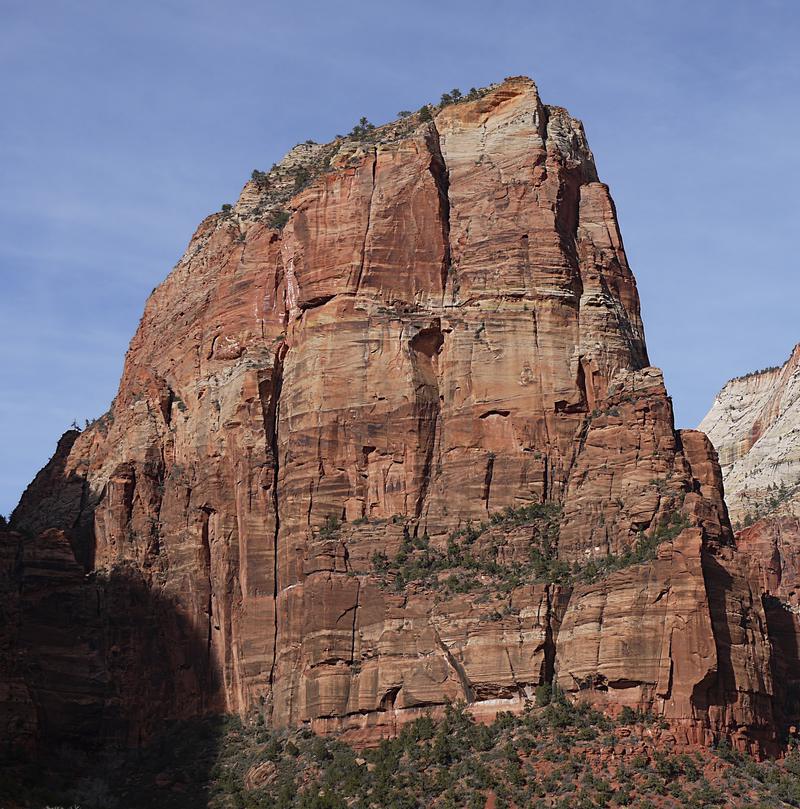 Angels LandingZion NP · UtahPermitLotterytough odds
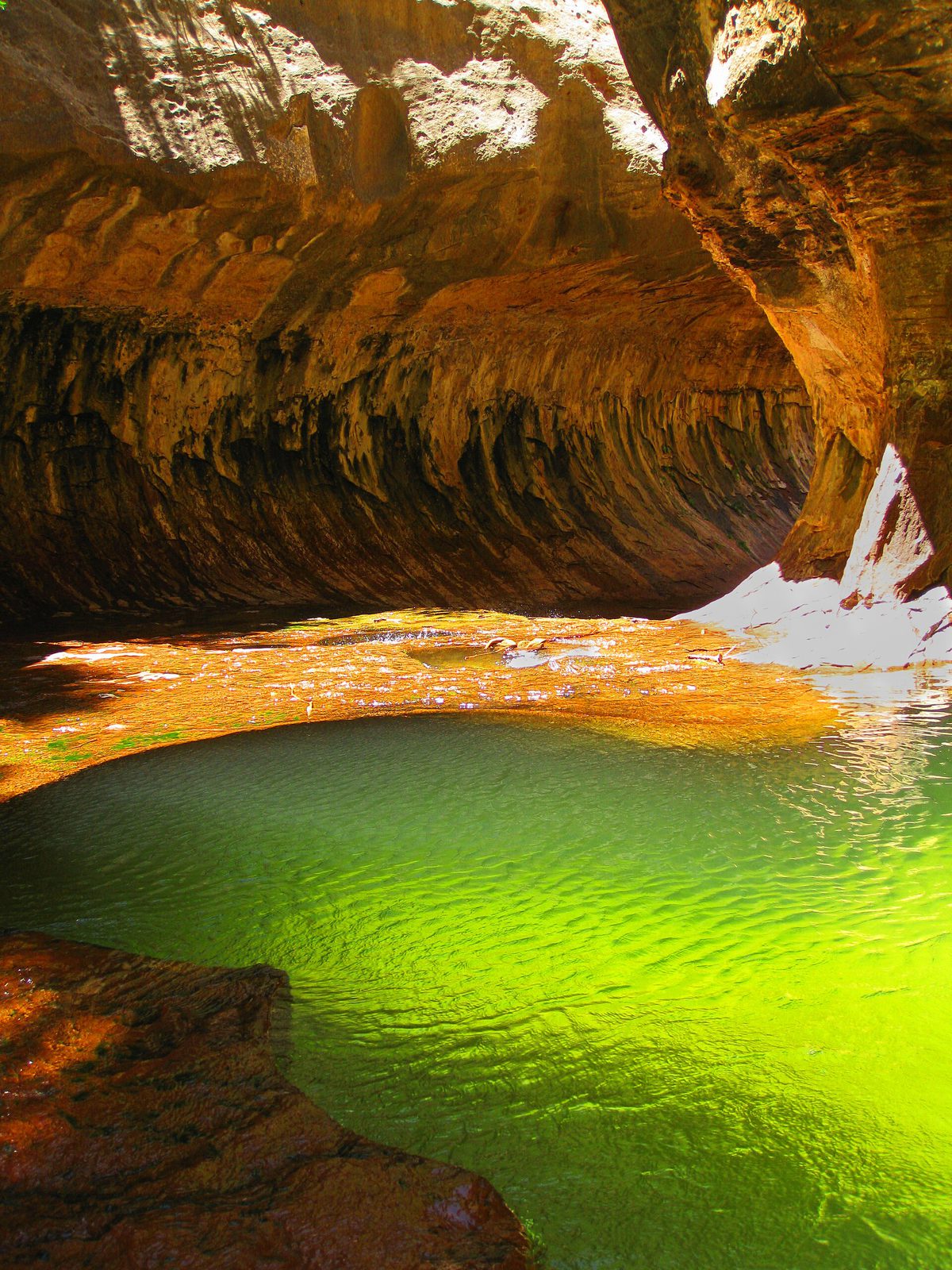 The SubwayZion NP · UtahPermitLotterytough odds
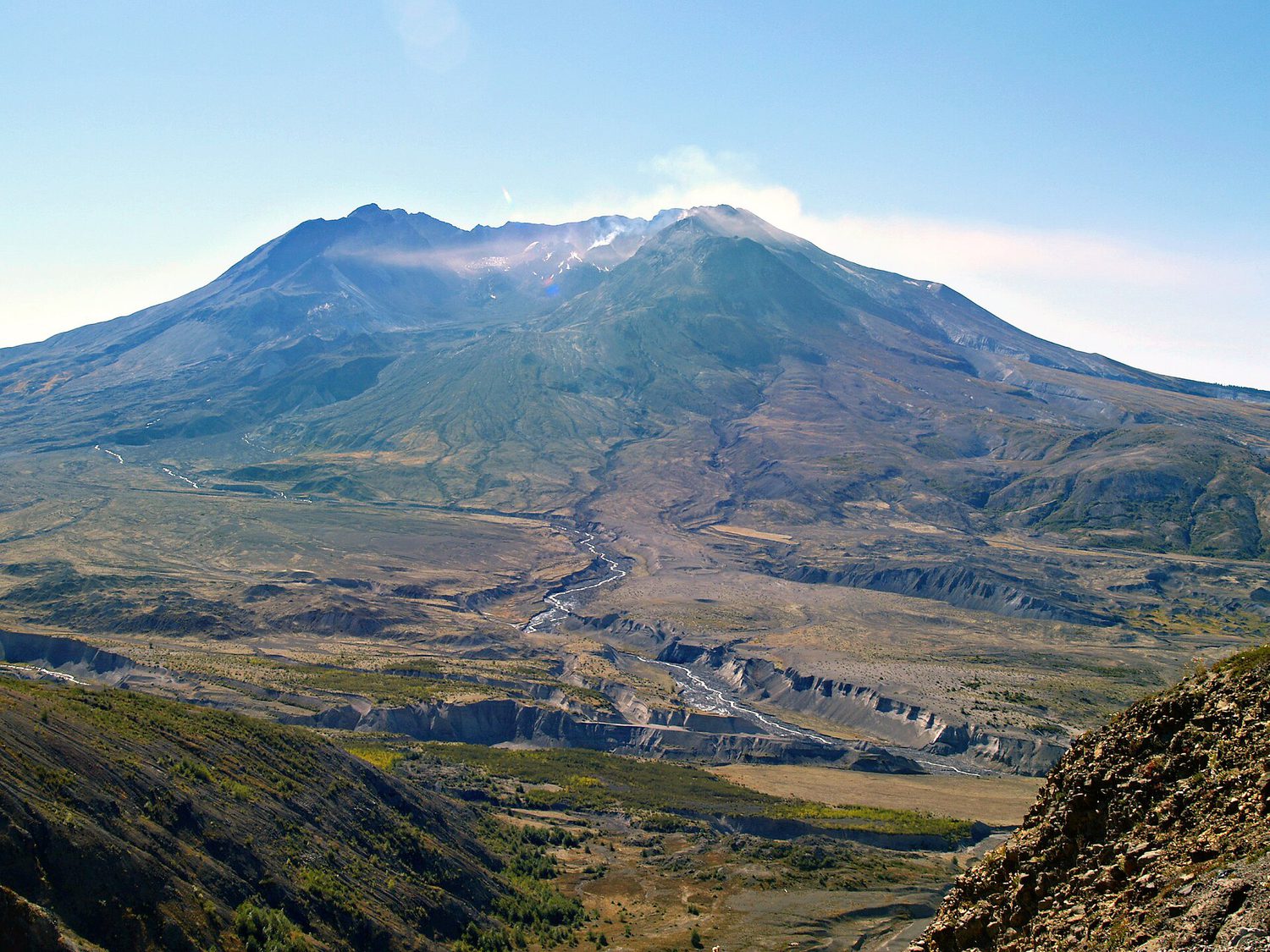 Mount St. Helens Summit ClimbGifford Pinchot NF · WashingtonPermitReservationtough odds
How it works
- An email the morning each window opens, never the day after.
- A 14-day heads-up so you can line up your group and dates.
- Win odds and a ranked backup plan for every trail you pick.
Didn't win? We keep watching. We check recreation.gov every day for The Enchantments, Half Dome and Angels Landing, and email you the moment a sold-out date frees up. Cancellations are the second chance most people never hear about.