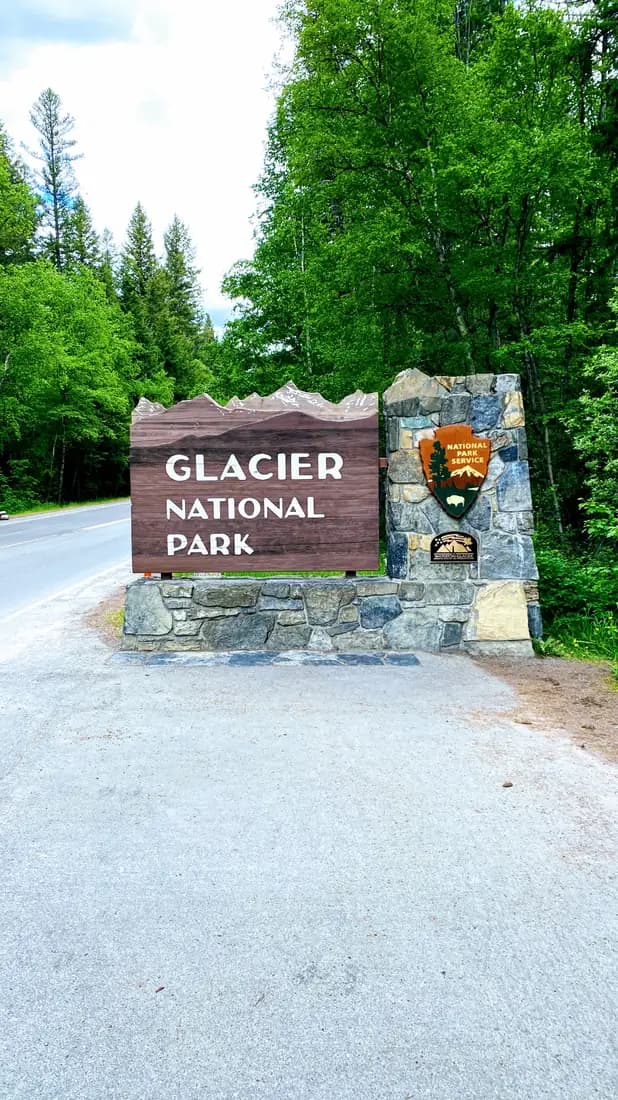
Missoula to Glacier National Park is about 137 miles and takes roughly 2.5 to 3 hoursdriving north on US-93 to Kalispell, then US-2 east to the West Glacier entrance. It's mostly two-lane highway with no mountain passes. With a coffee or lunch stop in Kalispell or Whitefish, plan on closer to 3 to 3.5 hours.
How long is the drive from Missoula to Glacier National Park?
Pure driving time to the West Glacier entrance is roughly 2.5 hours for the ~137 miles, but in practice budget 3 to 3.5 hours. Summer brings construction on US-93, slow-moving RVs through the Flathead Reservation, and a guaranteed urge to stop at Flathead Lake. If you're aiming for the St. Mary (east) entrance instead, that's a longer, separate trip (see below).
The route: US-93 north, then US-2 east
This is the standard and fastest way:
- Missoula to Polson (~65 mi): Head north on US-93. You climb gently out of the Missoula valley, pass through Ravalli, and drop toward the southern tip of Flathead Lake at Polson.
- Polson to Kalispell (~45 mi): Stay on US-93 along the west shore of Flathead Lake. This is the prettiest stretch, with cherry stands open roughly mid-July into August.
- Kalispell to West Glacier (~33 mi): From Kalispell, take US-2 east through Columbia Falls and Hungry Horse to the West Glacier entrance at the foot of Going-to-the-Sun Road.
An alternate from Kalispell runs through Whitefish on US-93, then east to US-2. It's similar in time and lets you stop in Whitefish for food.
Best stops along the way
- Flathead Lakethe largest natural freshwater lake west of the Mississippi. West-shore pullouts and Flathead Lake State Park units (Big Arm, West Shore) are good leg-stretchers. Day-use has a small fee; check current state-park rates.
- Polsonlast reliable full-service grocery this far south if you're stocking a cooler. The Miracle of America Museum is a quirky stop with kids.
- Whitefishthe most pleasant town to eat in on this route, with good breweries and coffee.
- Hungry Horse Dama short detour off US-2; one of the taller dams in the country, with an overlook.
- Columbia Fallslast easy gas, groceries, and gear before West Glacier. Fill up here; fuel near the park entrance is limited and pricier.
Glacier entrance fees and 2026 access rules
Glacier's entrance fee is $35 per private vehicle in summer (lower in winter), valid for 7 days, or use the $80 America the Beautiful interagency annual pass. A Glacier-specific annual pass runs $70.
The big 2026 change: vehicle reservations are NOT required anywhere in the park this yearincluding Going-to-the-Sun Road. The park has dropped the timed-entry system that ran in recent summers. Two new things to know instead: beginning July 1, 2026, weather permitting, Logan Pass parking is capped at three hoursand the park is piloting a ticketed shuttle (including early-morning express routes) to Logan Pass. Rules can shift mid-season, so confirm on the official NPS Glacier site before you go.
What's open by season?
- Summer (late June–early Sept): Going-to-the-Sun Road is typically fully open over Logan Pass. This is the only window to drive the whole alpine route, and also when crowds peak.
- Shoulder (May–June, Sept–Oct): The lower west side (Lake McDonald, Apgar) is open, but the high road may still be closed by snow into late June. Plowing to Logan Pass commonly finishes mid-to-late June; the full opening date varies year to year.
- Winter (Nov–April): The road is open only to near the foot of Lake McDonald. Quiet and snowy, good for snowshoeing, but no alpine driving.
Easy hikes right at West Glacier
If this is a day trip from Missoula, you'll arrive with limited time. These are close to the west entrance:
- Trail of the Cedars~1-mile, nearly flat, accessible boardwalk loop through old-growth cedar. The best easy walk in the park, along Going-to-the-Sun Road past Lake McDonald.
- Avalanche Lakeabout 4.5 to 6 miles round trip (depending on where you start), ~730 ft of gain, branching off Trail of the Cedars. The payoff is a lake ringed by waterfalls. Best choice if you have a half day.
- Apgar Lookout~7.2 miles round trip, ~1,900 ft of gain. Tougher, with a sweeping view over Lake McDonald and the peaks.
- Johns Lake Loop~2 miles, gentle, with views of McDonald Creek and a small waterfall.
Should you go to West Glacier or St. Mary?
From Missoula, West Glacier is the obvious choice: closer, faster, and the classic Lake McDonald / Going-to-the-Sun corridor. The St. Mary (east) entrance is reached either by driving over Going-to-the-Sun in summer or going around via US-2 over Marias Pass year-round (roughly 280–300 miles total, 5+ hours). The east side is drier, windier, and stunning, but it's better as a multi-day trip than a day trip from Missoula.
Practical tips for the drive
- Leave early. A 6 a.m. departure beats the worst summer traffic and gets you to popular trailheads like Avalanche before the lots fill.
- Gas in Columbia Falls or Kalispell. Don't count on West Glacier for fuel.
- Watch for wildlife and slow traffic on the reservation stretch of US-93; speed enforcement is real and so are deer.
- Download maps offline. Cell service is spotty from the lake north and basically gone inside the park.
- Bring layers. Logan Pass can be far colder and windier than the valley floor, even in July.
- If you only have one day, do Trail of the Cedars plus Avalanche Lake and drive Going-to-the-Sun as far as time and the road allow. That's a full, satisfying day.
Bottom line: it's an easy, scenic 2.5- to 3-hour drive that most people stretch to a half-day with stops. For 2026, you don't need a timed-entry reservation, but sort out your entrance pass and check the latest Logan Pass parking and shuttle rules before you leave Missoula.
Missoula to Glacier National Park: Drive, Route & Stops FAQs
About 137 miles to the West Glacier entrance, driving north on US-93 to Kalispell and then east on US-2. It's roughly a 2.5- to 3-hour drive without stops.
Take US-93 north through Polson and along Flathead Lake to Kalispell, then US-2 east through Columbia Falls to West Glacier. It's the fastest route and has no mountain passes.
No. Vehicle reservations are not required anywhere in Glacier National Park in 2026, including Going-to-the-Sun Road. You still need a valid entrance pass. Note new rules: a three-hour Logan Pass parking limit (from July 1) and a ticketed shuttle pilot.
The summer entrance fee is $35 per private vehicle for 7 days (lower in winter), or use the $80 America the Beautiful interagency annual pass. A Glacier-specific annual pass costs $70.
Yes. With a 2.5- to 3-hour drive each way, an early start lets you hike Trail of the Cedars and Avalanche Lake and drive part of Going-to-the-Sun Road, then return the same day. It's a long but doable day.
West Glacier. It's closer and faster from Missoula and accesses Lake McDonald and the start of Going-to-the-Sun Road. St. Mary on the east side is farther and better suited to a multi-day trip.