What Makes McWay Falls So Special
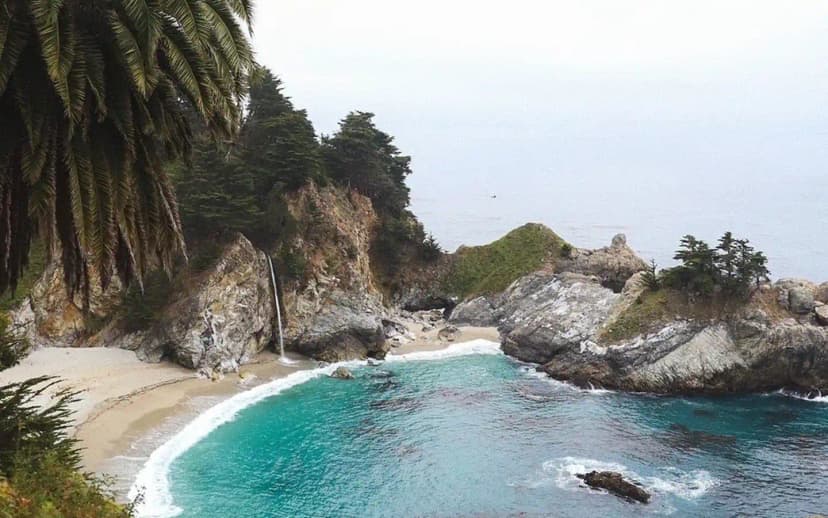
McWay Falls is the photograph that put Big Sur on a million mood boards. It is an 80-foot tidefall, meaning the water drops straight onto a sand-and-rock cove rather than into a river. The turquoise water, the golden pocket beach, and the rugged headlands behind it make this the single most iconic view on the entire Central California Coast. The falls sit inside Julia Pfeiffer Burns State Park, about 37 miles south of Carmel on Highway 1, and you can take in the whole scene in well under an hour.
One important thing to know up front: you cannot actually walk down to the beach. The cove is closed to public access to protect the bluffs and the seals that haul out there, so everyone sees McWay Falls from a clifftop overlook. That is good news for casual visitors, because the walk to the viewpoint is short, mostly flat, and stroller-friendly.
The McWay Falls Overlook Trail
The trail to the overlook is the McWay Waterfall Trail, a paved-then-dirt path that runs about 0.6 miles round trip. From the parking area you walk through a short tunnel under Highway 1, then follow the bluff south past benches and interpretive signs until the cove opens up below you. Allow 15 to 25 minutes for the round trip, longer if you want to linger for photos.
- Distance: roughly 0.6 miles round trip
- Elevation: nearly flat, with a gentle grade
- Difficulty: easy, accessible for most ages
- Time: 20 to 45 minutes including photos
If you want to turn this stop into a real hike, cross back to the inland side of the park and connect to the Ewoldsen Trail, a 4.5-mile loop that climbs through redwoods along McWay Canyon. It is one of the best leg-stretchers in the area and pairs perfectly with the overlook.
Parking and Fees
There is a paid day-use lot inside Julia Pfeiffer Burns State Park with a per-vehicle fee. It fills early on summer weekends and holidays, so arrive before 10 a.m. or after 4 p.m. for the best odds. A handful of free pullouts sit along Highway 1 just north and south of the entrance, but parking in undesignated spots is ticketed and the shoulder is narrow, so the lot is worth the fee. Restrooms are available near the trailhead.
Best Time of Day and Year
McWay Falls faces roughly southwest, so late afternoon and sunset deliver the warmest light on the cliffs and the most glow on the water. Mornings are often socked in with marine fog, especially from June through August, which can hide the falls entirely. If you only have one shot, aim for a clear afternoon.
The waterfall flows year-round because it is fed by McWay Creek, but it runs strongest in late winter and spring after the rains. Spring also brings wildflowers along the bluff. Fall offers the clearest skies and the smallest crowds.
Combining McWay Falls With the Rest of Big Sur
McWay Falls is a quick stop, so build it into a larger coastal day. Heading north you can pair it with the Pfeiffer Falls and Buzzards Roost loops at Pfeiffer Big Sur State Park and the famous purple-tinged sand at Pfeiffer Beach. To the south, Sand Dollar Beach and the Salmon Creek area extend the drive. For a complete plan that strings these together with trail-by-trail logistics, see our Big Sur hiking itinerary, which sequences McWay Falls alongside the best redwood and ridgeline trails over three days.
Tips for a Smooth Visit
- Check Highway 1 conditions before you go, since slides occasionally close sections south of the park.
- Bring layers; the bluff is windy and the fog rolls in fast.
- Stay behind the railings, both for your safety and to protect the closed cove.
- Cell service is unreliable, so download maps in advance.
- Fuel up before you arrive, as gas in Big Sur is scarce and expensive.
Spend an hour at McWay Falls and you will understand why it anchors nearly every Big Sur trip. Pair the overlook with one real hike nearby and you have the perfect introduction to this stretch of coast.
McWay Falls Big Sur: How to See the Waterfall on the Beach FAQs
No. The cove below McWay Falls is closed to public access to protect the bluffs and wildlife. Everyone views the falls from the clifftop overlook on the McWay Waterfall Trail.
The McWay Waterfall Trail to the overlook is about 0.6 miles round trip and nearly flat, taking 20 to 45 minutes including time for photos.
Visit on a clear late afternoon for the warmest light, since morning marine fog often hides the falls in summer. The waterfall flows year-round but is strongest in late winter and spring.