Maroon Bells Fall Colors, Weather and Shuttle Guide
Maroon Bells fall colors usually peak from roughly the third week of September into early October, though the window shifts a week or so each year. Maroon Lake sits near 9,600 feet, so the weather at Maroon Bells is cool and changeable, with freezing mornings, afternoon storms in summer, and snow possible in any month. For much of the year you reach the lake by riding the Aspen shuttle to Maroon Bells from the Aspen Highlands base, or with a limited timed vehicle reservation, so book tickets and parking early. Come for sunrise to catch the still, mirror reflection before the wind builds.
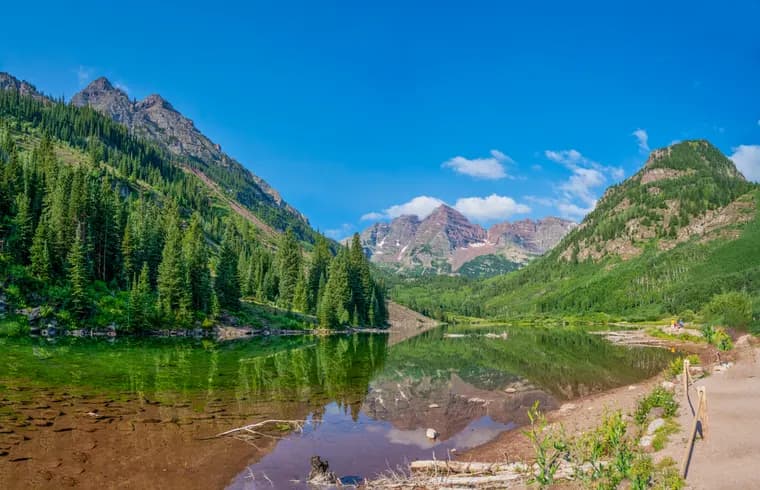
The Maroon Bells are two of the most photographed peaks in North America, and for good reason: two deep red pyramids rising over a glacial lake, framed in fall by whole hillsides of golden aspen. Most visitors come for the day, not the backcountry, so this guide covers what a day visitor actually needs. When the Maroon Bells fall colors peak, the weather at Maroon Bells and what to pack, how the Aspen shuttle to Maroon Bells and timed reservations work, the current Maroon Bells tickets and parking rules, and the best time for a Maroon Bells sunrise. If you want to go deeper and sleep out among the peaks, our full Maroon Bells backpacking itinerary maps the classic route day by day.
When Maroon Bells fall colors peak
Colorado aspens turn on elevation and temperature, not the calendar, so the timing moves a little every year. As a rule, the groves right around Maroon Lake, near 9,600 feet, begin turning first, usually from about the third week of September, and the display holds into the first days of October before a hard freeze or a wind event takes the leaves down. Lower in the valley and around Aspen, color often lingers a bit longer. The peak is short and unforgiving, so treat any single date as a best guess. In the week before your trip, check a Colorado fall color report and be ready to shift a day or two either direction to catch the Maroon Bells fall foliage at its brightest.
Weather at Maroon Bells and what to pack
The single most important thing to understand about the weather at Maroon Bells is the elevation. Maroon Lake sits close to 9,600 feet, and the trailheads climb higher, which makes conditions cool, dry, and fast changing no matter the season. Summer mornings can start near freezing and afternoons seldom pass the 70s Fahrenheit, with genuine thunderstorm risk on July and August afternoons. In fall, sunrise temperatures in the 30s and 40s are normal, warming into the 50s and 60s by midday. Snow is possible in every month of the year up here, and an early season storm can arrive with little warning.
Dress in layers you can add and shed: a warm base layer, an insulating mid layer, a wind and rain shell, hat and gloves for dawn, and sturdy shoes. Bring more water than you think you need, since the thin, dry air dehydrates you quickly, and give yourself time to adjust to the altitude if you have come from sea level. If you visit late in the season, pack traction for icy boardwalks and trails.
The Aspen shuttle to Maroon Bells, tickets and parking
Maroon Creek Road is one of the most protected access roads in Colorado, and for much of the year you cannot simply drive up and park. Instead, the valley is managed with a mandatory shuttle and a timed reservation system operated from the Aspen Highlands base area, a short drive from downtown Aspen. The usual flow is straightforward: you reserve in advance, park at Aspen Highlands, and ride the Aspen shuttle to Maroon Bells, which drops you at the welcome station a short walk from Maroon Lake. When personal vehicles are allowed at all, entry is limited to a paid, timed parking reservation for a specific arrival window.
Here is the honest part: the exact rules, prices, reservation platforms, seasonal dates, and whether private cars are permitted all change from year to year, and Maroon Bells tickets and parking reservations for fall weekends sell out early. Do not rely on same day walk up entry during peak color. Book your shuttle or timed vehicle slot as far ahead as you can, and reconfirm the current system on the official reservation and forest service pages shortly before you travel, because a rule that was true last season may have changed.
Best time for a Maroon Bells sunrise and reflection photos
If you can only be there once, make it dawn. The famous mirror reflection of the peaks in Maroon Lake happens when the water is glass calm, and that stillness almost always breaks up as the day warms and the wind rises. A Maroon Bells sunrise gives you that calm water plus the first warm light striking the red faces of the peaks, the best combination photographers chase. Plan to be lakeside before the sun clears the ridge, which in fall means arriving in the cold and dark well before dawn.
Getting there that early depends on the season's access rules. Shuttle schedules and timed vehicle windows can limit how early you are able to reach the lake, and some seasons offer a special early sunrise reservation for photographers. Check whether an early entry option exists for your dates and grab it the moment reservations open. Bring a headlamp, a tripod for low light, and warm layers, because standing still by the water before sunrise is genuinely cold.
Fall foliage and leaf peeping tips
- Start at the lake, then keep walking. The classic shot is from the Maroon Lake shoreline, but the easy Maroon Lake Scenic Trail loop and the path toward Crater Lake put you among the aspens with far fewer people.
- Go midweek if you can. Fall weekends draw the biggest crowds and the tightest reservation windows. A Tuesday or Wednesday at peak color is calmer.
- Watch the light. Golden aspens glow most in the low, warm light of early morning and late afternoon. Midday sun flattens the color.
- Look beyond the Bells. The drive over Independence Pass and the Castle Creek and Ashcroft area near Aspen offer excellent leaf peeping during the same late September window if the main lot is fully booked.
- Check the forecast the night before. A hard freeze or a windstorm can strip the leaves overnight, so the color report from three days ago may already be out of date.
Want to go beyond the day visit?
The view from Maroon Lake is only the doorway. Behind the peaks lies some of the finest backpacking in Colorado, from the climb over Buckskin Pass to the wildflower basins of the Four Pass Loop. If a day at the lake leaves you wanting the high country, our full Maroon Bells backpacking itinerary lays out the route day by day, with mileage, campsites, permit notes, and the same weather and altitude cautions that apply double once you are miles from the trailhead. Even one night out among these peaks is a trip you will not forget.
Maroon Bells Fall Colors, Weather and Shuttle Guide FAQs
Maroon Bells fall colors usually peak from roughly the third week of September into the first days of October, though the exact window shifts a week or so each year with elevation, temperature, and early storms. The aspens near Maroon Lake, at about 9,600 feet, tend to turn before the groves lower down the valley. Because the peak is short and weather dependent, watch a Colorado fall color tracker in the days before your trip and stay flexible, since a single hard freeze or wind event can strip the leaves quickly.
The weather at Maroon Bells is cool and changeable because Maroon Lake sits near 9,600 feet. Even in summer, mornings can start near freezing and afternoons rarely climb far past the 70s Fahrenheit, with a real chance of afternoon thunderstorms in July and August. In fall, expect crisp 30s and 40s at sunrise warming into the 50s and 60s by midday. Snow is possible in any month of the year at this elevation, so always pack warm layers, a rain shell, and traction if you visit late in the season.
For much of the year the road to Maroon Lake is managed with a mandatory shuttle and a timed reservation system, run from the Aspen Highlands base area a short drive from downtown Aspen. In practice you reserve a shuttle or a personal vehicle timed entry in advance, park at Aspen Highlands, and ride the bus up to the Maroon Bells welcome station. Rules, prices, dates, and reservation windows change from season to season, so book early and confirm the current system before you go, because same day walk up spots are limited or unavailable during peak fall weekends.
Yes, during the managed season you generally need either a shuttle ticket or a timed vehicle reservation, and both sell out fast on fall weekends. Personal vehicle entry, when it is offered, is limited and requires a paid parking reservation for a specific arrival window, while the shuttle is the reliable way in when vehicle slots are gone. Reservation platforms, fees, and exactly when private cars are allowed change year to year, so reserve as far ahead as you can and reconfirm the current Maroon Bells tickets and parking rules close to your visit.
Sunrise is the classic time to see Maroon Bells, because the first light hits the peaks while Maroon Lake is calm enough to hold a mirror reflection and the wind picks up later in the day. Plan to be at the lake before the sun clears the ridgeline, which in fall means arriving in the cold well before dawn. Timed entry and shuttle schedules can affect how early you are able to get up there, so check whether an early sunrise reservation or a permitted pre dawn vehicle window is available and book it as soon as reservations open.
The most famous Maroon Bells fall foliage view is from the shoreline of Maroon Lake, where golden aspens frame the two peaks and their reflection. For more color and fewer crowds, walk the easy Maroon Lake Scenic Trail loop, continue toward Crater Lake for closer groves, or watch the aspens along Maroon Creek Road on the ride up. Beyond the Bells, Independence Pass and the Castle Creek and Ashcroft area near Aspen offer excellent leaf peeping drives during the same late September window.
Yes. The worked day-by-day plan is Maroon Bells Fall Colors: A 3-Day Aspen Itinerary (3 Days), with the permits, the stays and the drive times already sorted. Tell us your dates and we will put it together for you and confirm what is genuinely open on those days. Asking is free: no card, no deposit, and nothing is held until you say yes.