How to Protect Yourself from Wildlife While Hiking (Complete Safety Guide)
Wildlife encounters are one of the most memorable parts of hiking. They are also one of the most mishandled. Hikers get hurt not because wild animals are aggressive by nature, but because the hikers did not know how to read the situation or respond correctly.
The animals responsible for the vast majority of serious hiking injuries, bears, mountain lions, moose, snakes, and ticks, all have well-established response protocols. Following them correctly makes the difference between a story you tell at dinner and a helicopter evacuation.
This guide covers how to prevent wildlife encounters before they happen, how to respond to each major type of encounter, bear spray deployment, food storage, and the one animal that injures more hikers per year than bears and mountain lions combined.
Prevention: The Most Effective Wildlife Safety Strategy
Most dangerous wildlife encounters are preventable. Animals that attack hikers are usually surprised at close range, protecting young, or attracted to food smells. Eliminating those three triggers removes most of your risk before you set foot on trail.
Make Noise While Hiking
Bears, mountain lions, and most other large wildlife will avoid humans if they hear them coming. The danger zone is a surprise encounter at close range, an animal that is startled has no time to make a calm assessment and may react defensively.
- Talk loudly, especially around blind corners, in dense brush, and near running water where animals cannot hear you coming
- "Hey bear" or clapping works, the content does not matter, the sound does
- Bear bells are controversial among wildlife biologists, they produce a constant jingle that animals may habituate to. Your voice is more effective
- Hike in groups, groups make more noise naturally and are significantly less likely to be approached by any large predator
Timing and Trail Selection
Most large predators are crepuscular, most active at dawn and dusk. Mountain lions are primarily nocturnal. Bears are most active in early morning and late evening. If you are in active bear or mountain lion territory, avoid hiking at dawn, dusk, and after dark. Mid-morning to mid-afternoon is the lowest-risk window.
Food Discipline
A bear that associates humans with food is a dangerous bear, and it is usually euthanized when wildlife managers cannot relocate it safely. Every hiker who properly stores food contributes to bear safety, not just their own, but for every hiker who comes after them.
- Never eat in or near your tent
- Pack out all food waste, including fruit peels, shells, and cooking grease
- Use a bear canister or bear bag system, do not rely on hanging food from a branch unless you know the proper PCT hang technique
- Keep food, trash, and scented items (toothpaste, sunscreen, lip balm) in the same bear storage as your food
Bears: Black Bear vs. Grizzly, Different Protocols
The single most important thing to know about bear safety is that the correct response to a black bear attack is the opposite of the correct response to a grizzly attack. Knowing which bear you are dealing with, and responding accordingly, is critical.
Identifying the Bear
Color is not reliable, black bears can be brown, cinnamon, or blonde. Grizzlies can be dark brown or nearly black. Use body shape instead:
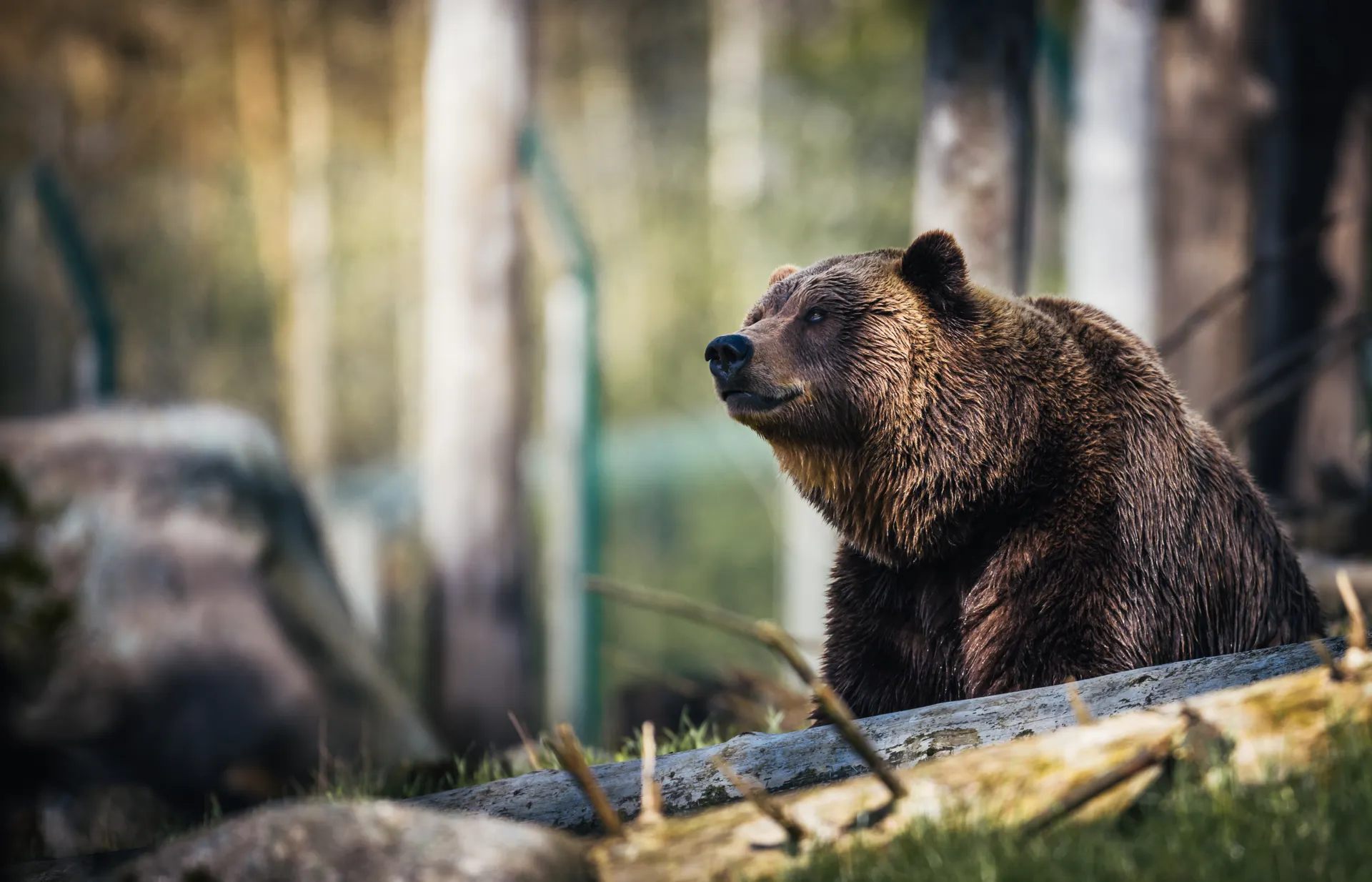
- Grizzly (brown bear): Prominent shoulder hump, dished facial profile (concave between the eyes and nose), short rounded ears, long front claws (often visible even from a distance)
- Black bear: No shoulder hump, straight or Roman nose profile, tall pointed ears, shorter front claws
Geographic context helps: if you are in Yellowstone, Grand Teton, Glacier, or Alaska, assume grizzlies are present. If you are in the Smokies, Shenandoah, or most of the Sierra Nevada, you are dealing with black bears only.
If You Encounter a Bear at Distance
Stay calm. Do not run, running triggers pursuit instinct in predators. Speak in a calm, low voice. Identify yourself as a human, bears have poor eyesight and may stand up to smell the air, not to charge. Make yourself look large by raising your arms or opening your jacket. Back away slowly without turning your back on the bear. Do not make direct eye contact with a grizzly (it can read as a challenge) but do maintain visual awareness of the animal.
If a Black Bear Charges or Attacks
Fight back. Black bears are rarely predatory, a black bear that makes contact is either very frightened or treating you as food. In either case, fighting back convinces a black bear the cost of the interaction is too high. Use whatever you have: poles, a pack, your fists. Aim for the nose and eyes. Several documented cases exist of people fighting off black bears by punching them in the snout.
If a Grizzly Charges or Attacks
Distinguish defensive from predatory. Most grizzly charges are defensive, a surprise encounter, a mother with cubs, a bear protecting a food source. A defensive grizzly attack stops when the threat (you) is neutralized.
For a defensive grizzly attack: play dead. Drop to the ground face-down with your hands interlaced behind your neck to protect the base of your skull. Spread your legs to make it harder for the bear to flip you. Stay still. A bear that is protecting its space will typically stop attacking once you are no longer a perceived threat. Stay down until the bear has left the area, many attacks resume if the person gets up too soon.
For a predatory grizzly attack, one that continues after you have played dead, or one that begins with a bear stalking you without provocation, fight back aggressively. A bear that is treating you as food will not stop because you are passive.
Bear Spray: How to Use It Correctly
Bear spray is more effective than firearms at stopping a bear charge, according to studies by bear biologist Dr. Stephen Herrero. A 2008 analysis of bear spray incidents found it stopped charging bears in 92% of encounters. It works by creating a dense cloud of capsaicin-based irritant that the bear must walk through.
How to Carry and Deploy Bear Spray
- Carry it on your body, a hip holster on your waist belt, not buried in your pack. You may have 2–3 seconds to deploy it.
- Safety clip: Know how to remove it with one hand. Practice before your trip. Many people have fumbled the safety clip during an actual charge.
- Effective range is 15–30 feet. Do not deploy until the bear is within 30 feet and closing. Spraying too early wastes the canister before the bear is in the cloud.
- Aim slightly downward, spray toward the ground between you and the bear so the cloud expands upward into its path.
- Account for wind, never spray directly into the wind. If wind is at your back, aim toward the ground slightly to your side to let the cloud drift forward.
- Spray in 1–2 second bursts and move sideways while spraying to avoid the cloud yourself.
- Bear spray has a shelf life of approximately 3 years. Check the expiration date before each season.
Mountain Lions (Cougars)
Mountain lion attacks are rare, there have been fewer than 30 fatal mountain lion attacks on humans in North America in the past 100 years. But the western US has significant mountain lion populations, and the response protocol for a mountain lion encounter is different from bears.
Prevention
- Hike in groups and keep children close, children and solo hikers are statistically much more likely to be targeted
- Avoid hiking at dawn, dusk, and night, mountain lions are primarily nocturnal and crepuscular
- Make noise on blind trail corners
- Keep dogs on leash in mountain lion territory, a dog running ahead can trigger a chase response
If You Encounter a Mountain Lion
Do not run, running triggers the predator's chase instinct and a mountain lion can run 50 mph. Do not crouch or bend over, this makes you look like prey. Instead: make yourself as large as possible (raise your arms, open your jacket). Maintain eye contact. Speak loudly and firmly. Pick up small children immediately without bending over. Back away slowly while facing the animal.
If a mountain lion attacks, fight back with everything you have. Mountain lions are ambush predators and expect prey that does not resist. Aim for the eyes and nose. Use trekking poles, rocks, your pack frame, anything available. Documented survivors almost universally report that fighting back stopped the attack.
Moose
Moose injure more people in North America each year than bears. They are large (adult males weigh 1,200–1,600 lbs), surprisingly fast (can run 35 mph), and less predictable than bears because they have not evolved to flee from predators the way deer have. A moose that charges is a serious physical threat.
Warning Signs
A moose that lays its ears back, raises the hackles along its neck and shoulders, or lowers its head and walks stiffly toward you is preparing to charge. These are clear warnings, act before the charge begins.
Response
Run. Unlike bears and mountain lions, running from a moose is appropriate, moose charges are usually bluff charges meant to drive you away, not predatory attacks. Get behind a large tree, boulder, or solid structure. If knocked down, curl into a ball and protect your head. A moose will kick and stomp, not bite. Once you are down and no longer perceived as a threat, it will usually stop and leave.
Give moose especially wide berth in May–June (cows with calves) and September–October (rut season, when bulls are aggressive).
Snakes
The United States has about 7,000 venomous snakebites per year, resulting in fewer than 10 deaths annually, nearly all of which involve improper handling or delayed treatment. A hiking snake encounter that follows basic protocol almost never results in a bite.
Prevention
- Watch where you step and where you put your hands, most bites happen when hikers step over a log or rock without looking, or reach into a crevice without checking
- Wear gaiters in brushy terrain where ground visibility is limited
- Stay on trail and use a hiking pole to probe brush ahead of you in dense vegetation
- Most rattlesnakes rattle as a warning, treat any rattling sound as a stop command
If You Encounter a Snake
Stop moving. Identify where the snake is. Give it a wide berth, at least 6 feet. Most snakes will move away given space and time. Do not try to move, kill, or interact with a venomous snake. Even a recently killed rattlesnake can envenomate through a reflexive bite.
If Bitten
Get to emergency medical care as fast as possible, antivenom is the only effective treatment and must be administered by a hospital. Do not apply a tourniquet, do not cut and suck the wound, do not apply ice. Keep the bitten limb at or below heart level. Remove constricting items (rings, watches) near the bite site as swelling will occur. Note the snake's appearance if you can do so safely, this helps the hospital prepare the correct antivenom.
Ticks: The Underestimated Threat
Ticks cause more illness in US hikers than all other wildlife combined. Lyme disease, Rocky Mountain spotted fever, anaplasmosis, ehrlichiosis, and several other tick-borne diseases are preventable with consistent tick checks and proper removal.
Prevention
- Apply permethrin to your clothing before trips, it kills ticks on contact and lasts through multiple washes. Do not apply permethrin directly to skin.
- Apply DEET-based repellent (20–30%) to exposed skin
- Tuck pants into socks in tick-heavy terrain, they cannot bite through fabric and need to reach skin
- Stay on trail where possible, ticks quest from the tips of tall grass and brush, not from trees
Tick Checks and Removal
Do a full-body tick check within 2 hours of returning from a hike. Check armpits, groin, behind the knees, inside the belly button, behind the ears, and along the hairline, ticks prefer warm, hidden spots. Showering within 2 hours of hiking significantly reduces tick attachment risk.
For removal: use fine-tipped tweezers and grip the tick as close to the skin surface as possible. Pull upward with steady, even pressure, do not twist or jerk. Do not apply heat, petroleum jelly, or nail polish to a tick before removal. After removal, clean the site with rubbing alcohol. If a rash (particularly a bull's-eye pattern) develops within 3–30 days of a tick bite, see a doctor immediately for Lyme disease evaluation.
Coyotes
Coyotes are common across most of the US and Canada, including suburban and urban areas. Serious coyote attacks on adults are extremely rare, children and small dogs are at more risk. If a coyote approaches you, haze it aggressively: yell, wave your arms, throw sticks or rocks near (not at) it. A coyote that does not respond to hazing and continues approaching may be habituated to humans or sick, report it to park staff.
Bear Canisters and Food Storage
Proper food storage protects both you and the wildlife in the area. A bear that becomes food-conditioned must eventually be euthanized. The mechanics of each storage method:
- Hard-sided bear canister: Required in many national park wilderness areas. Bears cannot crush or open them. They sit 200 feet from camp. Add 50–100 yards if in grizzly country.
- Bear bag (PCT hang): Uses a branch at least 10 feet off the ground and 4 feet horizontally from the trunk. Requires a suitable tree, often not available in alpine terrain. More difficult to execute correctly than a canister.
- Ursack: A soft-sided, cut-resistant bag that can be tied to a tree. Bears may maul the contents but cannot carry the bag away. Approved in some wilderness areas where canisters are required, but check current regulations for your specific area.
For more on preparing for challenging terrain, read our guide on how to train for high altitude hiking, which covers preparation strategies for alpine environments where wildlife encounters are most common.
How to Protect Yourself from Wildlife While Hiking FAQs
Stay calm and do not run. Speak in a low, calm voice to identify yourself as human. Make yourself look large. Back away slowly while facing the bear. Deploy bear spray if the bear charges and closes to within 30 feet. For a black bear attack, fight back. For a defensive grizzly attack, play dead face-down with hands protecting the back of your neck. For a predatory grizzly that continues attacking despite passive resistance, fight back.
For a black bear attack, always fight back, black bears are rarely predatory and aggression discourages them. For a grizzly bear defensive attack, play dead: lie face-down, hands clasped behind your neck, legs spread. Stay still until the bear leaves the area. For a predatory grizzly attack (rare) that continues after you play dead, fight back targeting the eyes and nose. Geographic context helps identify the bear: grizzlies are present in Yellowstone, Glacier, and most of Alaska.
The NPS standard is 100 yards (the length of a football field) from bears and wolves, and 25 yards from all other wildlife including bison, elk, deer, and moose. If an animal changes its behavior in response to you, stops grazing, faces you, moves toward you, you are already too close. Back away until the animal resumes normal behavior.
Yes, research shows bear spray stops charging bears in approximately 92% of encounters, which is more effective than firearms in real-world bear attack situations. It creates a capsaicin cloud the bear must walk through. Carry it in a hip holster for instant access, not in your pack. Deploy at 15–30 feet when the bear is actively charging. Check the expiration date before each season.
Hike in groups, keep children within arm's reach, make noise on blind corners, and avoid hiking at dawn, dusk, and night when mountain lions are most active. If you encounter one, do not run, make yourself large, maintain eye contact, back away slowly. If attacked, fight back aggressively: mountain lions are ambush predators that expect passive prey, and fighting back typically stops the attack.
Apply permethrin to your clothing before your trip (it kills ticks on contact and lasts through multiple washes). Apply 20–30% DEET repellent to exposed skin. Tuck pants into socks in tick-dense areas. Do a full-body tick check within 2 hours of returning, focus on armpits, groin, behind the knees, and along the hairline. Showering within 2 hours of a hike significantly reduces tick attachment. Remove attached ticks with fine-tipped tweezers, gripping close to the skin and pulling straight up.