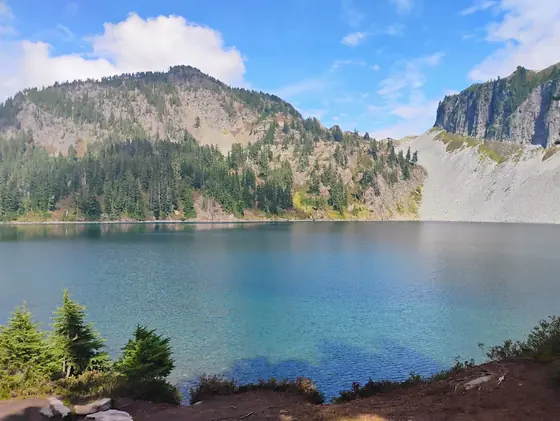
The Delta Lake hike has become one of the most sought-after day hikes in Grand Teton National Park, and for good reason. This glacier-fed lake sits in a hanging valley directly beneath the Grand Teton, glowing an electric turquoise from rock flour suspended in the meltwater. What makes it special is also what keeps the crowds thinner than nearby Jenny Lake: Delta Lake is not on any official park map, the turnoff is unmarked, and the final stretch involves a real boulder scramble.
Trail Stats and Where to Start
The hike begins at the Lupine Meadows Trailhead, a gravel parking area south of Jenny Lake reached by a short dirt road off Teton Park Road. Plan on roughly 8 miles round trip with about 2,300 feet of elevation gain. Most hikers finish in 5 to 7 hours depending on how long they linger at the top and how slow the boulder field goes.
- Distance: about 8 miles round trip
- Elevation gain: roughly 2,300 feet
- Difficulty: strenuous, with off-trail scrambling near the end
- Trailhead: Lupine Meadows, off Teton Park Road
The Lupine Meadows lot fills early. In July and August it is common to find it full by 6:30 or 7 a.m., so arriving at sunrise is the safest plan. There are vault toilets at the trailhead but no water, so fill up in Jackson or at your campground first.
Finding the Unmarked Turnoff
For the first 3 miles you follow the well-maintained Amphitheater Lake trail, climbing a series of switchbacks with widening views over Jackson Hole. After the third major switchback junction, watch for a worn climber's path that breaks off to the right. There is no sign. This is the Delta Lake spur, and it is steeper, rootier, and rougher than the main trail. If you reach Surprise and Amphitheater Lakes, you have gone too far.
The Boulder Field
The final push is the part people remember. The trail dissolves into a boulder field of car-sized granite blocks that you scramble up using your hands. Follow the faint use-paths and cairns, take your time, and watch your footing on loose rock. It is not technical climbing, but it is slow and demands attention, especially on the descent when legs are tired. Trekking poles help on the lower trail but you will want them stowed for the boulders.
What You See at the Top
Cresting the boulders, the lake appears suddenly, an impossibly blue pool ringed by talus with the sheer east face of the Grand Teton rising straight overhead. On calm mornings the peak reflects in the water. This is one of the most dramatic alpine scenes in the entire Teton Range, and it pairs naturally with the classic valley hikes you can string together on a longer trip. If you are planning multiple days in the park, see our Grand Teton hiking weekend itinerary for a route that combines Delta Lake with Cascade Canyon and the Jenny Lake shuttle.
Best Time to Hike Delta Lake
The realistic window is mid-July through late September. Earlier than that, snow lingers on the upper switchbacks and the boulder field can be icy and dangerous. Wildflowers peak in late July, and September brings cooler temperatures, fewer bugs, and the first golden aspens lower in the valley. Snow can return as early as October.
Safety and Etiquette
This is bear country. Carry bear spray, know how to use it, and make noise on the brushy spur trail. Because Delta Lake is off the official trail system, there are no rangers patrolling and no signage to guide you back, so start with daylight to spare. Pack out everything, stay on existing use-paths to protect the fragile alpine terrain, and give marmots and pikas their space rather than feeding them.
Bring layers even in summer. The lake sits near 9,000 feet and the wind off the snowfields can be sharp. With an early start, decent fitness, and respect for the boulder field, Delta Lake rewards you with arguably the best payoff-per-mile hike in Grand Teton.
Delta Lake Hike Grand Teton FAQs
It is strenuous. The 8-mile round trip climbs about 2,300 feet, and the last stretch is an off-trail boulder field that requires scrambling with your hands. Hikers in reasonable shape can do it, but it is not a casual stroll.
No. The first 3 miles follow the marked Amphitheater Lake trail, but the Delta Lake spur breaks off as an unmarked climber's path after the third switchback. Watch for the worn path on the right, and the boulder field at the top has cairns rather than signs.
Mid-July through late September is the safe window. Before mid-July, snow can make the upper switchbacks and boulder field icy and dangerous. Late July offers peak wildflowers and September brings cooler, less crowded conditions.