Why October Is a Quietly Brilliant Time to Visit Banff
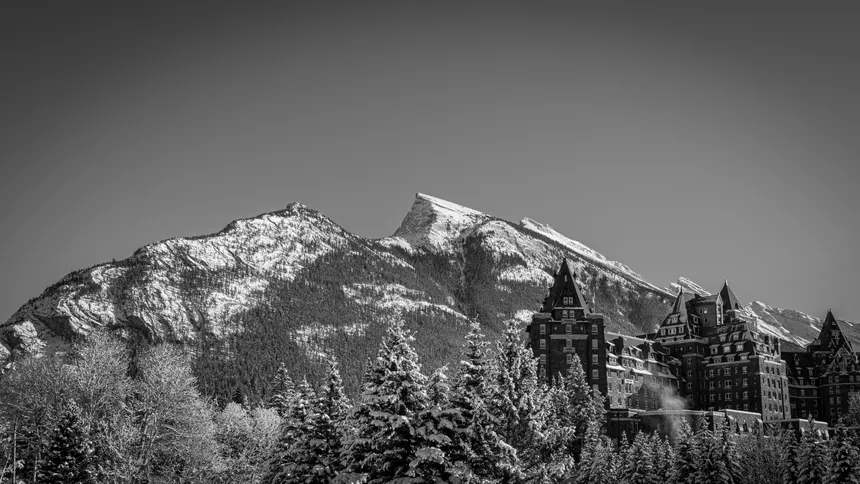
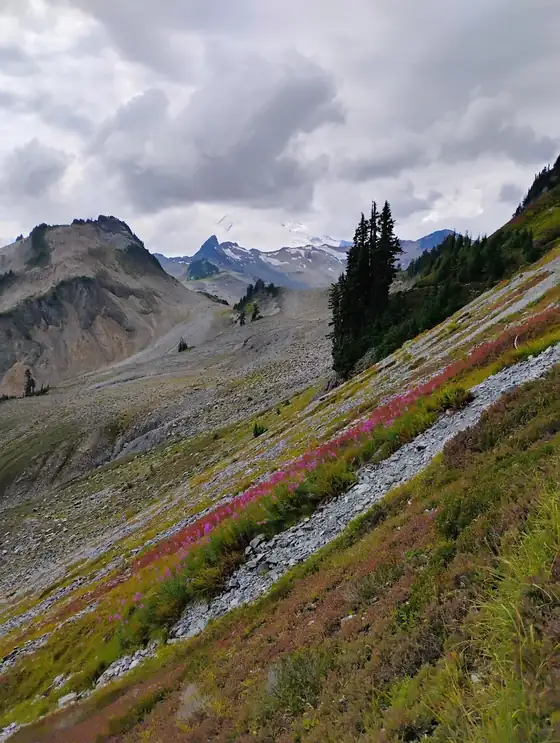
October is one of the most rewarding and least understood months in Banff National Park. The summer crowds along Bow Valley Parkway have thinned, hotel rates in the town of Banff and Lake Louise drop noticeably, and the alpine larch trees turn a glowing gold for a brief window. The trade-off is real weather variability: you can get a 15C bluebird afternoon in early October and a snowstorm closing Moraine Lake Road days later. If you want the Rockies at their most photogenic without August lineups, this is the month to plan around. For a full route that links Banff to Jasper, see our 5-day Icefields Parkway itinerary.
Temperature in Banff in October
October is the month Banff changes season, so a single monthly average hides what you actually need to plan around. The first week still behaves like late summer. The last week does not. Environment Canada's climate normals put the whole month at a 10C (50F) daily high and a -1C (30F) overnight low, but the trend inside the month matters more than that average.
| When | Daily high | Overnight low | Daylight |
|---|---|---|---|
| October 1 | 13C / 56F | 1C / 34F | 11 hr 36 min |
| October 31 | 5C / 41F | -4C / 25F | 9 hr 44 min |
| Month average | 10C / 50F | -1C / 30F | Loses 1 hr 52 min |
Two numbers do the real planning work. Highs fall about 8C (15F) across the month, and you lose almost two hours of daylight, which is what shortens a comfortable hiking day faster than the cold does. The chance of a snow-only day climbs from roughly 1 percent on October 1 to about 5 percent by October 31, and the first sticking snow at trailhead elevation usually arrives well before it reaches the townsite.
Banff town sits at 1,383 m. Every trailhead you care about sits higher: Moraine Lake is near 1,885 m and Sunshine Meadows higher still, so subtract several degrees from the table above and assume snow on the ground at the top of any larch hike from mid-month.
Monthly averages from Environment Canada's Canadian Climate Normals (1981-2010). Start and end of month figures and daylight from Weather Spark.
Larch Season: The Main Event
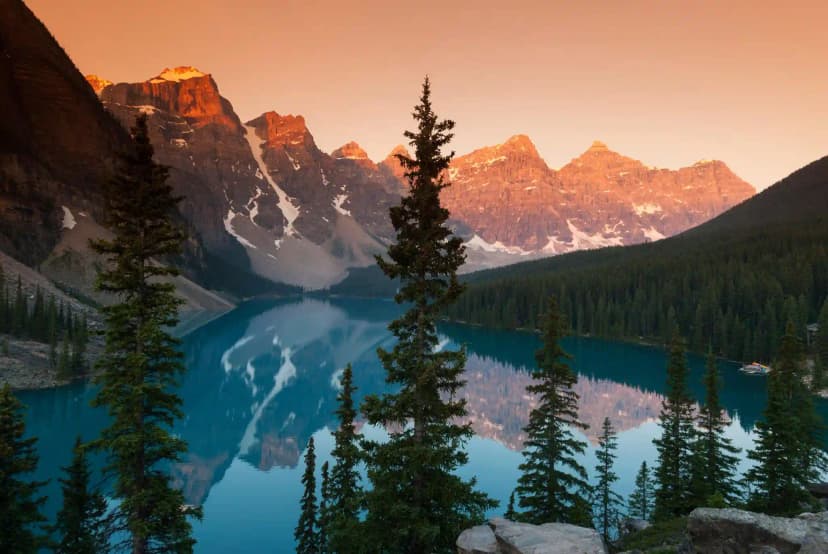
Larches are deciduous conifers that grow at high elevation, and for roughly two weeks they blaze yellow-gold before dropping their needles. In Banff, peak larch color typically falls between September 18 and the first week of October, varying year to year with temperature. The most famous larch hikes are in the Lake Louise and Moraine Lake area.
- Larch Valley and Sentinel Pass from Moraine Lake is the classic, a 4.3 km climb to a basin ringed by larches and the Ten Peaks.
- Saddleback Pass and Fairview above Lake Louise offers gold larches with fewer people.
- Healy Pass near Sunshine Village is a longer day but rewards you with one of the densest larch displays in the park.
Because of grizzly activity, Parks Canada often requires hiking in tight groups of four or more in the Moraine Lake area during fall. Check the trail report at the Lake Louise Visitor Centre before heading out.
What to Pack for Banff in October
Layers, and one more than you think. A warm base layer, an insulating mid-layer, and a genuinely waterproof shell cover the range in the table above. Add gloves and a hat, because the overnight low is below freezing for most of the month. Microspikes are the item people regret leaving at home: the first snow at trailhead elevation turns a packed larch trail into an ice slide, and they weigh nothing. Days shorten fast, so carry a headlamp even for a hike you expect to finish by four.
Moraine Lake, Lake Louise, and Road Closures
This is the single biggest planning factor for an October trip, and it is the thing most guides get vague about.
Moraine Lake Road is closed to personal vehicles year round. Not seasonally, not at peak times: always. The only exceptions are vehicles displaying a government-issued accessible parking placard, registered guests of Moraine Lake Lodge, staff and contractors, and emergency services. Everyone else arrives by Parks Canada shuttle, Roam transit, or a licensed commercial operator.
The 2026 shuttle season runs June 1 to October 12. After that date there is no public way to reach Moraine Lake until the following summer. If your trip starts on October 13, Moraine Lake and the Larch Valley trailhead are simply not on your itinerary, and no amount of early rising changes that. Plan the rest of the park instead.
Reservations for the 2026 season opened on April 15, with 40 percent of seats released that day and the remaining 60 percent released at 8 am MDT two days before each departure. That two-day window is the realistic option for most October trips.
Lake Louise is different and much easier: it stays reachable all month by paid parking and by shuttle, and the lakeshore walk stays open long after the larch hikes are snowed in.
The Icefields Parkway (Highway 93 North) stays open year round but can require winter tires after an early-October snow event, and the Columbia Icefield attractions wind down for the season. Check the Alberta 511 road report the morning you drive it, not the night before.
What to Do in Banff in October
The honest framing for October is that you plan two trips and pick one on the morning of. Here is what holds up in either weather.
If the weather is good
- Hike a larch trail in the first half of the month, ideally Larch Valley, Saddleback Pass, or Healy Pass.
- Drive the Bow Valley Parkway at dawn for elk and the best low light of the year, with almost none of the August traffic.
- Walk the Lake Louise shoreline and continue toward the Plain of Six Glaciers as far as conditions allow.
- Ride the Banff Gondola up Sulphur Mountain on a clear afternoon, when the valley haze of summer is gone.
If it snows, and it will
- Banff Upper Hot Springs in falling snow is the single best bad-weather hour in the park.
- Vermilion Lakes and Two Jack Lake for still-water reflections, both minutes from town and flat enough to be pleasant in poor conditions.
- The Whyte Museum and the town itself, which in October you can eat and drink in without a reservation battle.
- Johnston Canyon, where the catwalks stay walkable and the lower falls start to ice up late in the month.
Shoulder season also shows up in the prices. Hotel rates in the town of Banff and in Lake Louise drop noticeably once the summer season closes, which is the quiet argument for October that nobody puts in a headline.
Wildlife in Fall
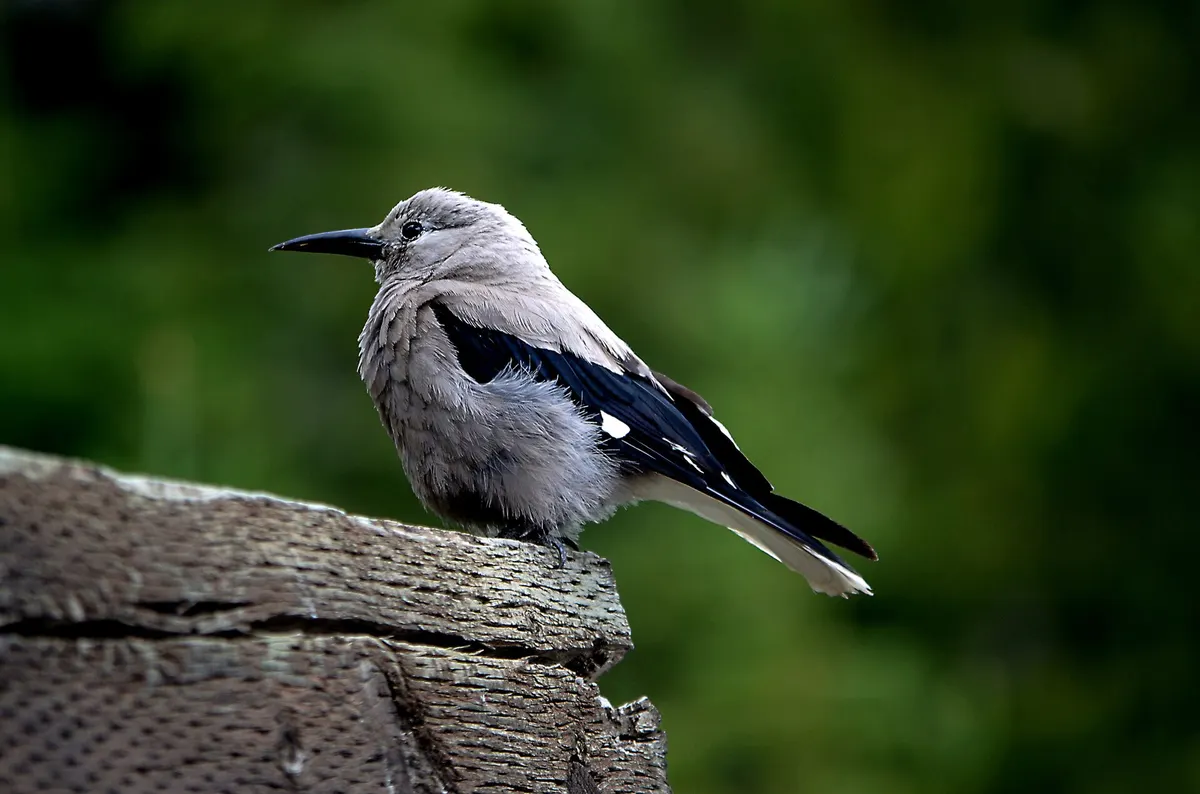
October is rutting season for elk, and bull elk become aggressive and unpredictable around the townsite and golf course. Keep at least 30 metres away and never get between a bull and his herd. It is also a critical feeding period for grizzly bears before hibernation, so carry bear spray, make noise on the trail, and respect any area closures. Fall is genuinely one of the best months for wildlife viewing in the valley if you keep a respectful distance.
Banff in October: Golden Larches, First Snow, Fewer People FAQs
Banff averages a 10C (50F) daily high and a -1C (30F) overnight low across October, but the month moves a long way. October 1 averages a 13C (56F) high and 1C (34F) low; by October 31 that is 5C (41F) and -4C (25F). Trailheads sit several hundred metres higher than the townsite and run colder, with snow likely on the ground from mid-month.
Peak larch colour usually runs from around September 18 through the first week of October, shifting a few days each year with temperature. The window is short, often about two weeks, so book flexible dates. If larches are the reason for your trip, plan the first ten days of October rather than the last ten.
No. Moraine Lake Road is closed to personal vehicles year round, not just in winter. Access is by Parks Canada shuttle, Roam transit, or a licensed commercial operator, and for 2026 that shuttle season ends on October 12. After that date there is no public way to reach Moraine Lake until the following summer.
Usually, yes, at least once. The chance of a snow-only day rises from about 1 percent on October 1 to roughly 5 percent by October 31, and snow reaches trailhead elevation well before it settles in the townsite. Expect a snow-covered larch trail from mid-month and carry microspikes.
The Banff Upper Hot Springs in falling snow, the Banff Gondola on a clear break, the flat lakeshore walks at Vermilion Lakes and Two Jack Lake, Johnston Canyon on its catwalks, and the Whyte Museum in town. October is also the one month you can eat in Banff without a reservation battle.
It is the best month for larches, elk rut and empty parkways, and the worst for certainty. Summer crowds are gone and hotel rates in Banff and Lake Louise drop noticeably, but you trade that for a real chance of snow, shorter days and the Moraine Lake road closing partway through. Plan two versions of each day and pick one at breakfast.