That window usually runs from some point in April through late June, and it ends the day the road fully opens to vehicles. The exact dates move every year with the snowpack, so the plowing progress map on the park's website is the only source worth trusting.
Why this ride is worth planning a trip around
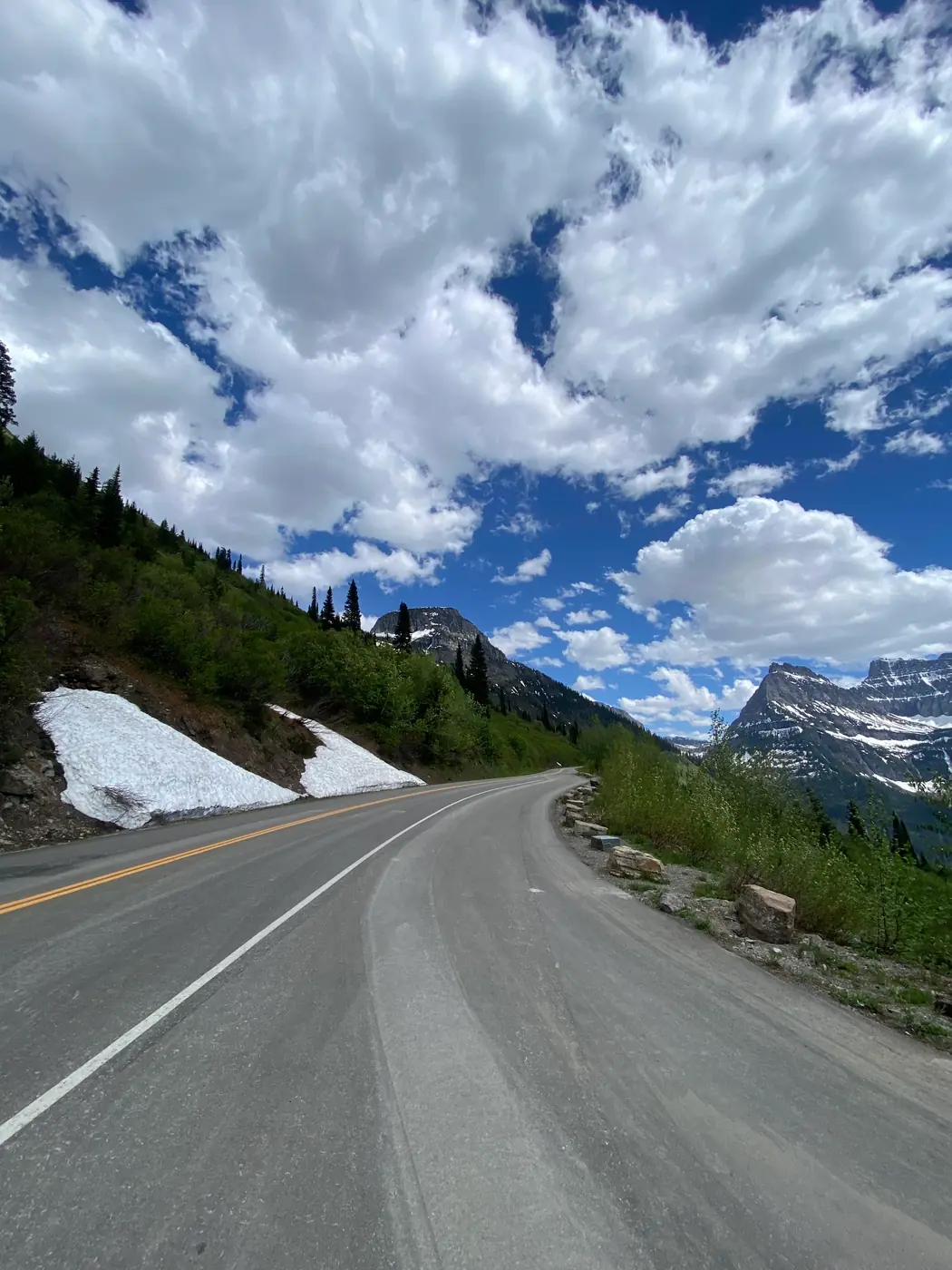
The Going-to-the-Sun Road is a 50-mile engineering set piece that climbs from Lake McDonald at 3,150 feet to Logan Pass at 6,646 feet, cut into cliffs the whole way. In July it carries thousands of vehicles a day, so many that Logan Pass needs a three-hour parking limit to cope.
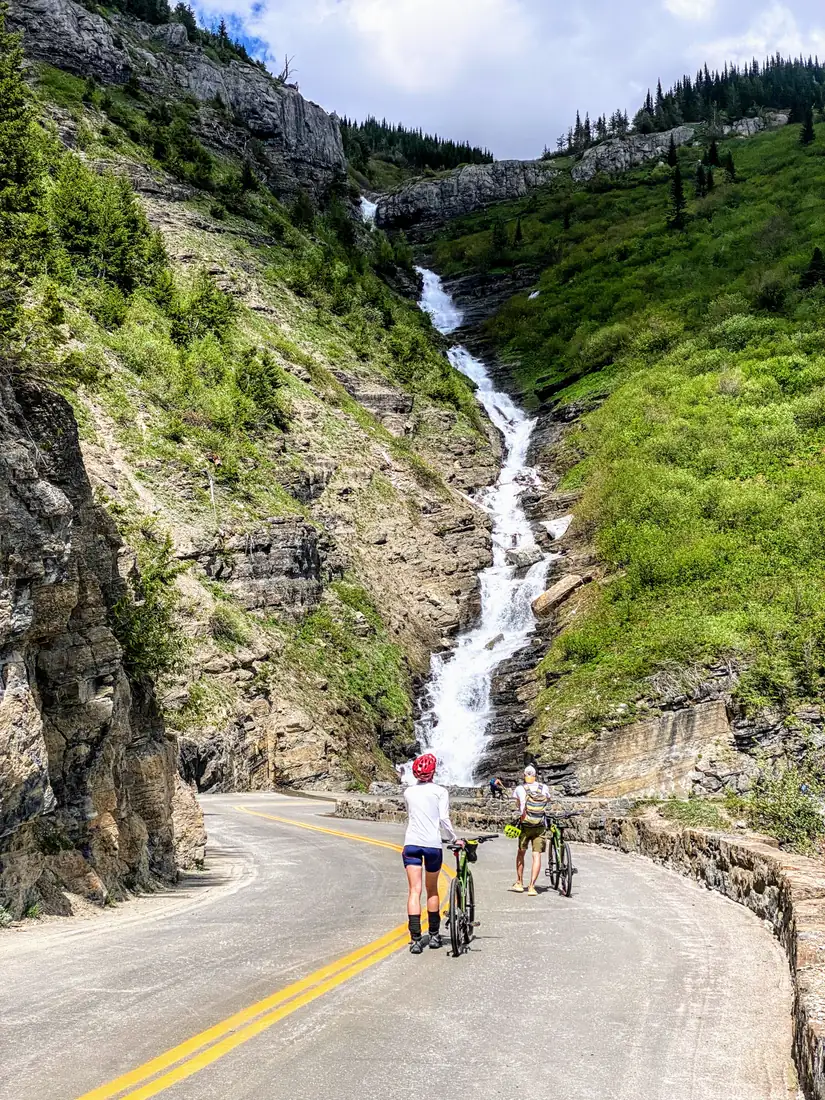
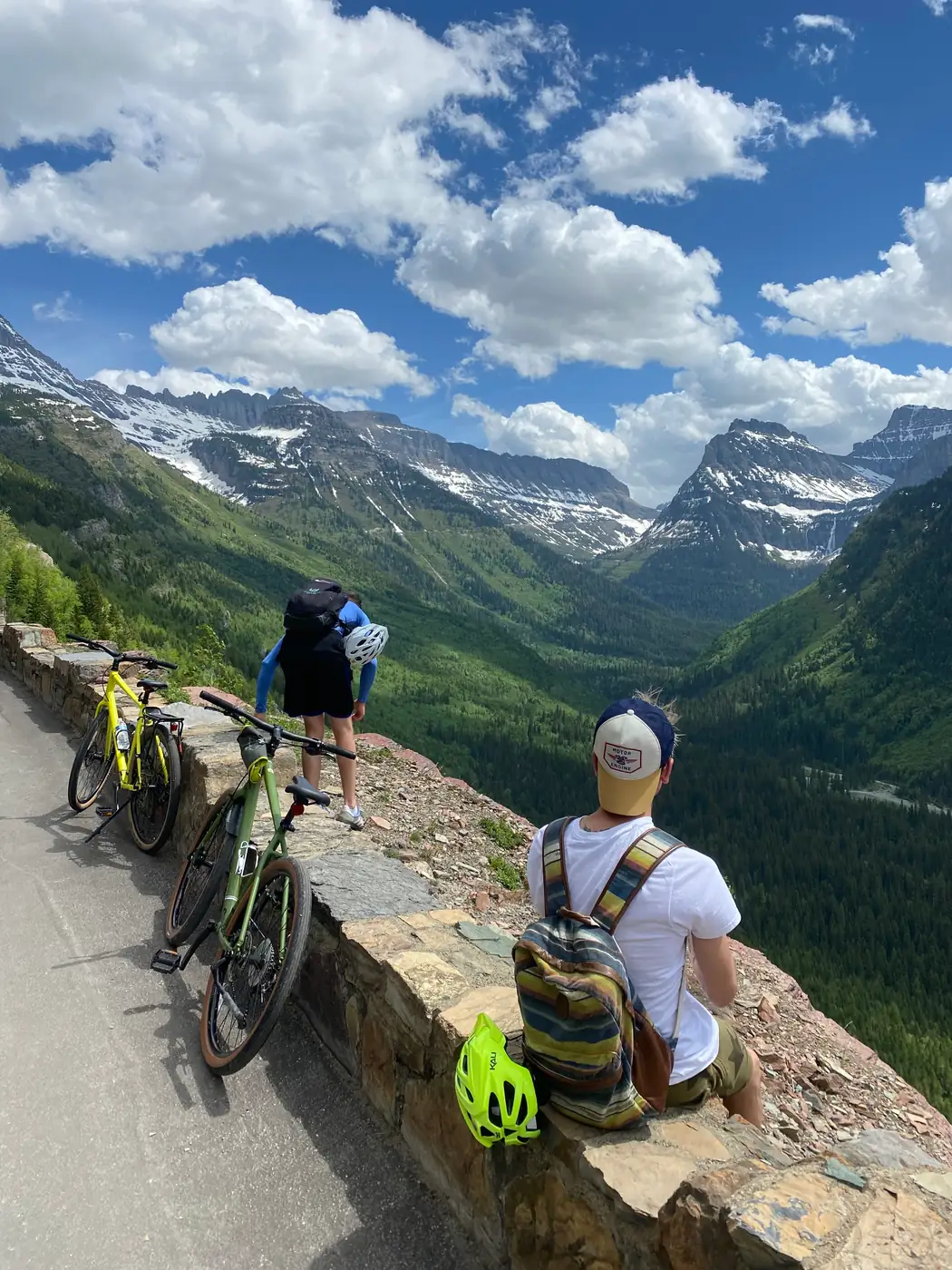
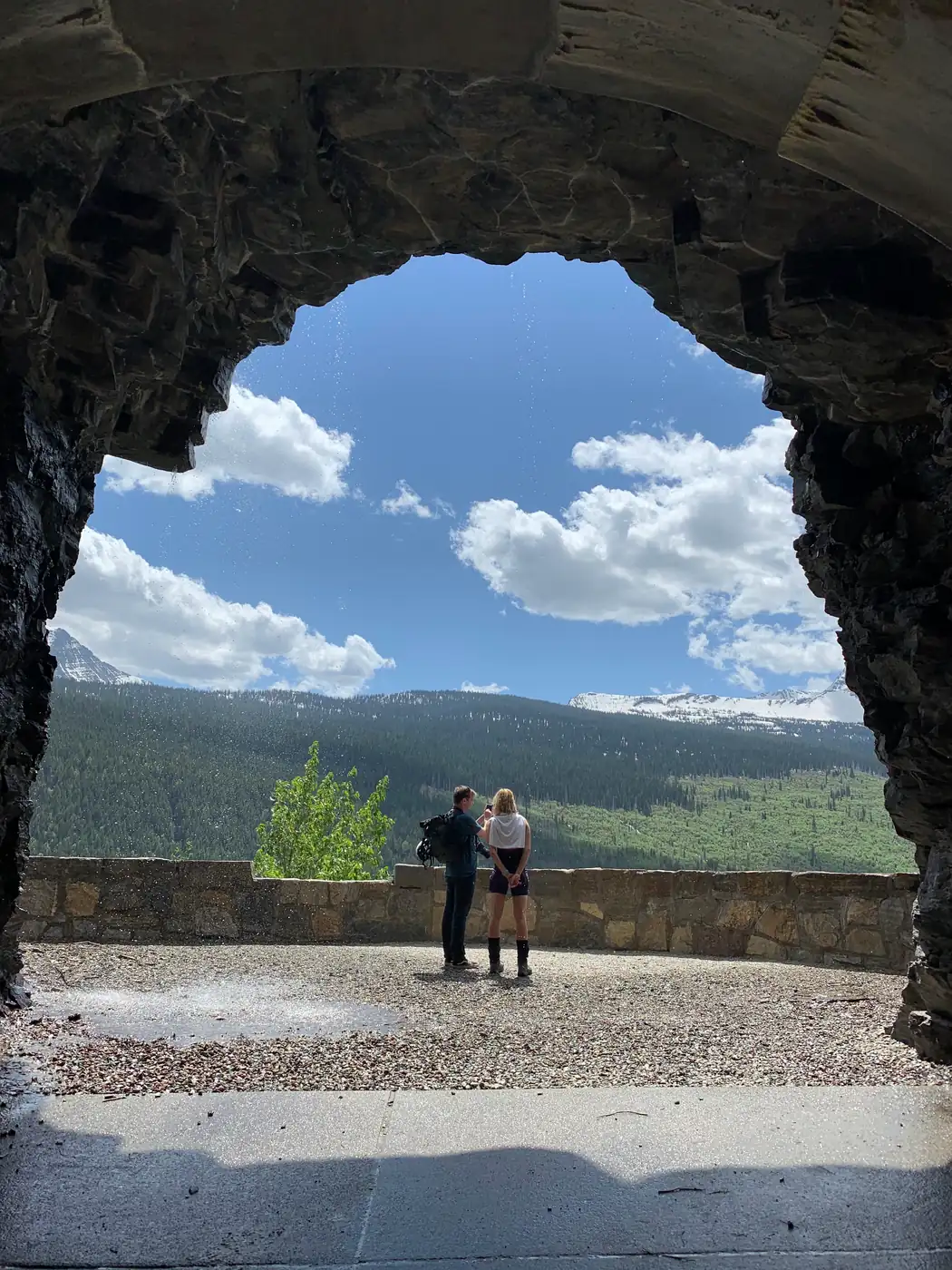
In May it carries you, a handful of other cyclists, and the plow crews. You get the Weeping Wall pouring straight onto the asphalt, the Loop switchback, Big Bend, and the tunnels, without a single car passing you on a road with no shoulder. There is nothing else quite like it in the national park system.
How far you can actually ride
It depends entirely on where the plows have reached, which is why nobody can tell you in advance. The usual pattern from the west side:
| Ride | Distance (one way) | Climbing | What it is |
|---|---|---|---|
| Apgar to Avalanche Creek | ~10 mi | ~400 ft | Flat, forested, along Lake McDonald. Opens first, easiest, fine with kids on the right bike |
| Avalanche to the Loop | ~6 mi | ~900 ft | Where the climbing starts and the views open up |
| The Loop to Logan Pass | ~9 mi | ~2,200 ft | The famous section. Weeping Wall, Big Bend, the cliffs. Sustained 6 percent |
| Avalanche to Logan Pass | ~16 mi | ~3,100 ft | The full spring classic, about 32 miles round trip. Four to six hours for a fit rider |
The descent is fast, cold and long. Whatever you wore going up will not be enough coming down, because you generate no heat and you are dropping 3,000 feet into shade.
The rules people get wrong
- Spring riding stops at the plow line, and the plow line is not a suggestion. Crews are working with heavy equipment on a one-lane cut through snow. Where the barricade is, that is the end of your ride.
- Once cars are back, bikes get restricted at peak hours. From mid-June through Labor Day, cycling is prohibited on the busiest lower sections during the middle of the day, roughly 11am to 4pm. If you are riding in high summer, ride early. Check the current restriction on the park site, because the exact sections and hours are set each year.
- You still need to get into the park. An entrance pass applies whether you arrive by bike or by car. Glacier didn't require vehicle reservations anywhere in 2026. In years when it does, they apply to cars, and riding in is one way around them.
- There are no services above Apgar. No water, no food, no bike shop, no reliable phone signal. Carry a tube, a pump, and more food than the distance suggests.
What to expect on the road
Falling rock and ice are real in spring. So is meltwater running across the asphalt and freezing overnight in the shaded corners. The road surface itself is good, but it is narrow with a stone wall on one side and a mountain on the other, and there is nowhere to go if something comes down.
Wildlife is more active and less used to people this early in the season. Bears are out of the den and the road is quiet. Carry bear spray where you can reach it while riding, not buried in a pannier.
Bikes, and whether to bring your own
Any road bike handles the surface fine. Gearing matters more than the frame: the sustained climb to Logan Pass is long rather than steep, and a compact chainset makes it pleasant instead of grim. E-bikes are permitted where regular bikes are permitted, which for a 3,000-foot climb at altitude is worth knowing.
Rentals are available in Apgar Village and in West Glacier, a few minutes from the west entrance. In spring the shops know exactly where the plow line is that morning, which makes them worth visiting even if you brought your own bike.
When to go
- Late April to mid May. Lower sections only, usually Apgar to Avalanche. Quiet, green, and often wet.
- Mid May to mid June. The sweet spot most years. The Loop or Logan Pass may be reachable, snow walls still stand at the roadside, and there are no cars.
- The week before the road opens. The best riding of the year and the hardest to time. Watch the plowing map daily and be ready to move your dates.
- July and August. Rideable, but with traffic and the midday restriction. Start at dawn or ride the east side from St. Mary, which is quieter.
Conditions, opening dates and cycling restrictions all change year to year. Confirm everything on the park's Going-to-the-Sun Road page before you drive to the trailhead.
Biking the Going-to-the-Sun Road Before It Opens to Cars FAQs
Yes, and it is the best reason to visit Glacier in spring. As the plows clear the road each spring, sections open to cyclists and hikers weeks before they open to vehicles. You ride up to wherever the plow line is that day. The window usually runs from April into late June and ends when the road fully opens to cars.
About 16 miles one way with roughly 3,100 feet of climbing, so 32 miles round trip. A fit rider takes four to six hours including stops. The gradient is a sustained 6 percent rather than anything savage, but you are climbing to 6,646 feet, so it feels harder than the same climb at sea level.
Yes, with restrictions. From mid-June through Labor Day, cycling is prohibited on the busiest lower sections during the middle of the day, roughly 11am to 4pm, to keep bikes and heavy traffic apart on a road with no shoulder. Ride early morning, or ride the quieter east side from St. Mary. Check the park website for the current year's sections and hours.
No. Glacier didn't require a vehicle reservation anywhere in the park in 2026, for cars or bikes. You still need an entrance pass: $20 per person on a bike in summer, or the $35 vehicle pass if you drove to Apgar first. In past years the reservation applied only to vehicles, so a bike was one way around it. The park sets the rules again each year, so check before you go.
Long rather than technical. From Avalanche it is 16 miles and 3,100 feet at a steady grade on good pavement. The difficulty is the sustained effort at altitude and the cold on the descent, where you drop 3,000 feet generating no heat. Gearing helps more than fitness alone: a compact chainset turns it from a grind into a good day.
Yes, in Apgar Village inside the park and in West Glacier just outside the west entrance. In spring the shops track the plowing daily and will tell you exactly how far up the road you can get that morning, which is worth a visit even if you brought your own bike.
It is safe if you respect three things. Never ride past the plow barricade, because crews are working with heavy equipment in a one-lane cut. Watch for falling rock and ice, which is a genuine spring hazard on the cliff sections. And carry bear spray somewhere you can reach it while riding, because bears are out of the den and the road is quiet.
Yes, the Glacier NP Backcountry is required. Advance wilderness camping permit for backcountry campsites across Glacier National Park.
Application window: early-access lotteries in March, then general reservations open May 1.
Competitive for marquee routes, more open on the May 1 release.
Grab a May 1 general reservation, or a walk-in first-come permit held back at permit offices.
West Glacier, MT is the gateway town, flying into Glacier Park International (FCA).
Yes. The worked day-by-day plan is Going-to-the-Sun Road: The Drive, Every Stop, in 2 Days (2 Days), with the permits, the stays and the drive times already sorted. Tell us your dates and we will put it together for you and confirm what is genuinely open on those days. Asking is free: no card, no deposit, and nothing is held until you say yes.