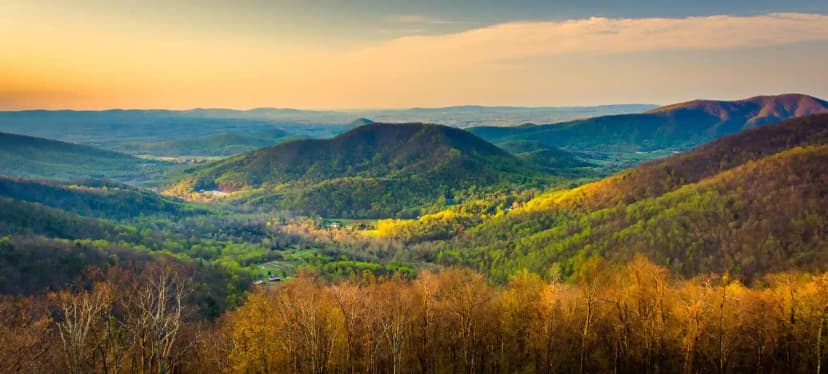
The Great Smoky Mountains National Park straddles the Tennessee-North Carolina border and receives more visitors than any other national park in the US — 12 million per year. Despite the crowds, its 800+ miles of trails include some genuinely spectacular hiking, particularly at higher elevations where the famous "smoky" haze creates atmospheric ridgeline views and the Appalachian balds offer open panoramas in a sea of forested mountains.
Best Hikes in the Smokies
Alum Cave Trail to Mount LeConte (11 miles RT, 2,860 ft gain): The most popular strenuous hike in the park. Passes dramatic geological features (Alum Cave Bluffs, an overhanging cliff of black rock) before climbing to the LeConte summit. LeConte Lodge at the summit offers the only backcountry lodging in the park — reserve 6+ months in advance.
Andrews Bald via Forney Ridge Trail (3.6 miles RT, 800 ft gain): One of two naturally occurring grass balds in the Smokies, with panoramic views across the Appalachian ridgeline and outstanding wildflower displays in June. Accessible from the Clingmans Dome parking lot.
Charlies Bunion (8 miles RT, 1,600 ft gain): Follows the Appalachian Trail east from Newfound Gap along the exposed rocky crest of the Smokies. Charlies Bunion is a rocky promontory with dramatic drop-offs and long views. Best in fall for foliage or early morning for solitude.
Laurel Falls Trail (2.6 miles RT, 314 ft gain): The most popular waterfall hike in the park. Paved, accessible, and genuinely beautiful — the 80-foot falls are split by a rock ledge. Expect company on weekends but worth it in shoulder season.
When to Visit
Late April–May for wildflower season (the park has 1,500+ wildflower species). Mid-October for peak fall foliage. December–February for snow-dusted ridgelines and minimal crowds. Avoid July–August weekends — Clingmans Dome road and popular trailheads are genuinely overcrowded.