The Most Important Rule: Match Volume to Trip Length
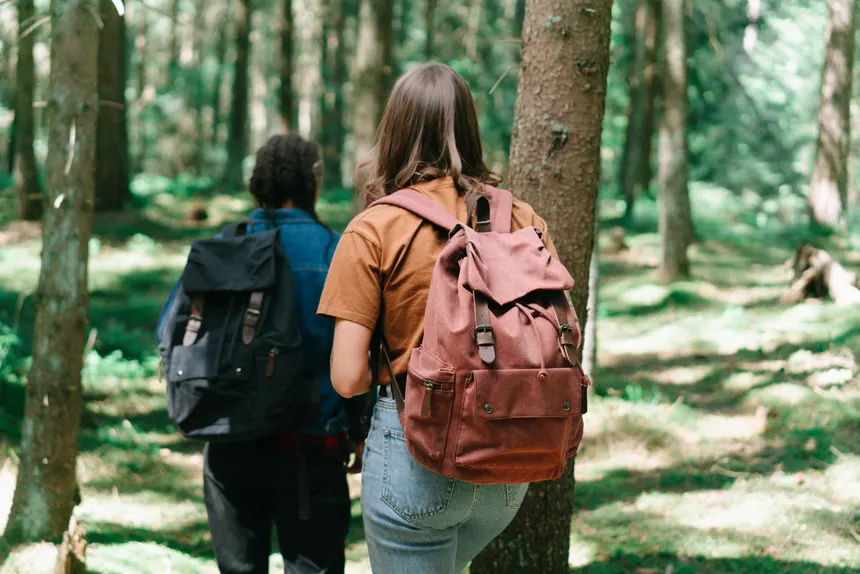
The single biggest mistake hikers make buying a backpack is choosing something too large for their actual use. A 65-liter bag for day hikes means you'll either overpack or carry a half-empty sack that shifts around all day. Match the pack volume to the trip: 15–25L for day hikes, 30–50L for 2–4 night trips, 50–70L for week-long expeditions. Everything on this list is organized by that framework.
Best Day Pack: Osprey Daylite Plus (20L)
The Osprey Daylite Plus is the best selling daypack for a reason. At 20 liters it holds a hydration reservoir (up to 3L), layers, lunch, and all the day-hike essentials without turning into a disorganized stuff bag. The suspended mesh back panel keeps air flow between the pack and your back, a genuine comfort feature on warm days.
Build quality is typically Osprey: the fabric holds up, the zippers stay smooth after years of use, and the hipbelt actually transfers weight even on a daypack. At around $85 it's not the cheapest option, but it's meaningfully better than the $40 daypacks that fold in half under any real load. The Daylite also integrates with Osprey's larger packs as an attachable daypack lid, useful if you own an Osprey backpacking pack.
Best for: Day hikes, travel, commuting that moonlights as trail use. Price: ~$85.
Best Daypack Runner-Up: REI Co-op Flash 22
The REI Flash 22 undercuts the Osprey by about $20 and comes surprisingly close in quality. The framesheet provides more structure than you'd expect at this price, the hipbelt is functional (not just decorative webbing), and the 22L capacity hits the sweet spot for long day hikes. If you're an REI member the annual dividend brings the effective price down further.
Best for: Budget-conscious day hikers, REI members. Price: ~$65.
Best Weekend Pack (30–45L): Osprey Stratos 36 / Sirrus 36
For 1–3 night trips where you're camping with real gear (tent, sleeping bag, pad, food, stove), 36 liters is the minimum viable capacity for most hikers, and the Osprey Stratos (men's) and Sirrus (women's) are the best packs in this range. The AirSpeed suspended mesh back system is the standout feature: it holds the pack away from your back, creating airflow that makes a significant difference on warm-weather trips.
The hipbelt is substantial and transfers load effectively. Osprey's All Mighty Guarantee covers repairs or replacement for the life of the pack regardless of cause, a genuine differentiator from brands with limited warranties. At 36L with an integrated rain cover, front pocket, and solid organization, this is a do-everything weekend pack.
Best for: 1–3 night trips, summer backpacking, hikers who run warm. Price: ~$220.
Best Multi-Day Pack (50–65L): Gregory Baltoro 65 / Deva 60
If you're spending a week in the backcountry, carrying a bear canister, or hauling significant camera gear, you need a pack in the 55–70L range with a real suspension system. The Gregory Baltoro 65 (men's) and Deva 60 (women's) have the best load transfer of any backpacking pack in this size class. The Response A3 suspension system actually moves with your body on uneven terrain rather than fighting it.
Gregory's FitRight hipbelt is pre-shaped to the curve of your hip rather than being flat like most competitors. On a 10-day trip with 45 lbs of gear, this difference matters enormously, the pack stays in place on steep switchbacks instead of rotating. It's heavy for the category (~2.5 kg empty) and expensive (~$350), but if you're doing real expeditions, the comfort pays off over miles.
Best for: Week-long backpacking, heavy loads, technical routes. Price: ~$340–$360.
Best Ultralight Pack: Hyperlite Mountain Gear 2400 Southwest
If you've committed to lightweight backpacking and your base weight is under 12 lbs, the Hyperlite Mountain Gear 2400 Southwest is the pack to beat. Made from Dyneema composite fabric (formerly Cuben fiber), it weighs just over 500 grams for the pack itself, roughly one-quarter the weight of a traditional backpacking pack of similar volume.
There's no frame, no thick foam hipbelt (just a thin padded one), no fancy suspension, you're trading that for an absurd weight savings. It works well if your other gear is correspondingly light. It's completely waterproof without a cover, which matters when you're caught in a downpour. At ~$425 it's expensive, but for ultralight hikers it replaces $150+ in lighter components they'd otherwise cobble together.
Best for: Ultralight backpackers with base weight under 12 lbs, long-distance hikers. Price: ~$425.
Best Women's Specific Pack: Deuter Futura Air Trek 45+10 SL
Most packs offer women's versions with a shorter back length and narrower shoulder straps, but Deuter's SL (Slim Line) series goes further: narrower shoulder straps that wrap the chest better, a contoured hipbelt shaped for wider hips and a narrower waist, and a torso length adjusted for proportionally shorter torsos. The result is a pack that fits women significantly better than a unisex pack sized down.
The Futura Air Trek's Aircomfort mesh back system rivals Osprey's AirSpeed for ventilation. The 45+10 configuration (compressible 10L collar) gives flexibility between a packed-down 45L and a fully loaded 55L. At ~$260 it's priced competitively with the Osprey Stratos/Sirrus.
Best for: Women hikers doing 2–5 night trips who've struggled with pack fit. Price: ~$260.
What to Look for in a Hiking Backpack
Frame type: Anything carrying more than about 25 lbs needs an internal frame, a sheet or stays that hold the pack's shape and push the weight down onto the hip belt. Frameless packs are lighter and fine for a day out, but under heavier loads they collapse and put the whole weight back on your shoulders. This is the single biggest difference between the best day hiking backpack and a multi-day one.
Sternum strap and load lifters: The sternum strap stops the shoulder straps sliding outward and should sit an inch or two below the collarbone, adjustable up and down on a rail. Load lifters, the small straps running from the top of the shoulder harness back to the pack, pull the top of the load toward you at roughly 45 degrees. Both cost nothing in weight and change how a loaded pack feels.
Pockets that earn their place: Two stretch side pockets you can reach without taking the pack off, hip belt pockets for a phone and snacks, and one zippered compartment at the lid or front for keys, permit and headlamp. A side pocket you have to stop and unclip for is a pocket you will not use.
Water resistant, not waterproof: Nearly every pack here is water resistant fabric with a coating that wets out in sustained rain, and seams and zips leak regardless. Carry a pack cover or, better, line the inside with a trash compactor bag. Assume the pack will get wet and keep the sleeping bag dry.
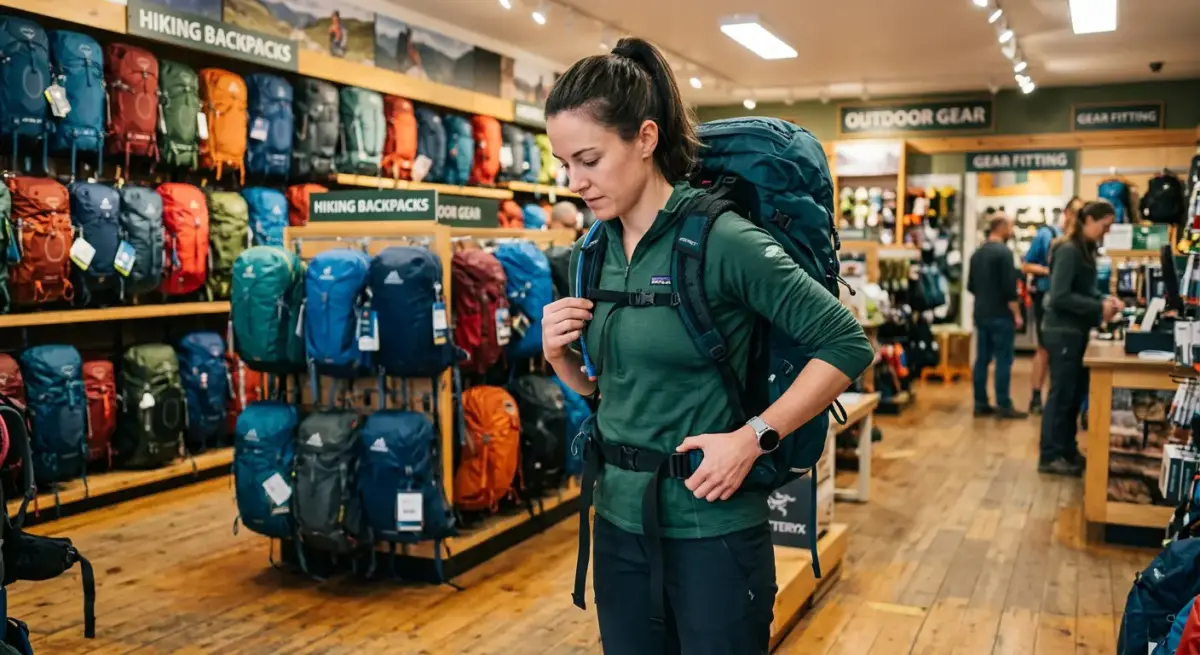
Suspension and fit: Try packs on with weight in them. A hip belt that transfers load properly (sitting on the hips, not the waist) makes the biggest difference on long days. Most quality outdoor retailers will let you load a pack with weight to test fit.
Back ventilation: Suspended mesh systems (Osprey AirSpeed, Deuter Aircomfort) keep you significantly cooler than packs that contact your back directly. Worth the premium in warm climates or for hikers who sweat heavily.
Organization: Think about your specific needs. Do you need a sleeping bag compartment? Hip belt pockets? A dedicated hydration sleeve? A front panel zip? More pockets isn't always better if it adds weight, pick what matches how you actually pack.
Warranty: Osprey's All Mighty Guarantee and Gregory's lifetime warranty are genuinely valuable. Packs take abuse, and a no-questions-asked repair/replace policy over the life of the product matters more than saving $30 on a brand with a limited warranty.
Best Day Hiking Backpack to Overnight Pack FAQs
For a day hike, 15–25 liters is the right range. A 20L pack holds a 2L hydration reservoir, a layer, lunch, first aid, and a few extras without overpacking. Anything larger becomes cumbersome and encourages overpacking. The Osprey Daylite Plus (20L) and REI Flash 22 are the best options in this range.
For a quality daypack, $65–$100 is the right budget. For weekend or multi-day packs, $180–$280 gets you a genuinely good pack with a real suspension system. Below those price points, you're compromising on fit, durability, or load transfer in ways you'll notice on real trips. Osprey and Gregory are the most reliable brands at each price tier.
Osprey is the most consistent for overall quality across price points and their lifetime guarantee is unmatched. Gregory makes the best load transfer systems for heavy packs. Deuter makes the best women's-specific fit. For ultralight, Hyperlite Mountain Gear is the benchmark. REI Co-op packs offer excellent value at lower price points.
Both, with roughly 80% of the load on your hips and 20% on your shoulders. The hip belt should sit on your iliac crest (the bony shelf at the top of your hip), not your waist. Shoulder straps should contour your shoulders without gaps but shouldn't bear the majority of the load. Most back pain from backpacking comes from a pack fit incorrectly with too much weight on the shoulders.
Most quality packs are water-resistant but not waterproof, they'll handle light rain but not a sustained downpour without a rain cover. Almost all packs over $150 include a rain cover. For ultralight hikers, Dyneema packs (like Hyperlite) are inherently waterproof without a cover. For everything in your pack that can't get wet, use dry bags regardless of your pack's water resistance.
Yes. The worked day-by-day plan is Hidden Lake Lookout Backpacking: The Overnight, Start to Finish (2 Days), with the permits, the stays and the drive times already sorted. Tell us your dates and we will put it together for you and confirm what is genuinely open on those days. Asking is free: no card, no deposit, and nothing is held until you say yes.