Pennsylvania Outdoor Adventure: A 10-Day Itinerary
One state, gorges, waterfalls & whitewater, end to end.
A 10-day Pennsylvania outdoor road trip looping the best state parks and forests: the Pine Creek Gorge, Ricketts Glen's 21 waterfalls, Worlds End and the Loyalsock, the Allegheny National Forest, Ohiopyle whitewater, and the Lehigh Gorge.
“I’ve requested to book a Chain Lakes Loop guide on ExplorOFF, and it was the best idea ever! I highly recommend going with their guided option since you get a real human connection on the trail and don’t have to worry about a thing. Yulia was great to talk to!”
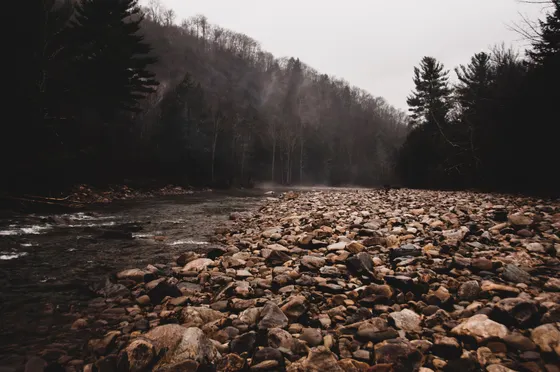 35 stops on a real mapEvery stop pinned in order→
Pennsylvania: every stop pinned in order.
Pine Creek Gorge, Ricketts Glen, Ohiopyle & the Lehigh Gorge · Pennsylvania
Every stop on this trip, in order, opens as one driving route in the Google Maps app. No copying addresses across one at a time.
Pennsylvania in photos: 5 of the stops.


Plan and book your 10 days in Pennsylvania, one step at a time
- Pine Creek Outfitters' guided canyon rafting trip (day 2) has no bookable dates in October or November 2026; it is a spring high-water trip, so in fall plan the rail trail by bike instead. Source
- The Kinzua Sky Walk (day 5) can close without notice for high wind, storms, ice or maintenance; check the park's alerts on the morning you go. Source
How 10 days in Pennsylvania split up
Plan 10 days for Pennsylvania. Total distance: ~750 mi. Difficulty: Moderate. Park entry: Free. Pennsylvania hides some of the best outdoor country in the Northeast inside its enormous network of state parks and forests, and almost none of it charges a dime to enter. This 10-day loop strings together the headline sights: the Pine Creek Gorge (the Grand Canyon of Pennsylvania), the 21 waterfalls of Ricketts Glen, the wild Loyalsock country around Worlds End, the Allegheny National Forest with the Kinzua Bridge skywalk, the whitewater of Ohiopyle, and the Lehigh Gorge rail trail and river.
Day 1: Wellsboro & the Pine Creek Gorge · the Grand Canyon of Pennsylvania
4 stops · Day one
Day 2: The Pine Creek Rail Trail · biking & kayaking the gorge
4 stops · Day two
Day 3: Worlds End State Park & the Loyalsock Trail
3 stops · Day three
Day 4: Ricketts Glen State Park · 21 waterfalls on the Falls Trail
3 stops · Day four
Day 5: West to the Allegheny National Forest · Kinzua Bridge skywalk
3 stops · Day five
Day 6: Hickory Creek Wilderness & the Allegheny
3 stops · Day six
Day 7: South to Ohiopyle · Cucumber Falls & Fallingwater
4 stops · Day seven
Day 8: Youghiogheny whitewater & the Great Allegheny Passage
4 stops · Day eight
Day 9: East to the Lehigh Gorge & Jim Thorpe
4 stops · Day nine
Day 10: Lehigh River whitewater & the Pocono Mountains
3 stops · Day ten
Wellsboro & the Pine Creek Gorge · the Grand Canyon of Pennsylvania
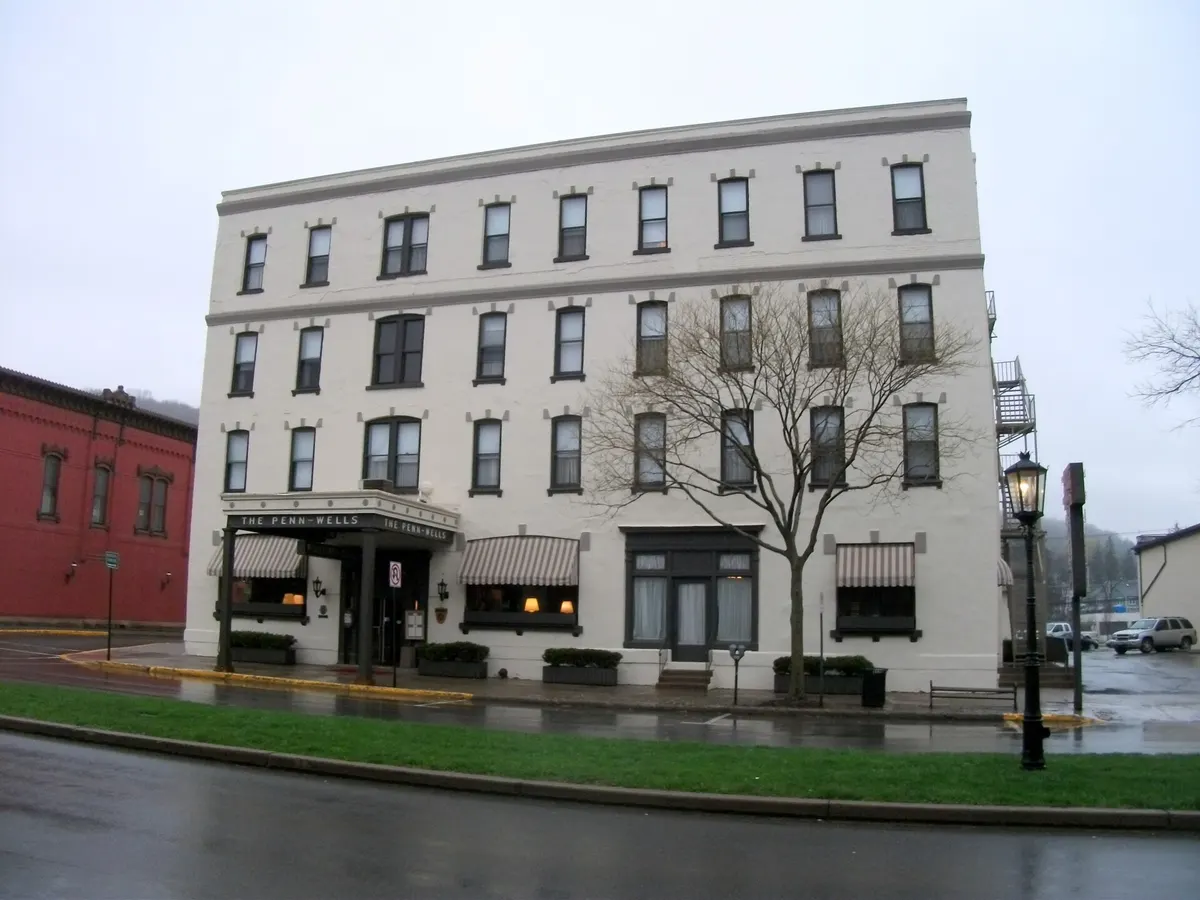
Start in Wellsboro, the charming, gas-lit county seat that serves as the gateway to the Pine Creek Gorge, the thousand-foot-deep canyon better known as the Grand Canyon of Pennsylvania. Drive out to Leonard Harrison State Park on the east rim for the classic overlook, where the gorge drops away below you and Pine Creek winds along the bottom far below.
Not the order you want? Drag a stop, or use the arrows beside it. Stops move between days too.
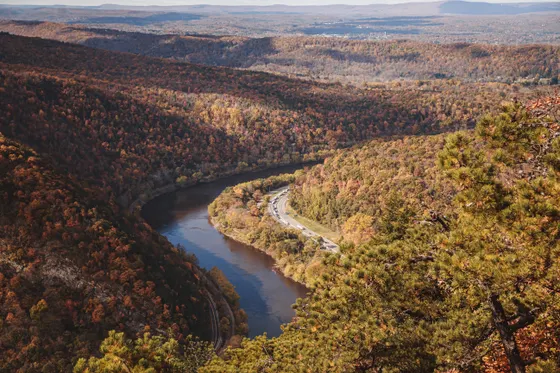 Drive from
Gateway to the Grand Canyon of PA · DriveStart in Wellsboro, the gas-lit county seat that serves as the gateway to the Pine Creek Gorge. It is roughly two hours from Wilkes-Barre/Scranton (AVP) and makes the best base for the northern leg, with inns, diners, and outfitters all in one walkable town.
- Leonard Harrison State Park
East-rim overlook · free to enter · ViewpointDrive out to Leonard Harrison State Park on the east rim for the classic overlook of the Pine Creek Gorge, the thousand-foot-deep canyon known as the Grand Canyon of Pennsylvania. It has the most accessible overlook and a visitor center, and like every state park here it is free to enter.
Official info →  Colton Point State Park
Quieter west-rim views · ViewpointCross to the quieter west rim at Colton Point State Park for a wilder angle on the same canyon, then walk a stretch of rim trail for views you cannot get from the parking lots. It is less developed than Leonard Harrison and usually far less crowded.
 Doug Kerr from Albany, / CC BY-SA 2.0Stay in Wellsboro
Inns & diners · Pine Creek base · lodgeSettle into Wellsboro for the first two nights. The walkable, gas-lit town is the hub for the whole Pine Creek area, with the best lodging, food, and gear shops, so it makes an easy base for both the rim parks and tomorrow's gorge-floor adventures.

The Pine Creek Rail Trail · biking & kayaking the gorge
Get down into the canyon today. The Pine Creek Rail Trail runs flat and car-free for more than 60 miles along the old railroad grade through the bottom of the gorge, and it is consistently rated one of the best rail-trail rides in the country. Rent bikes and pedal a scenic stretch through the canyon, watching for bald eagles, deer, and the occasional river otter along the creek.
Not the order you want? Drag a stop, or use the arrows beside it. Stops move between days too.
- Pine Creek Gorge raft, kayak & bike · Pine Creek Outfitters
Guided & rentals with shuttle · book ahead · activityBook a guided raft, a kayak, or a bike with Pine Creek Outfitters, the long-running gorge outfitter, and let them shuttle you so you can ride or paddle one-way through the canyon instead of doubling back. Reserve ahead on summer and high-water weekends.
Book this → 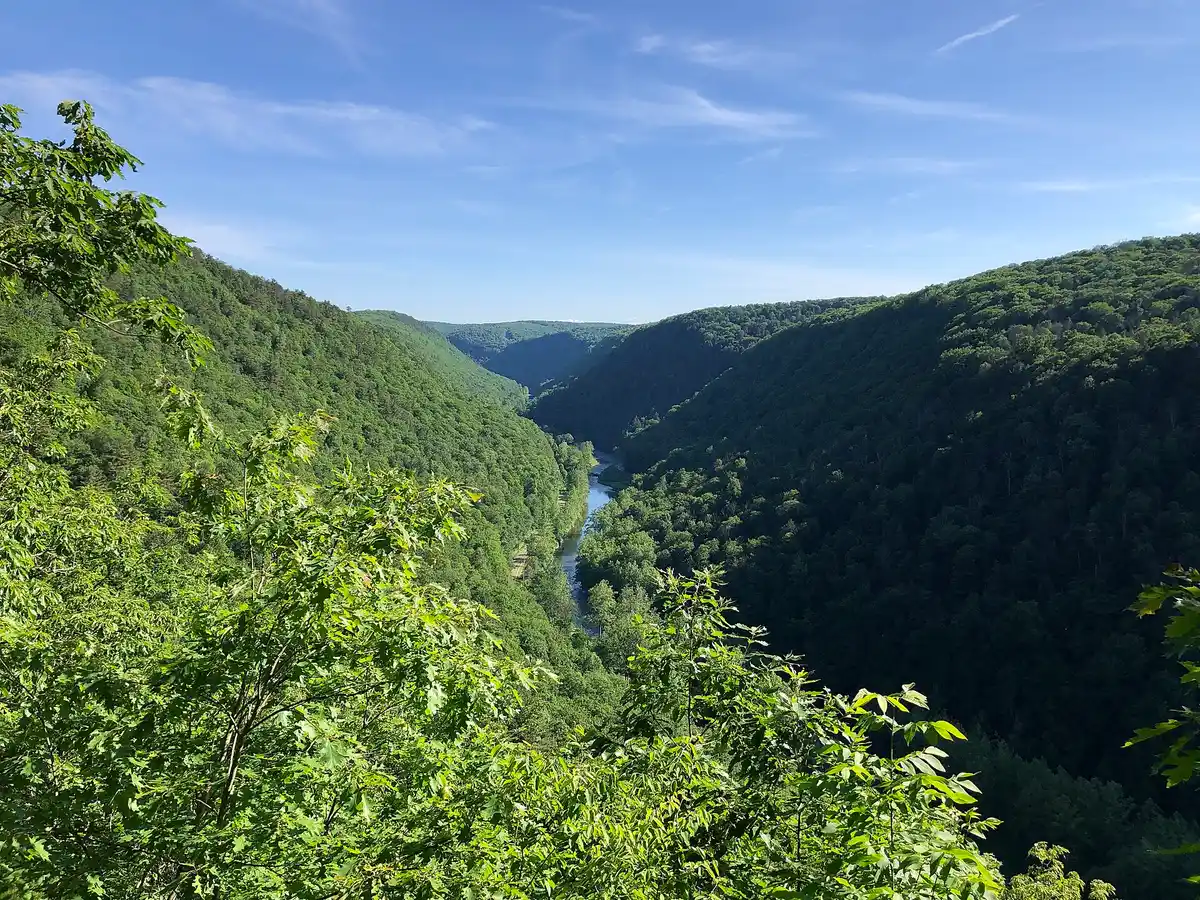 Famartin / CC BY-SA 4.0Pine Creek Rail Trail
60+ mi flat car-free rail trail · activityThe Pine Creek Rail Trail runs flat and car-free for more than 60 miles along the old railroad grade through the bottom of the gorge, consistently rated one of the best rail-trail rides in the country. Pedal a scenic stretch and watch for bald eagles, deer, and river otters along the creek.
Official info → Kayak or raft Pine Creek
Best in spring high water · activityWhen the water is up, Pine Creek itself is the play: spring high water turns the gorge into a kayaking and rafting run, while summer flows are gentler for easy floats. Plan your paddling around the season and the day's flow.
Official info →- Second night in Wellsboro
Easy gorge-day base · lodgeStay a second night in Wellsboro so you can do the rail trail and the water without packing up. Keeping the same base makes for an easy, unhurried gorge day before you head southeast tomorrow.
Worlds End State Park & the Loyalsock Trail
Head southeast into the rugged Loyalsock country and Worlds End State Park, a small but spectacular park tucked into a tight S-bend of Loyalsock Creek deep in the forest. The drama here is the steep, rocky terrain: the High Rock Vista looks straight down the gorge, and the creek itself forms natural water slides and swimming holes when the flow is right.
Not the order you want? Drag a stop, or use the arrows beside it. Stops move between days too.
- Worlds End State Park
Steep Loyalsock gorge · free park · ViewpointHead southeast into the rugged Loyalsock country and Worlds End State Park, tucked into a tight S-bend of Loyalsock Creek deep in the forest. The High Rock Vista looks straight down the gorge, and the creek forms natural slides and swimming holes when the flow is right.
Official info → 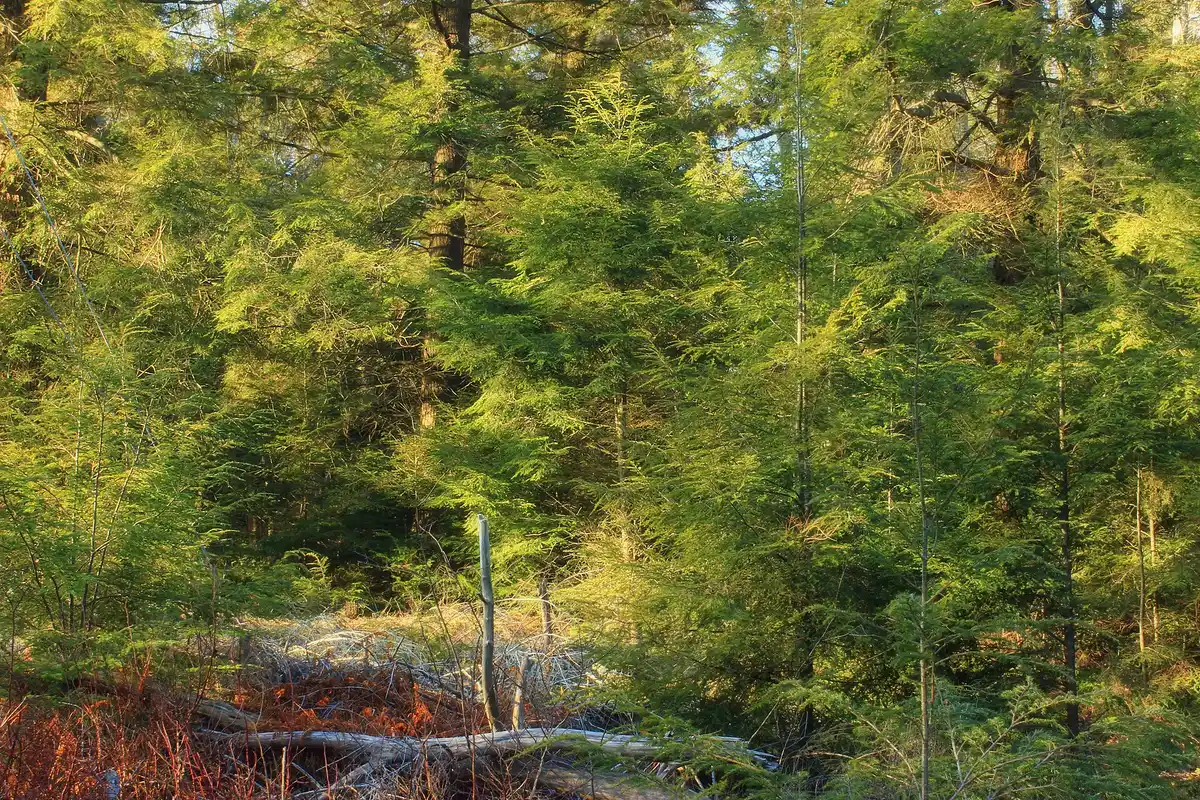 Nicholas A. Tonelli fr / CC BY 2.0Loyalsock Trail day segment
Vistas, ravines & creek crossings · HikePick up a stretch of the Loyalsock Trail, the classic long-distance footpath that runs nearly 60 miles across this corner of the state, threading vistas, hemlock ravines, and creek crossings. A day-hike segment out of Worlds End delivers big views without committing to the whole trail.
Official info →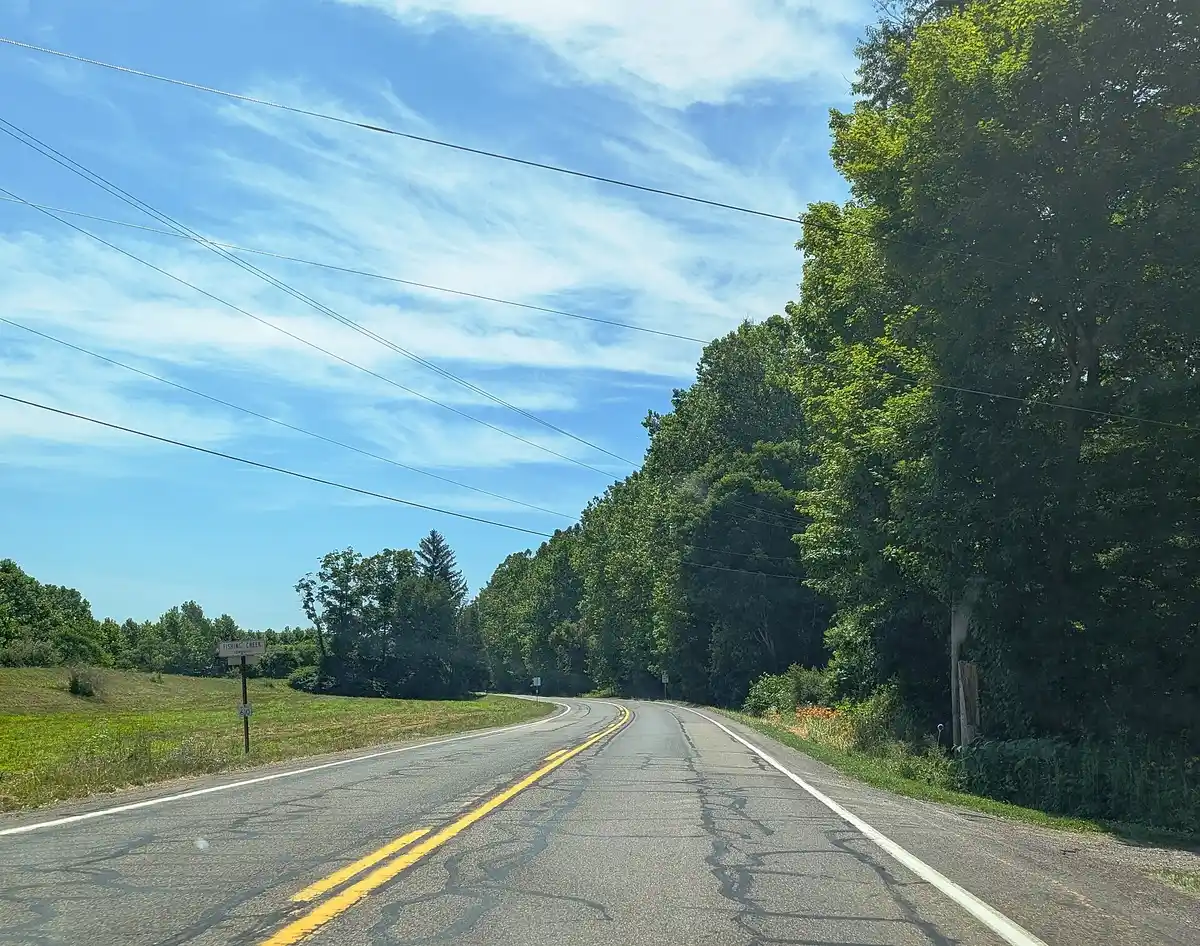 Mr. Matté (if there is / CC BY-SA 4.0Stay in Benton
Closest base to Ricketts Glen · lodgeBase in Benton, the closest town to Ricketts Glen, with small-town lodging and an easy launch to the Falls Trail. It also sets you up for the long, scenic drive west to the Allegheny National Forest tomorrow.
Ricketts Glen State Park · 21 waterfalls on the Falls Trail
Today is the waterfall masterpiece. Ricketts Glen State Park, near Benton, holds the Falls Trail, a roughly 7-mile loop that passes 21 named waterfalls, several of them dropping more than 30 feet, as two glens converge in a deep hemlock gorge. It is widely considered the finest waterfall hike in the eastern United States, and there is simply nothing else like it in Pennsylvania.
Not the order you want? Drag a stop, or use the arrows beside it. Stops move between days too.
- Falls Trail · 21 waterfalls
~7 mi loop · steep wet steps · half-day · HikeHike the Falls Trail at Ricketts Glen State Park, a roughly 7-mile loop that passes 21 named waterfalls as two glens converge in a deep hemlock gorge. It is widely considered the best waterfall hike in the eastern United States. The loop is strenuous with steep, wet stone steps, so wear grippy footwear and take your time.
Official info → 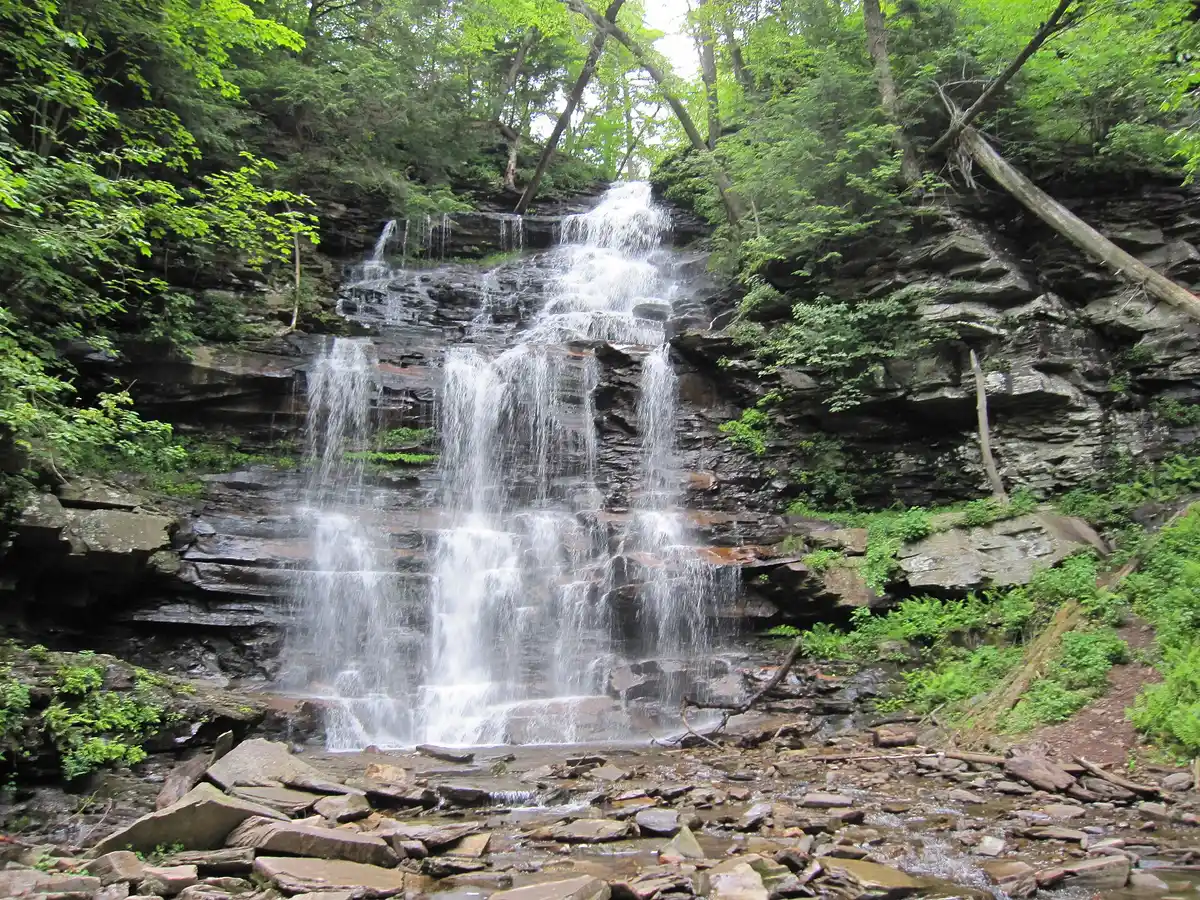 Chris M Morris / CC BY 2.0Ganoga Falls (94 ft)
Tallest fall on the loop · ViewpointGanoga Falls, at 94 feet, is the tallest cascade on the Falls Trail and the loop's showpiece, set in the Ganoga Glen branch. If you want a shorter day, hiking just one glen branch still passes a dozen waterfalls.
Official info →- Mr. Matté (if there is / CC BY-SA 4.0Stay in Benton
Closest base to Ricketts Glen · lodgeBase in Benton, the closest town to Ricketts Glen, with small-town lodging and an easy launch to the Falls Trail. It also sets you up for the long, scenic drive west to the Allegheny National Forest tomorrow.
West to the Allegheny National Forest · Kinzua Bridge skywalk
Make the scenic drive west across the northern tier to the Allegheny National Forest, Pennsylvania's only national forest, a half-million acres of hardwoods, hemlock, and the Allegheny Reservoir. The set-piece is Kinzua Bridge State Park, where a former railroad viaduct partly toppled by a tornado has been turned into the Kinzua Sky Walk, a 600-foot pedestrian walkway out over the valley with a glass-floored overlook at the end.
Not the order you want? Drag a stop, or use the arrows beside it. Stops move between days too.
- Drive west across the northern tier
~200 mi · ~3.75 hr to Kinzua · fuel up · DriveMake the scenic drive west across Pennsylvania's northern tier to the Allegheny National Forest, Pennsylvania's only national forest, a half-million acres of hardwoods, hemlock, and the Allegheny Reservoir. It is a long but beautiful drive, so fuel up and aim to arrive with daylight for the skywalk.
- Kinzua Sky Walk
600-ft glass-floored skywalk · free · ViewpointAt Kinzua Bridge State Park, a former railroad viaduct partly toppled by a 2003 tornado has become the Kinzua Sky Walk, a 600-foot pedestrian walkway out over the valley with a glass-floored overlook at the end. Walk out and look straight down through the glass to the wrecked towers and forest below.
Official info → 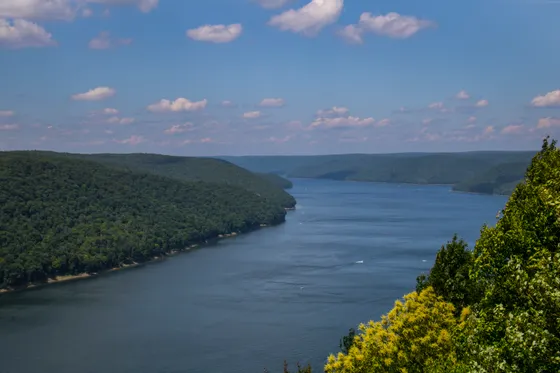 Stay in Kane, PA
Or Bradford, or a forest campground · lodgeBase near the Allegheny National Forest for two nights, in a town like Kane or Bradford or at a forest campground. This puts you in position for a full wilderness day tomorrow before the long drive south to whitewater country.
Hickory Creek Wilderness & the Allegheny
Spend a full day in the heart of the Allegheny National Forest. For a real wilderness hike, take on the Hickory Creek Wilderness, the largest of Pennsylvania's federally designated wilderness areas, where a roughly 11-mile loop wanders through deep second-growth forest with creek crossings and no facilities, signage, or shortcuts. It is a quiet, immersive walk in the woods, the antidote to the busier waterfall trails.
Not the order you want? Drag a stop, or use the arrows beside it. Stops move between days too.
- Hickory Creek Wilderness loop
~11 mi · PA's largest wilderness · HikeTake on the Hickory Creek Wilderness, the largest federally designated wilderness in Pennsylvania, where a roughly 11-mile loop wanders through deep second-growth forest with creek crossings and no facilities or signage. It is a quiet, immersive walk in the woods, so carry a map, water, and the skills to navigate.
Official info → 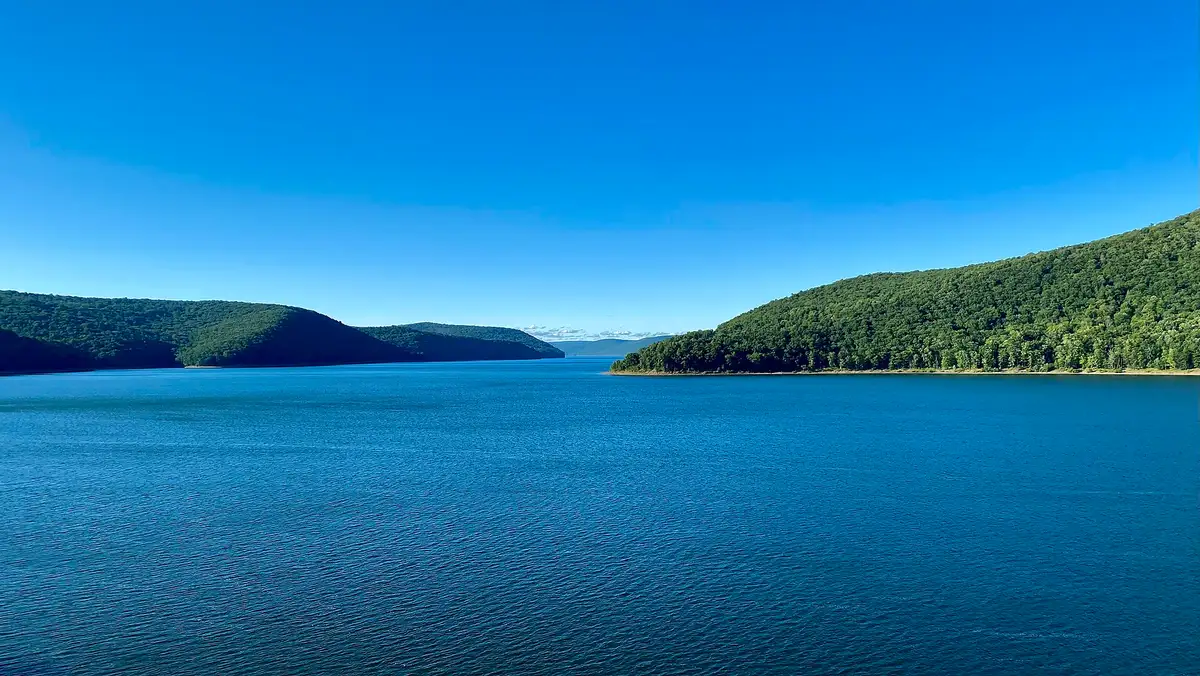 Andre Carrotflower / CC BY-SA 4.0Allegheny Reservoir paddle
Flatwater kayak or canoe · activityIf you want a lighter day, swap the wilderness loop for a flatwater paddle on the Allegheny Reservoir, or shorter forest trails and an overlook drive. However you spend it, this is the wild, forested middle of the trip before you turn south.
Official info →- Second night in Kane, PA
Stay put before the drive south · lodgeStay a second night near the forest so you can use a full day in the wilderness without rushing. Rest up, because tomorrow is the long drive south through the Laurel Highlands to Ohiopyle.
South to Ohiopyle · Cucumber Falls & Fallingwater
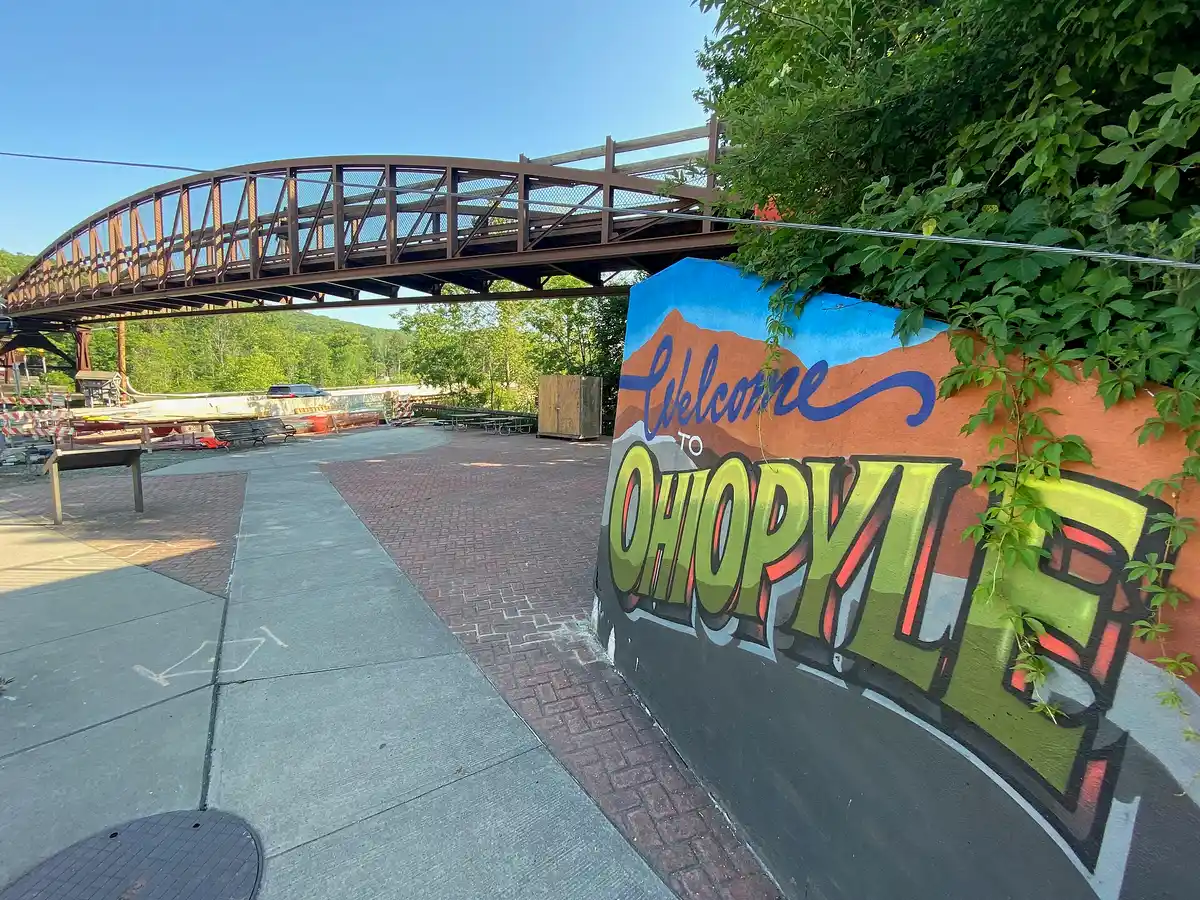
Drive south through the Laurel Highlands to Ohiopyle State Park, the whitewater and waterfall hub of southwestern Pennsylvania, set on a horseshoe bend of the Youghiogheny River. Walk down to the powerful Ohiopyle Falls in the center of town, then follow the short trail to Cucumber Falls, a graceful bridal-veil cascade tucked into a side glen, an easy stop you can reach almost from the parking lot.
Not the order you want? Drag a stop, or use the arrows beside it. Stops move between days too.
 daveynin from United S / CC BY 2.0Drive south to Ohiopyle
~165 mi · ~3.5 hr · through the Laurel Highlands · DriveDrive south through the Laurel Highlands to Ohiopyle State Park, the whitewater and waterfall hub of southwestern Pennsylvania, set on a horseshoe bend of the Youghiogheny River. It is a long but scenic transfer, so fuel up and plan to arrive with time for the falls.
- Cucumber Falls
Short trail to a bridal-veil cascade · ViewpointFollow the short trail to Cucumber Falls, a graceful bridal-veil cascade tucked into a side glen and reachable almost from the parking lot, then walk down to the powerful Ohiopyle Falls in the center of town. Both are free in Ohiopyle State Park.
Official info → 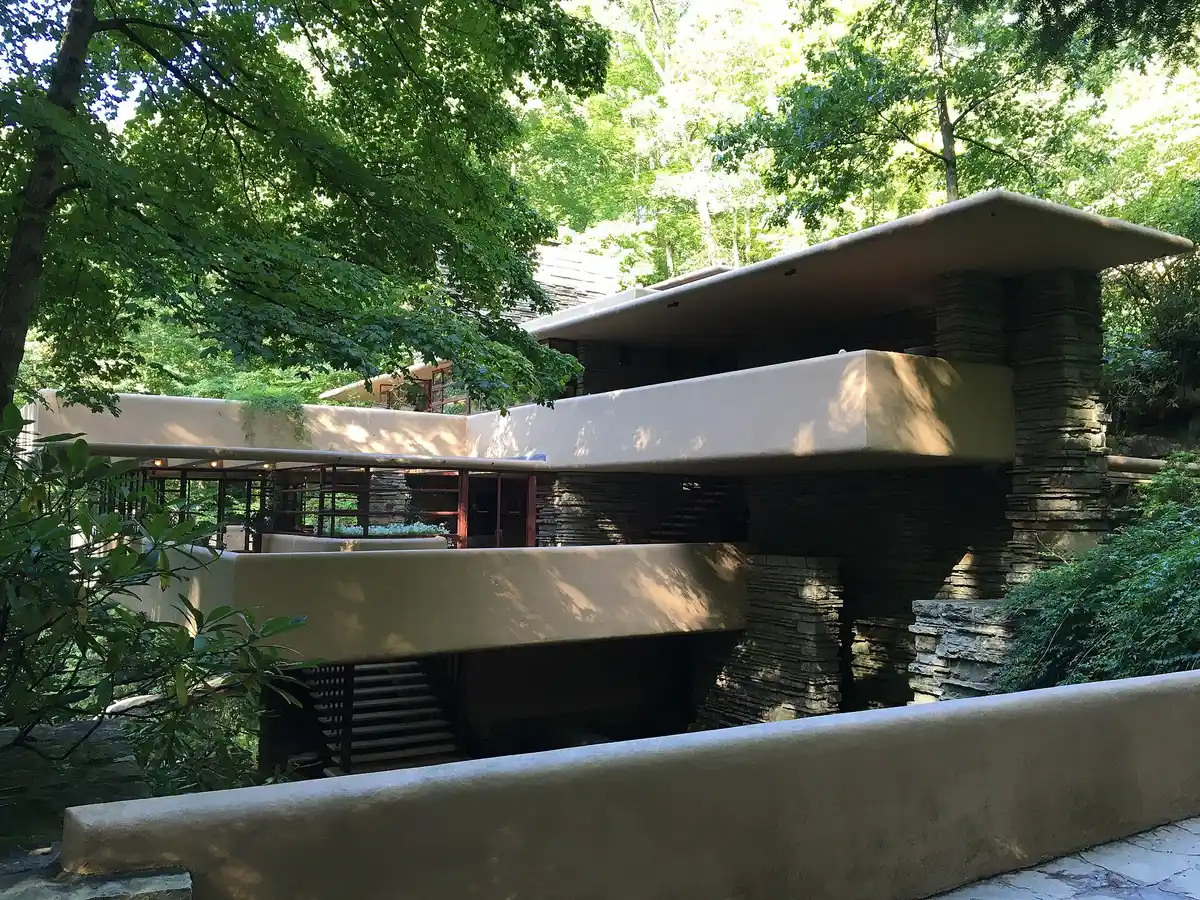 SuperAnth / CC BY-SA 4.0Fallingwater
Wright's house over a waterfall · book ahead · ViewpointJust up the road sits Fallingwater, Frank Lloyd Wright's masterpiece cantilevered directly over a waterfall, one of the most famous houses in the world. It requires a timed, reserved tour that sells out far ahead in peak season, so book before you arrive.
Official info → bobistraveling / CC BY 2.0Stay in Ohiopyle
River-town base for the Yough · lodgeSettle into Ohiopyle for two nights, a tiny river town with the falls and the Youghiogheny roaring through it. It books up on summer and fall weekends, so reserve early or look at nearby Laurel Highlands towns.
Youghiogheny whitewater & the Great Allegheny Passage
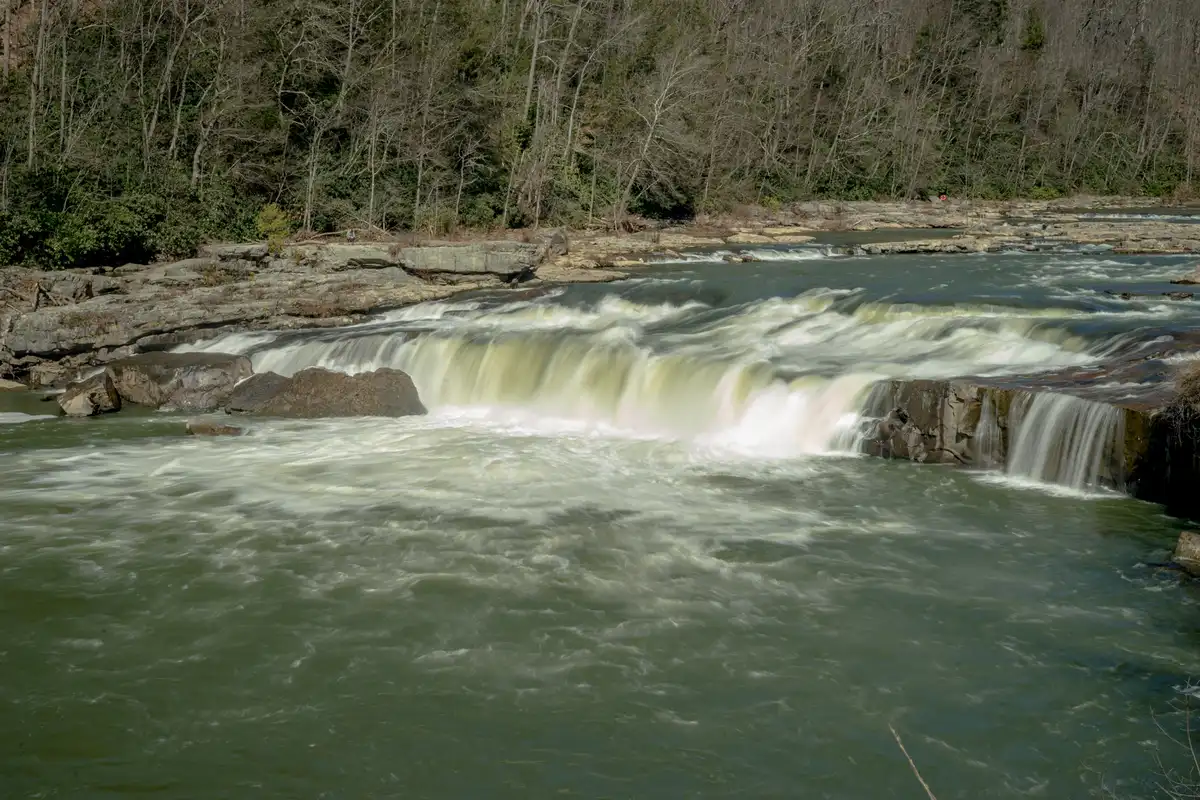
This is the southwestern whitewater day. The Youghiogheny River through Ohiopyle is one of the most popular whitewater runs in the eastern United States, with the Middle Yough offering family-friendly water and the famous Lower Yough delivering nonstop Class III to IV rapids through the gorge. Book a guided raft trip with one of Ohiopyle's long-running outfitters and let them handle the shuttle and the safety.
Not the order you want? Drag a stop, or use the arrows beside it. Stops move between days too.
 John Brighenti from Ro / CC BY 2.0Lower Yough whitewater raft
Class III-IV · guided · book ahead · activityThe Youghiogheny River through Ohiopyle is one of the most popular whitewater runs in the East. The Lower Yough delivers nonstop Class III to IV rapids through the gorge and runs on guided, reserved trips through the town's outfitters, so book ahead on summer weekends.
Official info →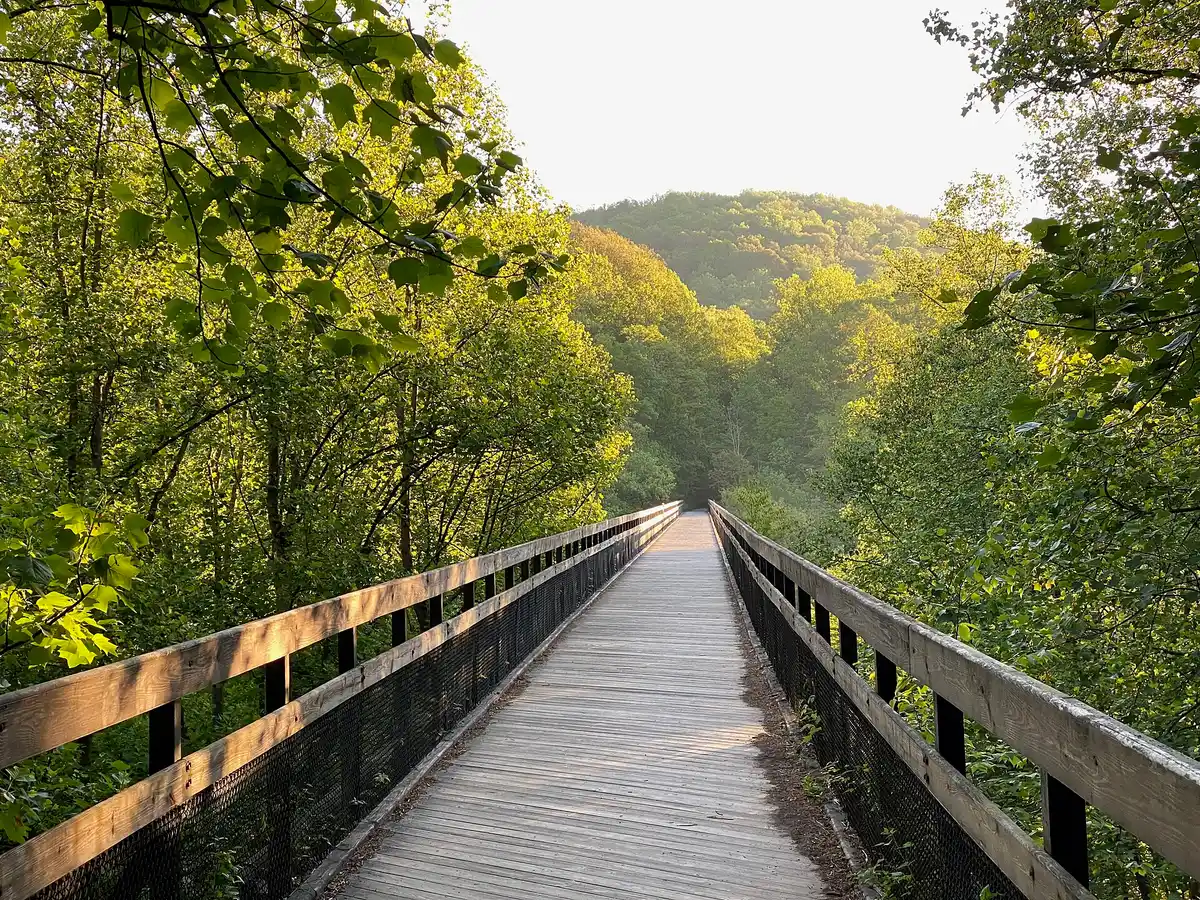 daveynin from United S / CC BY 2.0Middle Yough family float
Gentler family-friendly water · activityIf the Lower Yough sounds intimidating, the Middle Yough above the falls is gentle enough for families and first-timers, a relaxed float with light rapids and big scenery. It is a great choice for mixed-ability groups.
Official info →- Great Allegheny Passage ride
Flat rail trail along the Yough · activityPrefer to stay dry? The Great Allegheny Passage rail trail runs right through Ohiopyle, so you can rent a bike and pedal a flat, scenic stretch along the river instead of, or alongside, the rafting.
Official info → 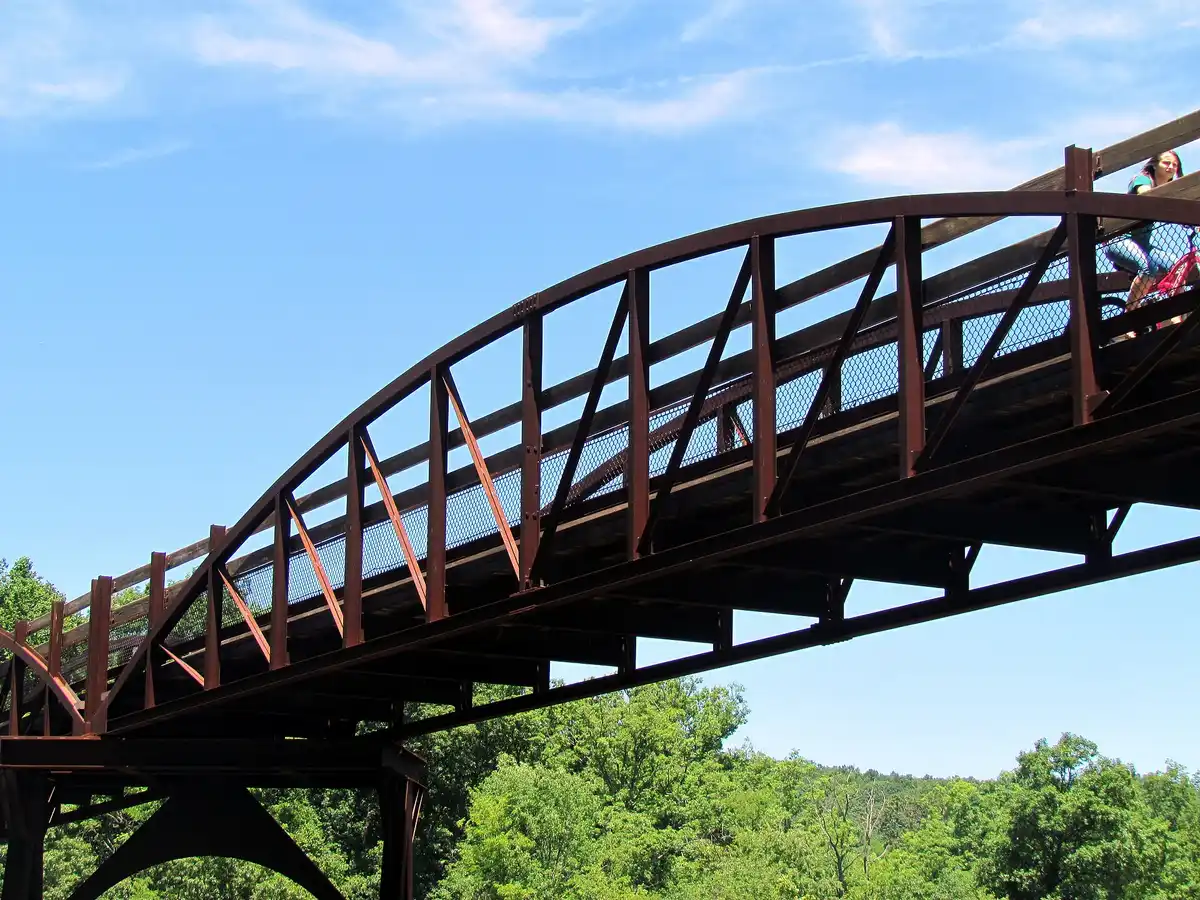 bobistraveling / CC BY 2.0Second night in Ohiopyle
Stay put for a full river day · lodgeStay a second night in Ohiopyle so you can take a full day on the Yough without rushing. Tomorrow is the long drive east across the state to the Lehigh Gorge and Jim Thorpe.
East to the Lehigh Gorge & Jim Thorpe
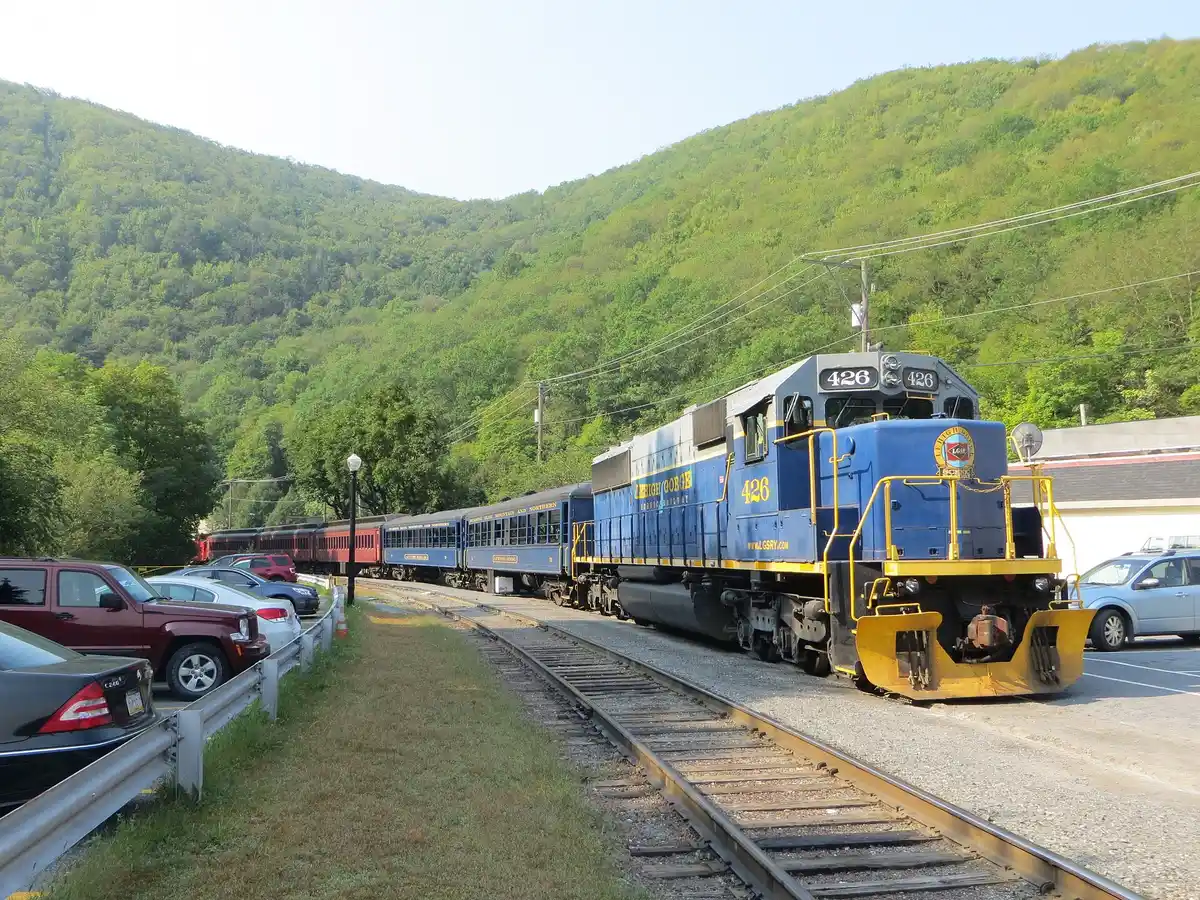
Cross the state east to Lehigh Gorge State Park and the storybook river town of Jim Thorpe, often called the Switzerland of America for its steep streets, Victorian architecture, and mountain setting. Lehigh Gorge protects a deep, dramatic canyon along the Lehigh River, with a long rail trail running its length and frequent waterfalls spilling down the walls after rain.
Not the order you want? Drag a stop, or use the arrows beside it. Stops move between days too.
 David Wilson / CC BY 2.0Drive east to Jim Thorpe
~265 mi · ~4.75 hr · the longest transfer · DriveCross the state east to Lehigh Gorge State Park and the storybook river town of Jim Thorpe, often called the Switzerland of America for its steep streets, Victorian architecture, and mountain setting. It is a long transfer, so fuel up and plan to arrive with time to explore.
- Lehigh Gorge Trail (if you arrive early)
Flat car-free rail trail · optional after the long drive · activityRent a bike and ride the flat, car-free Lehigh Gorge Trail through the deep river canyon, one of the most popular rail-trail rides in the Poconos region, with the Lehigh River beside you and rock walls towering above. Outfitters in Jim Thorpe rent bikes and run shuttles for one-way rides.
Official info → - Jim Thorpe town & overlooks
Shops, streets & viewpoints · ViewpointSpend the rest of the day wandering Jim Thorpe's shops, steep streets, and overlooks. The compact Victorian town is very popular for fall foliage, so expect busy October weekends, and book tomorrow's whitewater before you turn in.
Official info → - Stay in Jim Thorpe
Inns & B&Bs in the river town · lodgeStay in the heart of Jim Thorpe, where inns and B&Bs cluster among the Victorian streets. It is the base for tomorrow's Lehigh River whitewater, so reserve early for fall-foliage weekends, which fill fast.
Lehigh River whitewater & the Pocono Mountains
Finish the trip with whitewater. The Lehigh River through the gorge is the Poconos' premier rafting run, with dam-release weekends pumping up the flow for lively Class II to III rapids that suit families and first-timers as well as seasoned paddlers. Book a guided trip with Jim Thorpe River Adventures, the town's established outfitter, and raft the same canyon you biked yesterday from water level.
Not the order you want? Drag a stop, or use the arrows beside it. Stops move between days too.
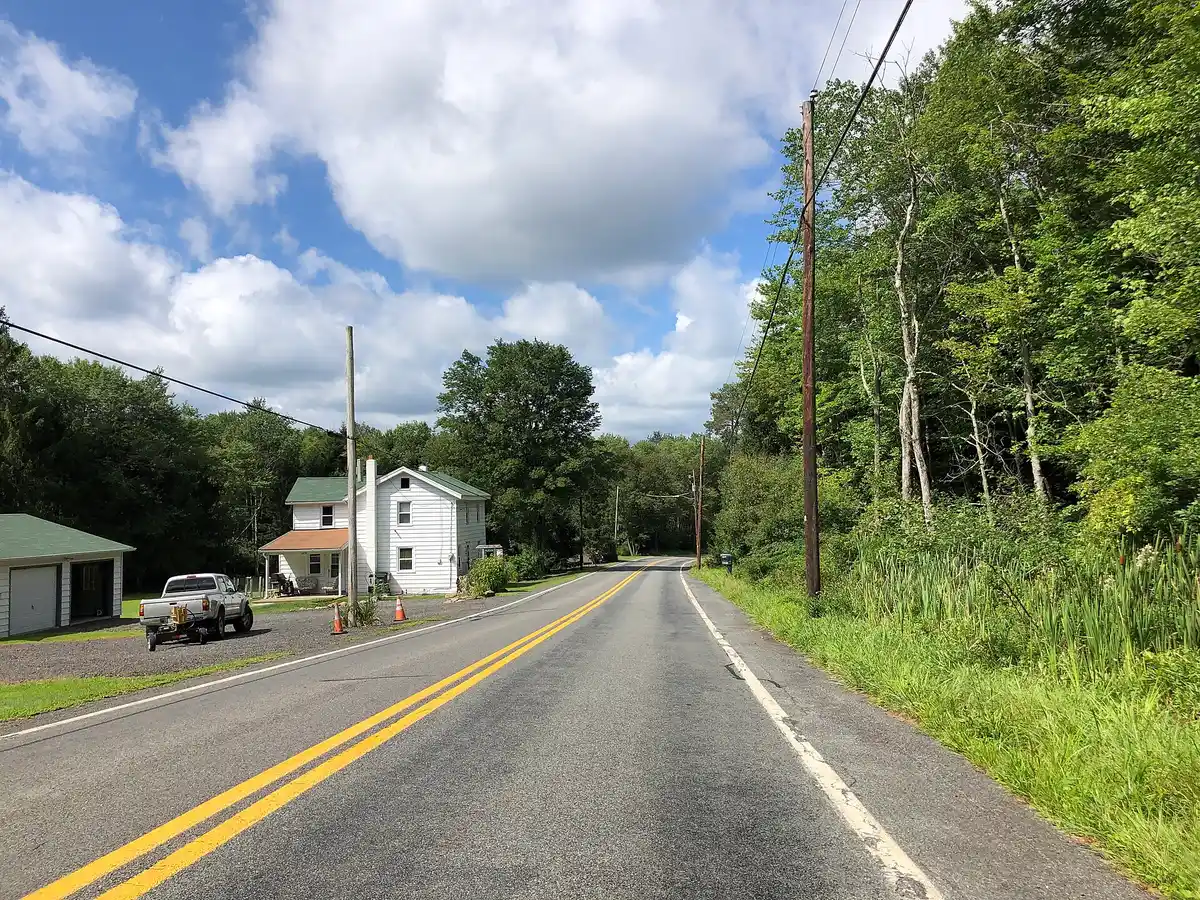 Famartin / CC BY-SA 4.0Lehigh whitewater raft · Jim Thorpe River Adventures
Class II-III · guided · book ahead · activityFinish the trip with whitewater. Book a guided Lehigh River raft trip with Jim Thorpe River Adventures, the town's established outfitter, and raft the same canyon you biked yesterday. The biggest water comes on scheduled dam-release weekends, with lively Class II to III rapids that suit families and first-timers.
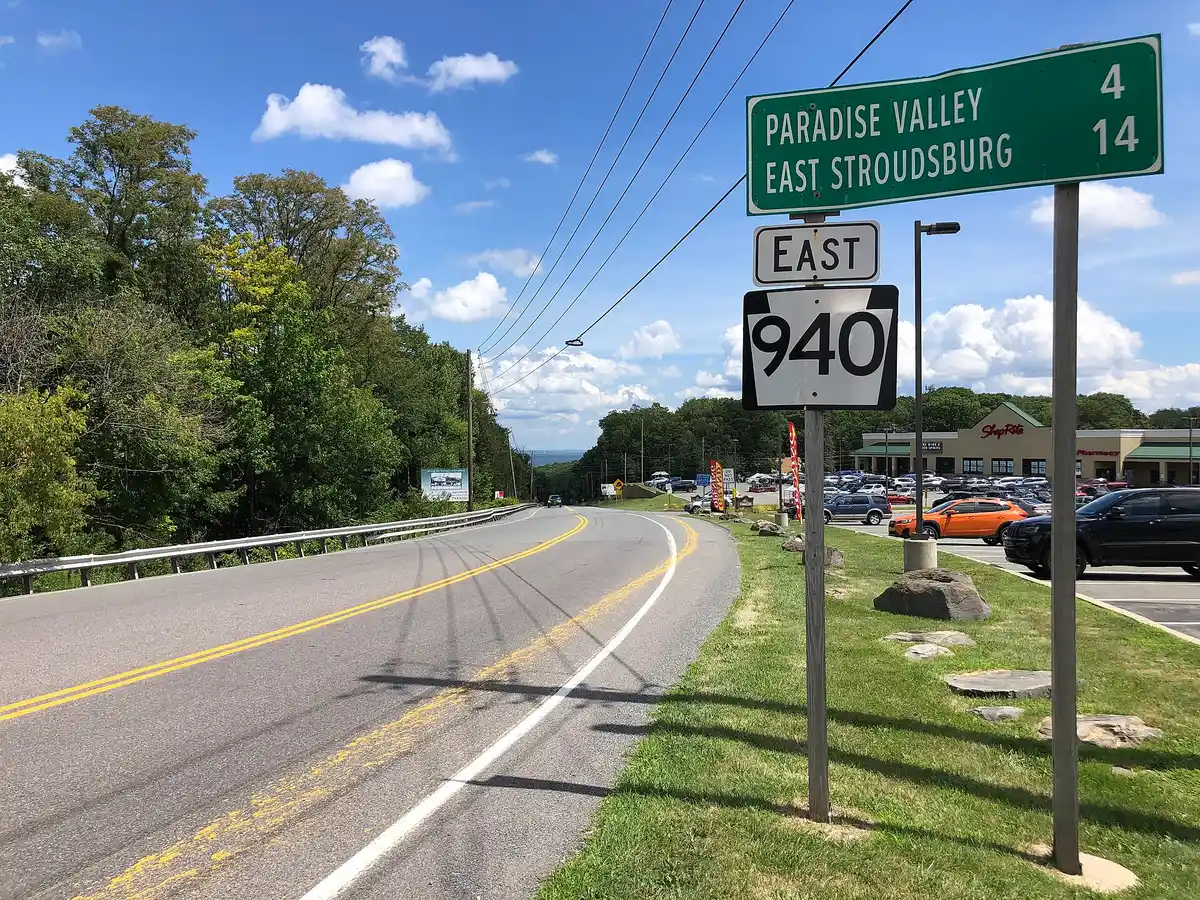 Famartin / CC BY-SA 4.0Pocono Mountains waterfalls & trails
Lakes, falls & easy walks · ViewpointWith the rafting done, spend your last hours in the wider Pocono Mountains, a lake-and-forest region full of waterfalls, overlooks, and easy trails to wander before you head home.
Official info →- Getting home: AVP, MDT or PIT
AVP ~1 hr · MDT ~2 hr · or loop to PIT · DriveFrom Jim Thorpe it is about an hour to Wilkes-Barre/Scranton (AVP), under two hours to Harrisburg (MDT), or you can close the loop back toward Pittsburgh (PIT) on the western end. Pick your departure airport before you set the route, since this is a big statewide loop.
Book the 9 nights
Beds near the trailheads are the one thing on this trip that genuinely runs out. Everything else can be decided later.
Tell us your dates and we will do the checking. We find what is still open near each trailhead and email you this plan back with a booking link for each night. Nothing is charged and you decide at the end.
Request to bookWhat to pack for Pennsylvania
Built from this route, not a generic list. Every line says why it is here.
On every day of this trip
On your feet
Because you are sleeping indoors
For the driving days
What we actually learned across Pennsylvania.
State parks are free to enter
Every Pennsylvania state park on this route, Pine Creek's rim parks, Worlds End, Ricketts Glen, Ohiopyle, Lehigh Gorge, charges no entrance fee. The Allegheny National Forest is also free for day use, though some developed campgrounds and boat launches charge. That makes this one of the most affordable outdoor road trips in the country.
Go in spring or fall
Spring brings snowmelt and high water, so the waterfalls thunder and the rivers run big for whitewater. Fall paints the gorges and forests in color and is the single most beautiful time to be out here. Summers are warm and humid but still fine for rivers and rail trails, and winters are cold, icy, and quiet.
Book whitewater & rentals ahead
Guided rafting on the Lehigh and the Youghiogheny, plus the Pine Creek raft, kayak, and bike rentals, run on reservations and sell out on summer and high-water weekends. The Lehigh's biggest flows come on scheduled dam-release weekends, so check the calendar and reserve early.
Use the rail trails
Pennsylvania has some of the best rail trails in the country: the Pine Creek Rail Trail, the Great Allegheny Passage, and the Lehigh Gorge Trail all run flat and car-free through dramatic scenery. They are perfect for mixed-ability groups and a great low-impact alternative to a big hike.
Base in the small towns
Rather than chasing one park, base in Wellsboro for Pine Creek, Benton for Ricketts Glen and Worlds End, Ohiopyle for the Yough, and Jim Thorpe for the Lehigh. Lodging in these towns is limited and fills fast for peak fall weekends, so reserve early.
Plan the loop and your airports
This is a big statewide loop of roughly 750 miles, so plan your driving in advance. Pittsburgh (PIT) is closest to Ohiopyle in the west, Harrisburg (MDT) is central, and Wilkes-Barre/Scranton (AVP) is closest to the Pine Creek, Ricketts Glen, and Lehigh corners in the east and north.
Boots for the rocks, and check for ticks
Pennsylvania's ridge trails, including sections of the Mid State Trail and the Appalachian Trail, are famous for jagged, ankle-twisting boulder fields, and the wet stone stairs at Ricketts Glen are just as unforgiving. Wear high-top rigid leather boots with heavy ankle support and use a dual trekking-pole setup to stay stable across the rock. Ticks are common in the warm months, so wear repellent and do a thorough tick check every evening.
Pennsylvania: questions before you go
Pennsylvania outdoor road trip: the questions people ask most.
A great 10-day Pennsylvania outdoor road trip loops the state's headline parks and forests: the Pine Creek Gorge (the Grand Canyon of Pennsylvania) near Wellsboro, Worlds End State Park and the Loyalsock Trail, Ricketts Glen's 21 waterfalls near Benton, the Allegheny National Forest with the Kinzua Bridge skywalk, Ohiopyle's Youghiogheny whitewater and Cucumber Falls, and the Lehigh Gorge rail trail and river out of Jim Thorpe. It mixes waterfalls, gorges, rail trails, and whitewater across one big scenic loop.
Yes. Pennsylvania state parks charge no entrance fee, so Pine Creek's rim parks, Worlds End, Ricketts Glen, Ohiopyle, and Lehigh Gorge are all free to enter. The Allegheny National Forest is also free for general day use, though some developed campgrounds and boat launches charge a fee. Guided activities like whitewater rafting and bike or kayak rentals are paid through the outfitters.
Spring and fall are the best seasons. Spring snowmelt brings the highest water, so the waterfalls run hardest and the rivers are biggest for whitewater. Fall brings spectacular foliage through the gorges and forests and is the single most popular time to visit. Summers are warm and humid but still good for rivers and rail trails, while winters are cold and quiet with icy, often closed, waterfall trails.
The Grand Canyon of Pennsylvania is the Pine Creek Gorge, a canyon up to about a thousand feet deep cut by Pine Creek in the northern tier near Wellsboro. You can view it from Leonard Harrison State Park on the east rim and Colton Point State Park on the west rim, ride the flat Pine Creek Rail Trail along the canyon floor, and kayak or raft the creek itself, best in spring high water.
The Falls Trail at Ricketts Glen State Park, near Benton, is the standout. The roughly 7-mile loop passes 21 named waterfalls as two glens converge in a deep hemlock gorge, including the 94-foot Ganoga Falls. It is widely considered the best waterfall hike in the eastern United States. The full loop is strenuous with steep, wet stone steps, but you can hike a single branch for a shorter day and still see a dozen falls.
Yes, on two famous rivers on this route. The Youghiogheny River through Ohiopyle in the southwest offers a gentle Middle Yough for families and a continuous Class III to IV Lower Yough through the gorge. The Lehigh River through the Lehigh Gorge near Jim Thorpe runs family-friendly Class II to III whitewater, biggest on scheduled dam-release weekends. Both run guided, reserved trips through established local outfitters.
The Kinzua Sky Walk, at Kinzua Bridge State Park in the Allegheny region, is a 600-foot pedestrian walkway built on the surviving portion of a railroad viaduct that a tornado partly toppled in 2003. It ends at a glass-floored overlook where you can look straight down to the wrecked towers and the valley far below. It is free to enter and one of the most striking stops in northern Pennsylvania.
It depends on where you start the loop. Pittsburgh (PIT) is closest to Ohiopyle and the Laurel Highlands in the west. Harrisburg (MDT) is central and convenient to much of the state. Wilkes-Barre/Scranton (AVP) is closest to the Pine Creek Gorge, Ricketts Glen, and Lehigh Gorge corners in the north and east. Since this is a big loop, you can fly into one and out of another if your rental allows it.
Pennsylvania is notorious for rocky, ankle-twisting hiking. The ridge trails, including stretches of the Mid State Trail and the Appalachian Trail, cross jagged boulder fields, and the Ricketts Glen Falls Trail adds steep, wet stone steps. High-top rigid leather boots with heavy ankle support and a pair of trekking poles keep you stable and protect your ankles. Ticks are also common from spring through fall, so treat clothing with repellent and check yourself thoroughly at the end of each day.
Yes. Tell us your dates and we check what is still open for the plan on this page, then send it back with a booking link for each night and the total. Nothing is charged and nothing is held, and you pay the normal rate.
Pick how you want to go.
Same 10-day route. Same 21 stops.
- 9 nights, sites along the route
- $198
- Pine Creek Gorge raft, kayak & bike · Pine Creek Outfitters
- Priced when you book
- 9 nights, rooms in Wellsboro, Benton, Ohiopyle and Jim Thorpe
- from $1,314
- Pine Creek Gorge raft, kayak & bike · Pine Creek Outfitters
- Priced when you book

- A private local guide, rooms and campsites booked
- Included
- Airport pickup and every drive
- Included
- Park, permit and campsite fees paid
- Included
- All the gear and the trail meals
- Included
Written and walked by Yulia Vasilyeva · Co-founder · Lead planner and guide
Three years leading guided hikes in the Pacific Northwest, rated 5.0 by 20+ verified guests, and she builds every custom itinerary herself. Based in Seattle.
Last checked September 2026
You might also love these
Other itineraries near this one.
Pennsylvania Grand Canyon Backpacking: 5-Day West Rim Trail
A 5-day Pennsylvania Grand Canyon backpacking itinerary along the 30-mile West Rim Trail through Pine Creek Gorge in Tioga State Forest,…
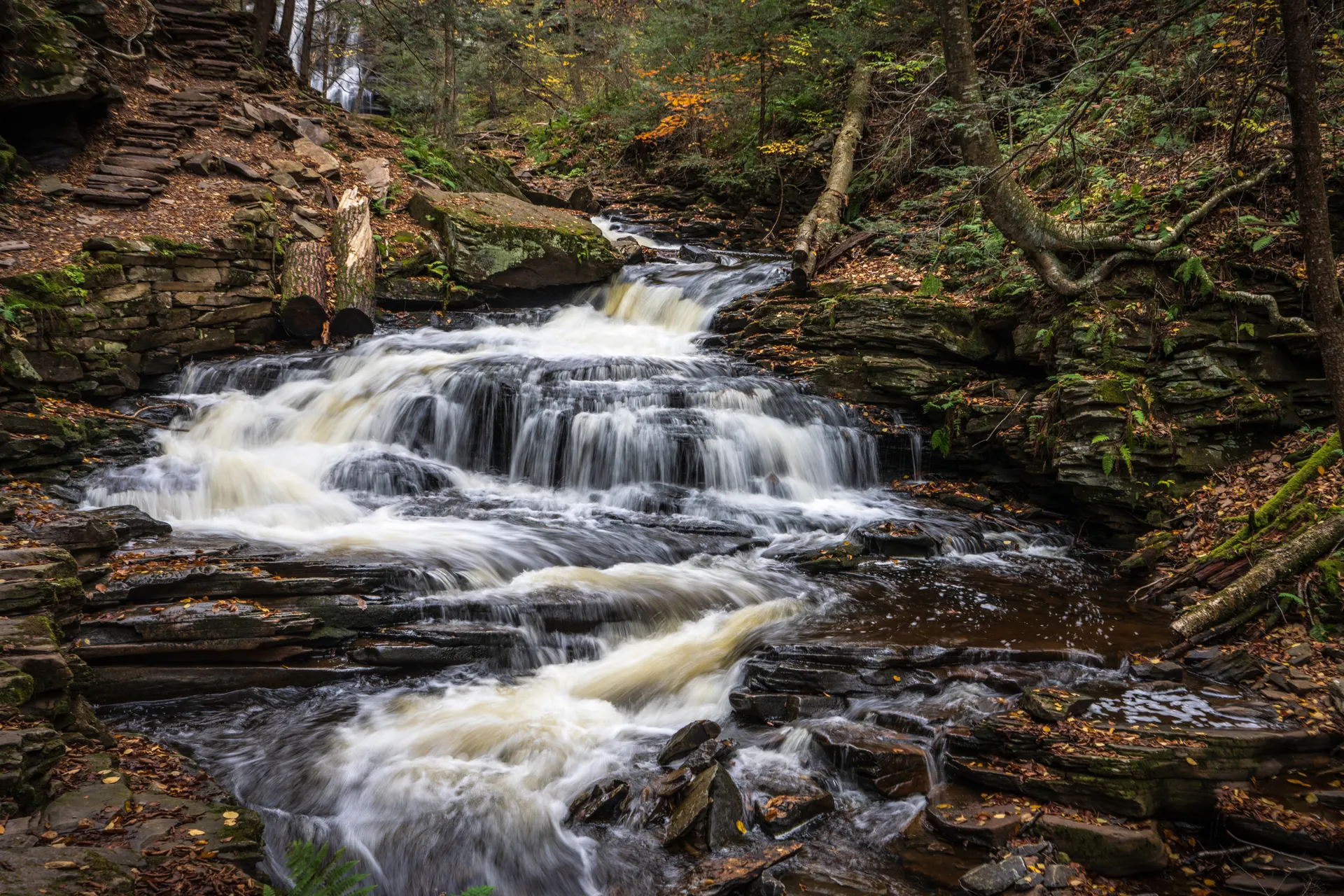
Ricketts Glen State Park: A Waterfall Weekend Itinerary
A weekend built around the Ricketts Glen waterfalls hike: the Falls Trail past 21 named waterfalls, the Glen Leigh and Ganoga Glen loop,…
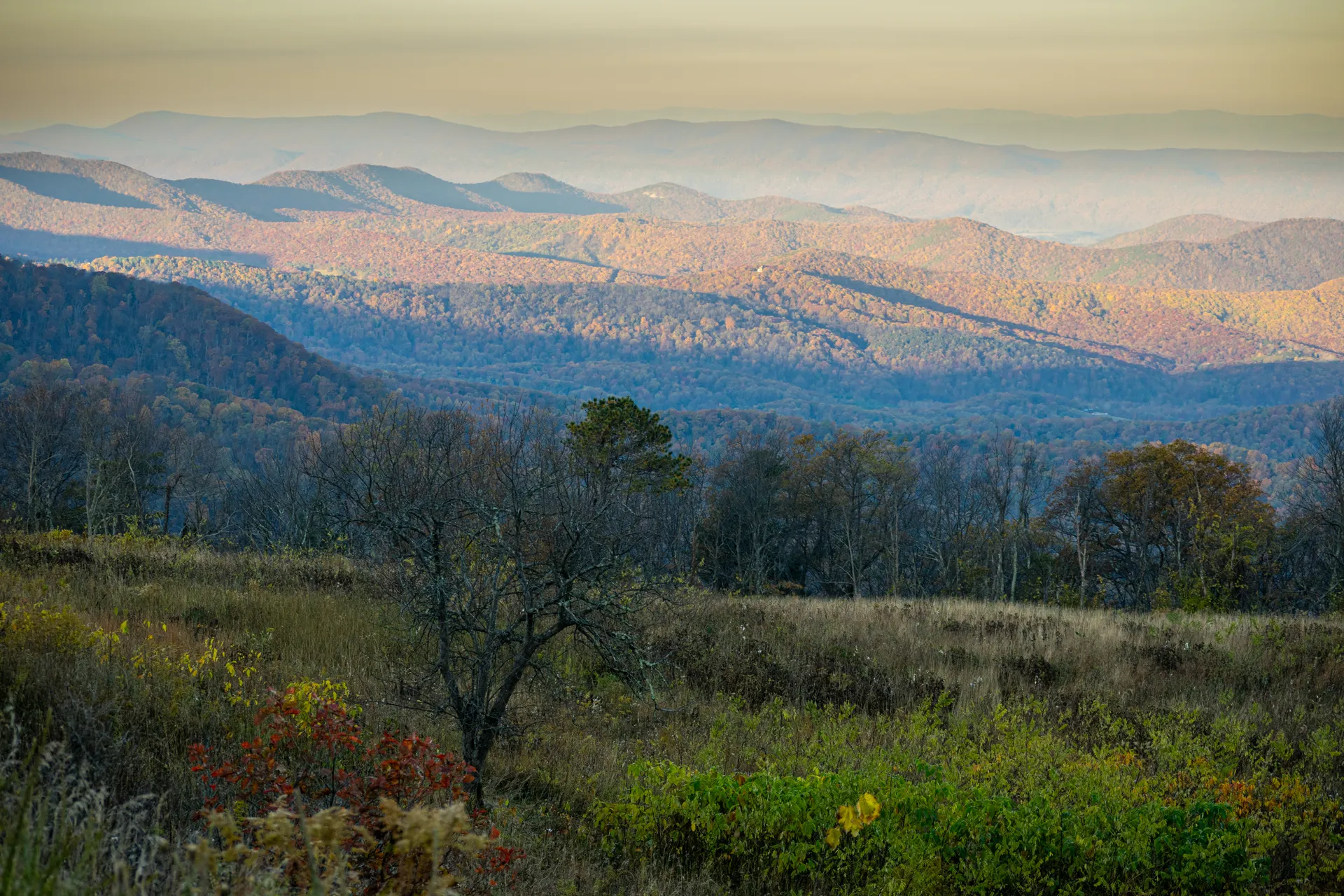
Shenandoah National Park Itinerary: 3 Days on Skyline Drive
Three days along Skyline Drive in Shenandoah National Park: the best hikes (Old Rag, Hawksbill, Stony Man, Dark Hollow Falls), 75…
Guides for this tripBest Pennsylvania Waterfall Hikes and When to See ThemPine Creek GorgeRicketts Glen Falls Trail
What adventurers say about us.
All reviews are from verified guests. ★★★★★ 5.0 average from 20+ bookings.
"Felt like going out with a really knowledgeable friend who just happens to know everything about the area. No awkward tour-guide energy, just a magnificent day."
"Yulia is an incredible guide. She knew every trail, every viewpoint, and exactly how to pace the day for our group. The photos she took of us were stunning. 100% booking again."
"I was visiting Seattle solo and this was the best decision I made on the trip. Yulia picked me up, had snacks, and took us to a trail I never would have found on my own. Absolute must-do."
"We did this as a couple's trip and it was perfect. Yulia adapted everything to us, our pace, our interests, our photo obsession. The mountain views were unreal."
"Phenomenal experience. Yulia has deep local knowledge and a real passion for the outdoors. She went out of her way to show us the hidden gems tourists never see. Will remember this forever."
"I've done a few guided hikes and this was by far the best. Yulia is warm, funny, and genuinely expert. The trail she chose had the most insane wildflower bloom, we got so lucky."
Fees, reservation windows, shuttle dates and trail closures are planning estimates. Confirm hours, road status and any reservations with the land manager before you go.
What other travelers are saying
Be the first to leave a tip or question for the next traveler.
Was this helpful?
One tap. It goes straight to Yulia and Margarita.
You can't hike it if you can't get the permit.
The best hikes in America run on lotteries that open once a year and sell out in minutes. Every trail runs on its own calendar. Pick the ones you want and we do the watching.
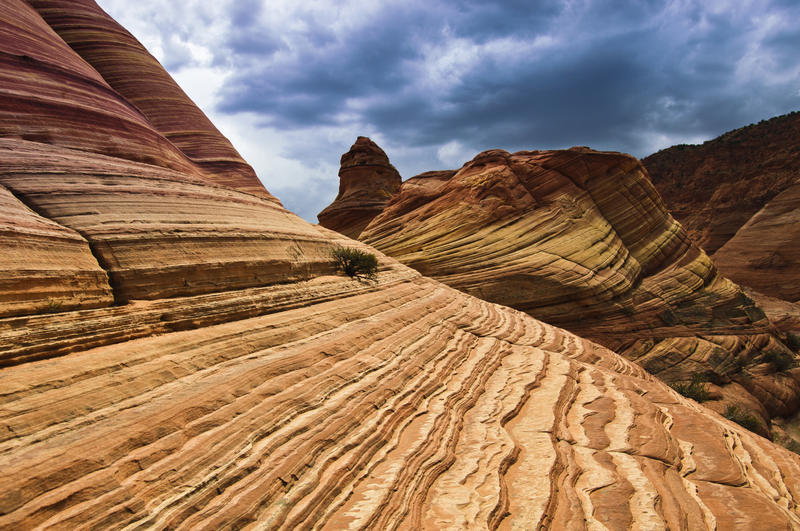 The WaveCoyote Buttes North · Arizona / UtahPermitLotterybrutal odds
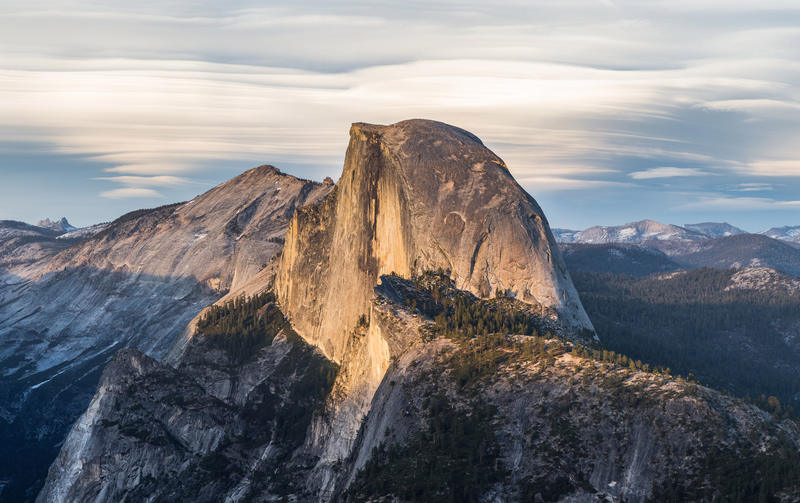 Half Dome CablesYosemite NP · CaliforniaPermitOpens Mar 1fair odds
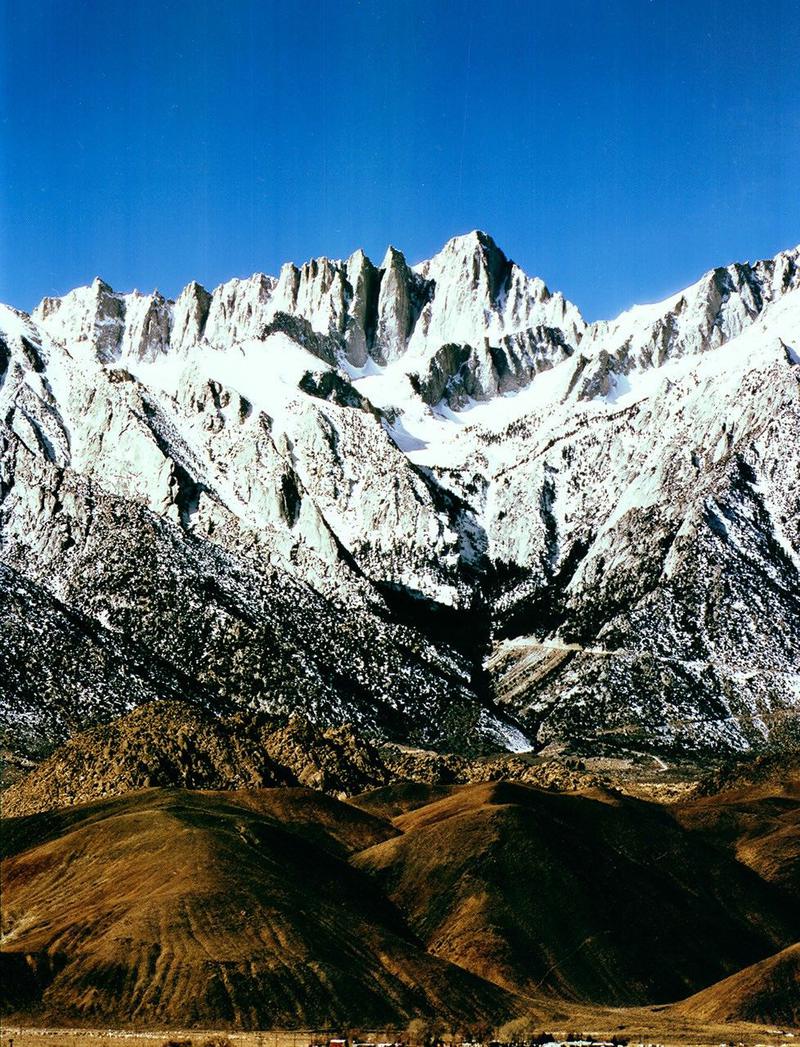 Mt. WhitneyInyo NF · CaliforniaPermitOpens Feb 1tough odds
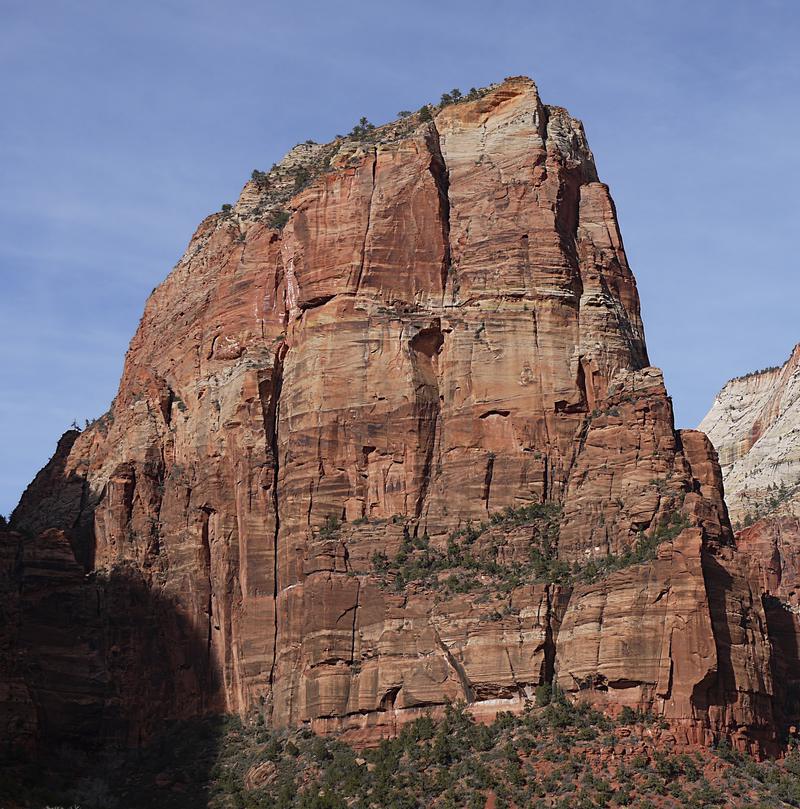 Angels LandingZion NP · UtahPermitLotterytough odds
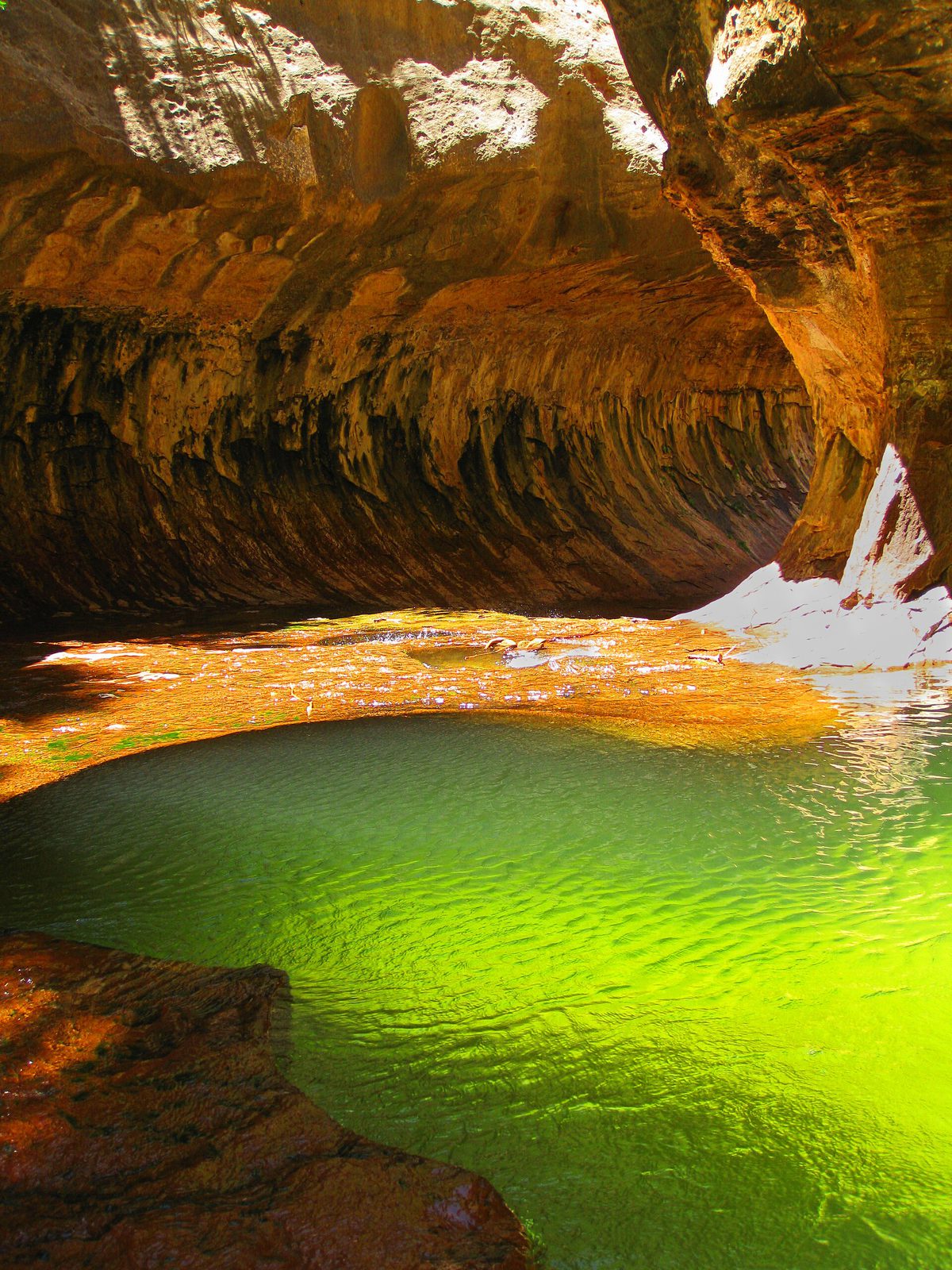 The SubwayZion NP · UtahPermitLotterytough odds
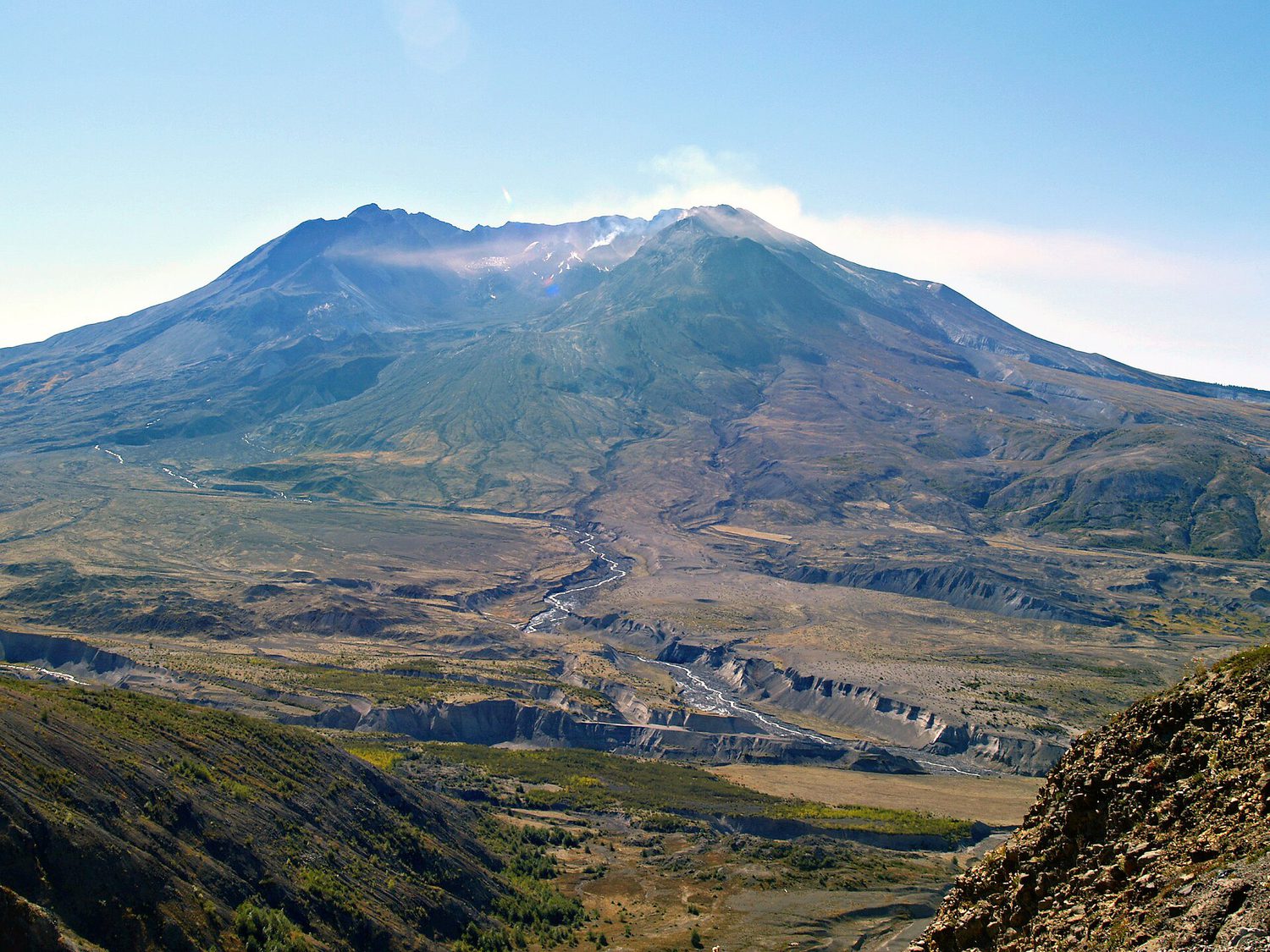 Mount St. Helens Summit ClimbGifford Pinchot NF · WashingtonPermitReservationtough odds
How it works
- An email the morning each window opens, never the day after.
- A 14-day heads-up so you can line up your group and dates.
- Win odds and a ranked backup plan for every trail you pick.
Didn't win? We keep watching. We check recreation.gov every day for The Enchantments, Half Dome and Angels Landing, and email you the moment a sold-out date frees up. Cancellations are the second chance most people never hear about.