Mississippi Outdoor Adventure Map
River, barrier island, trace & via ferrata, end to end.
10-day Mississippi outdoor road trip. Paddle the Black Creek Wild & Scenic River, ferry out to a Gulf Islands barrier island, hike and camp on the Natchez Trace, and climb Mississippi's only via ferrata at Tishomingo State Park, from Hattiesburg to the Appalachian foothills.
“I’ve requested to book a Chain Lakes Loop guide on ExplorOFF, and it was the best idea ever! I highly recommend going with their guided option since you get a real human connection on the trail and don’t have to worry about a thing. Yulia was great to talk to!”
 30 stops on a real mapEvery stop pinned in order→
Mississippi: every stop pinned in order.
Black Creek · Ship Island · Natchez Trace · Tishomingo · Mississippi
Every stop on this trip, in order, opens as one driving route in the Google Maps app. No copying addresses across one at a time.
Mississippi in photos: 2 of the stops.
Plan and book your 10 days in Mississippi, one step at a time
- Black Creek near Brooklyn is running about 89 cfs (gauge 3.8 ft) today, below the 20th percentile for late September (105 cfs; median 163 cfs): expect shallow riffles, some dragging over sand bars, and slower miles than the day estimates. Source
- Ship Island Excursions runs the Gulfport to West Ship Island round trip March to October only, and camping is not allowed on West Ship Island, so day 4 is a day trip. Source
How 10 days in Mississippi split up
Plan 10 days for Mississippi. Distance: ~700 mi. Activities: Paddle · Camp · Climb. Permits: Free / reserved. This 10-day Mississippi outdoor road trip is built for active travelers who want variety: wilderness river paddling, barrier-island camping, historic-trail backpacking, and climbing, all in one state. You base out of four towns, Hattiesburg, Gulfport, Natchez, and Tishomingo, and cover roughly 700 miles from the Gulf Coast up to the Appalachian foothills.
Day 1: Arrive in Hattiesburg & prep for Black Creek
2 stops · Day one
Day 2: Black Creek paddle & sandbar camping
3 stops · Day two
Day 3: Paddle out & drive to the Gulf Coast
3 stops · Day three
Day 4: Ferry day to West Ship Island
5 stops · Day four
Day 5: Davis Bayou & Ocean Springs
2 stops · Day five
Day 6: Drive to Natchez & the Natchez Trace
4 stops · Day six
Day 7: Hike the Natchez Trace Trail & camp at Rocky Springs
3 stops · Day seven
Day 8: Hike out & drive to Tishomingo
3 stops · Day eight
Day 9: Tishomingo via ferrata & Bear Creek trails
3 stops · Day nine
Day 10: Final hike & drive to your airport
2 stops · Day ten
Arrive in Hattiesburg & prep for Black Creek
Fly into Jackson-Medgar Wiley Evers International Airport (JAN), pick up your rental car, and drive about 90 minutes south to Hattiesburg, your base for the Black Creek Wilderness. Use the afternoon to grab last-minute supplies and confirm your canoe or kayak rental for tomorrow.
Not the order you want? Drag a stop, or use the arrows beside it. Stops move between days too.
- Drive from
~90 mi · 1.5 hr · airport to base town · DriveFly into Jackson-Medgar Wiley Evers International Airport (JAN), the most central airport for this trip, pick up a rental car, and drive about 90 minutes south to Hattiesburg. New Orleans (MSY) works for the southern legs and Memphis (MEM) for the northern end.
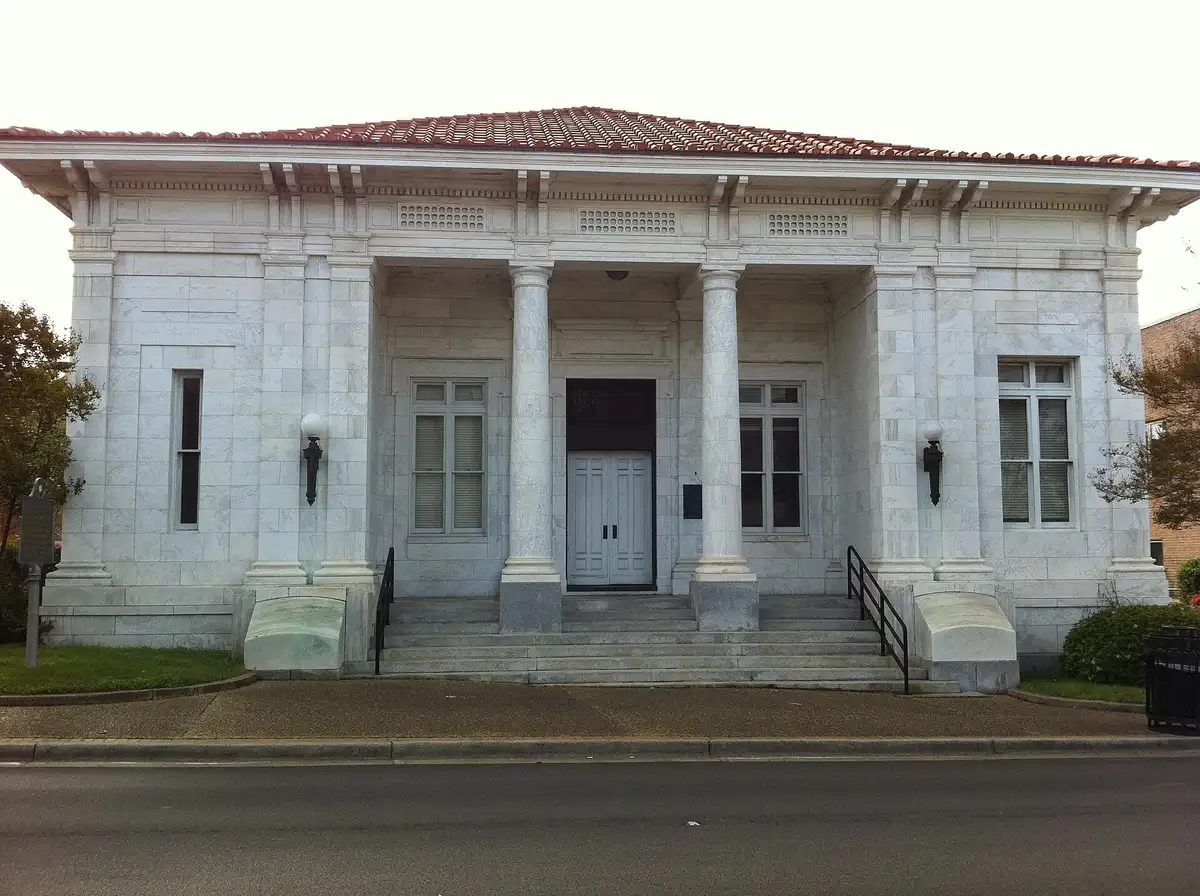 Dudemanfellabra / CC BY-SA 3.0Overnight & resupply in Hattiesburg
Base town · full services · lodgeCheck into Hattiesburg, your base for the Black Creek Wilderness and the last easy resupply before the river. Confirm your canoe or kayak rental and shuttle, then sort dry bags, water, and food for a two-day self-supported paddle.
Black Creek paddle & sandbar camping
Drive to Janice Landing off Highway 29 and self-issue your free wilderness permit at the kiosk. Launch onto the Black Creek, Mississippi's only National Wild & Scenic River, and paddle downstream through the Black Creek Wilderness past cypress, vertical bluffs, and white sand bars.
Not the order you want? Drag a stop, or use the arrows beside it. Stops move between days too.
- Drive to Janice Landing
~30 mi · 1 hr · Black Creek put-in · DriveDrive to Janice Landing off Highway 29, a public concrete boat ramp with a small picnic area, and self-issue your free wilderness permit at the kiosk. This is a common put-in for the multi-day Janice-to-Fairley-Bridge run.
 Black Creek Wild & Scenic River paddle
~6 mi today · calm, scenic water · activityLaunch onto the Black Creek, Mississippi's only National Wild & Scenic River, and paddle downstream through the Black Creek Wilderness past cypress, vertical bluffs, and white sand bars. Calm water, scenic and beginner-friendly with some experience.
See the trail →- Primitive camp on a river sandbar
Free · self-selected sandbar · Leave No Trace · lodgePick a white sandbar above the waterline for a primitive camp. Practice strict Leave No Trace: pack out all trash, bury waste well away from the water, and keep any fire small in a pan. No facilities, be fully self-sufficient.
Paddle out & drive to the Gulf Coast
Enjoy the morning quiet and finish the paddle to Fairley Bridge Landing, the designated take-out with a concrete ramp and parking. De-rig your boats and hand off to your outfitter or shuttle.
Not the order you want? Drag a stop, or use the arrows beside it. Stops move between days too.
- Paddle to Fairley Bridge Landing
~6 mi · morning paddle · take-out · activityEnjoy the morning quiet and finish the paddle to Fairley Bridge Landing, the designated take-out with a concrete ramp and gravel access road. De-rig your boats and hand off to your outfitter or shuttle.
- Drive Fairley Bridge → Gulfport
~60 mi · 1.5 hr · wilderness to coast · DriveDrive south about 90 minutes to Gulfport on the Mississippi Gulf Coast, trading the wilderness river for the coast. Stock up on all your water, food, and sun protection for tomorrow's overnight on Ship Island, where nothing is for sale.
- Overnight in Gulfport
Coastal base · near the ferry harbor · lodgeCheck into Gulfport, ideally near the small-craft harbor where the Ship Island ferry departs. Relax, then prep every water bottle, food item, and sun shelter you'll need for the barrier island, which has no store or drinking water.
Ferry day to West Ship Island
Take the morning Ship Island Excursions ferry from Gulfport out to West Ship Island, part of the Gulf Islands National Seashore, watching for dolphins across the Mississippi Sound on the roughly hour-long crossing.
Not the order you want? Drag a stop, or use the arrows beside it. Stops move between days too.
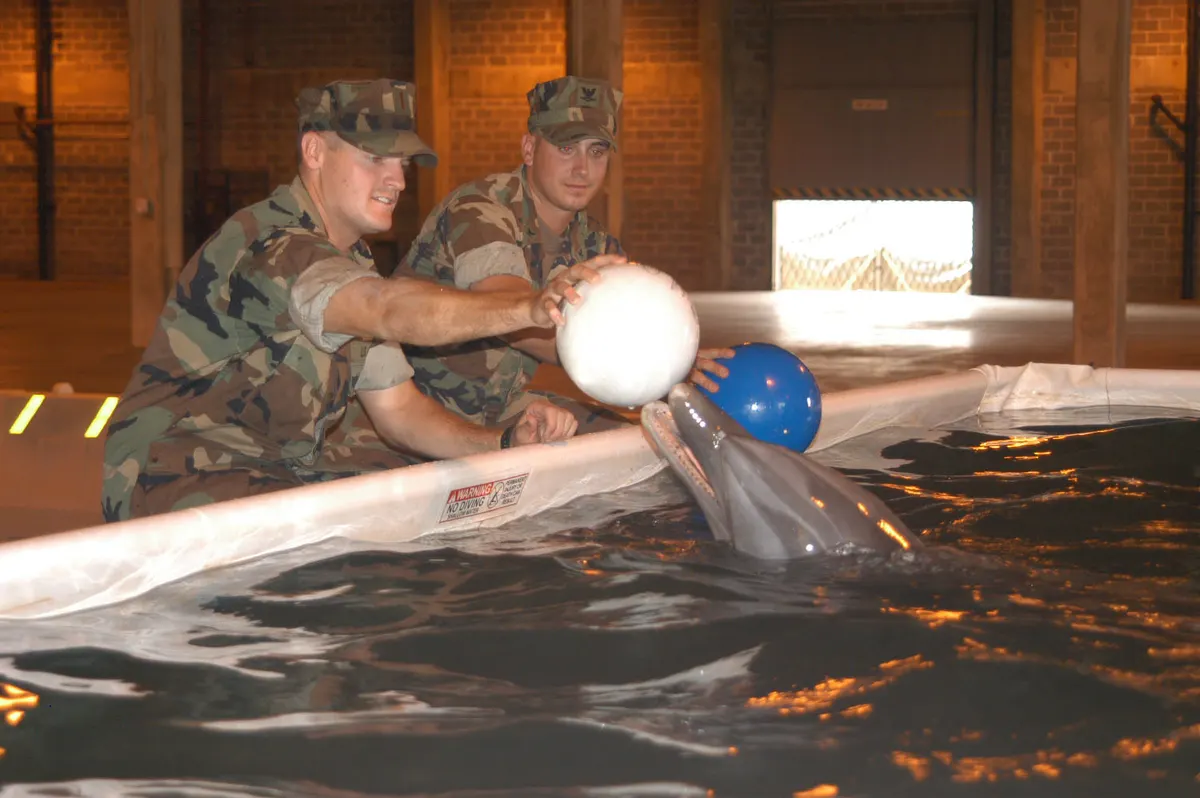 Ship Island Excursions ferry, round trip
~1 hr each way · Mar to Oct · book ahead · activityTake the morning Ship Island Excursions ferry from Gulfport out to West Ship Island in the Gulf Islands National Seashore, watching for dolphins across the Mississippi Sound. The round trip runs March to October ($48 adult, $38 child). Camping is not allowed on West Ship Island, so this is a day trip: confirm the return sailing when you board.
Book this →- Fort Massachusetts
Civil War brick fort · free · rare shade · ViewpointOn arrival, tour Fort Massachusetts, a Civil War-era brick fortification and one of the only sources of shade on the island. Ranger-led talks may be available for the island's history.
Official info → - Beach walk & birding
2–3 hr · beaches, dunes, shelling · HikeWalk the beaches and dunes of West Ship Island, a great spot for birdwatching, shelling, and swimming in the Gulf. The island is critical migratory-bird habitat, so keep clear of roped-off nesting areas.
 Shocking Blue / CC BY-SA 3.0Afternoon ferry back to Gulfport
~1 hr · confirm the sailing time · ViewpointCatch the afternoon ferry back to Gulfport on the return half of your ticket. Confirm the return time when you land, the last sailing can be earlier than you expect, and it can shift with weather.
- Second night in Gulfport
Rinse off the salt · seafood dinner · lodgeBack on the mainland, rinse the salt and sand off your gear and head out for a fresh Gulf Coast seafood dinner: shrimp, oysters, and fresh fish.
Davis Bayou & Ocean Springs
Drive half an hour east to the mainland side of the Gulf Islands National Seashore at Davis Bayou, just outside Ocean Springs. Trails and boardwalks run out over the bayous for wading birds, there is a visitor center with a park film and observation deck, and a boat launch into the bayous and the Mississippi Sound if you have your own kayak.
Not the order you want? Drag a stop, or use the arrows beside it. Stops move between days too.
- Davis Bayou Area trails & boardwalks
Gulf Islands NS · gate 8 am to sunset · HikeDrive 30 minutes east to the mainland side of Gulf Islands National Seashore at Davis Bayou, three miles east of downtown Ocean Springs (3500 Park Rd). Walk the trails and boardwalks over the bayous for wading birds and alligators, stop at the visitor center (9 am to 4 pm), and launch your own kayak from the boat launch if you brought one.
Official info → - Third night in Gulfport
Resupply for the inland legs · lodgeA last coast night: wander downtown Ocean Springs for dinner on the way back, then resupply groceries for the long drive inland to Natchez tomorrow.
Drive to Natchez & the Natchez Trace
Drive about 3.5 hours west to Natchez, one of the oldest European settlements on the Mississippi River and the southern terminus of the Natchez Trace Parkway. Spend the afternoon on the Trace, an ancient travel corridor turned scenic byway managed by the National Park Service.
Not the order you want? Drag a stop, or use the arrows beside it. Stops move between days too.
- Drive Gulfport → Natchez
~210 mi · 3.5 hr · inland drive · DriveDrive about 3.5 hours west to Natchez, one of the oldest European settlements on the Mississippi River and the southern terminus of the Natchez Trace Parkway. The route runs through rural Mississippi.
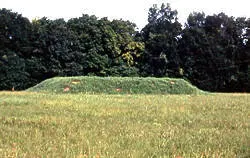
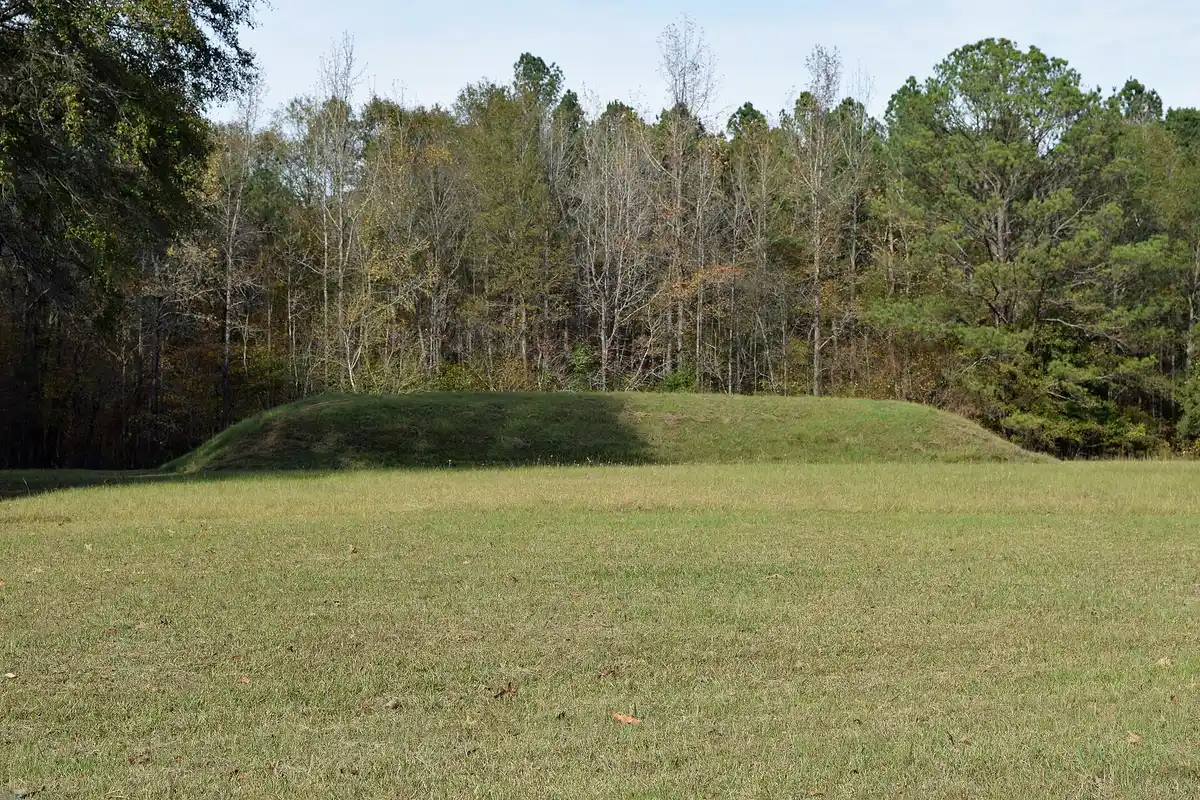
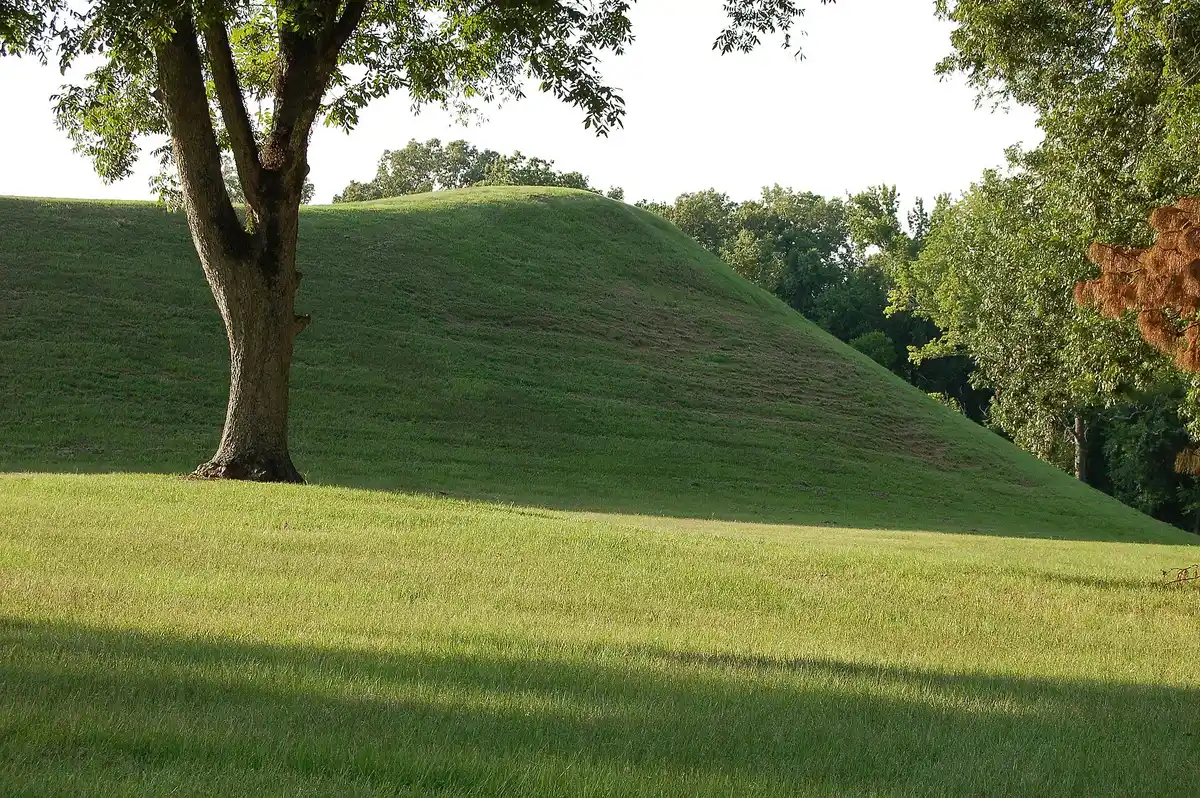 Galen Parks Smith (Gsm / CC BY 2.5Emerald Mound
Native American ceremonial mound · free · ViewpointVisit Emerald Mound, one of the largest Native American ceremonial mounds in the country, just off the Natchez Trace Parkway near Natchez. It is free and managed by the National Park Service.
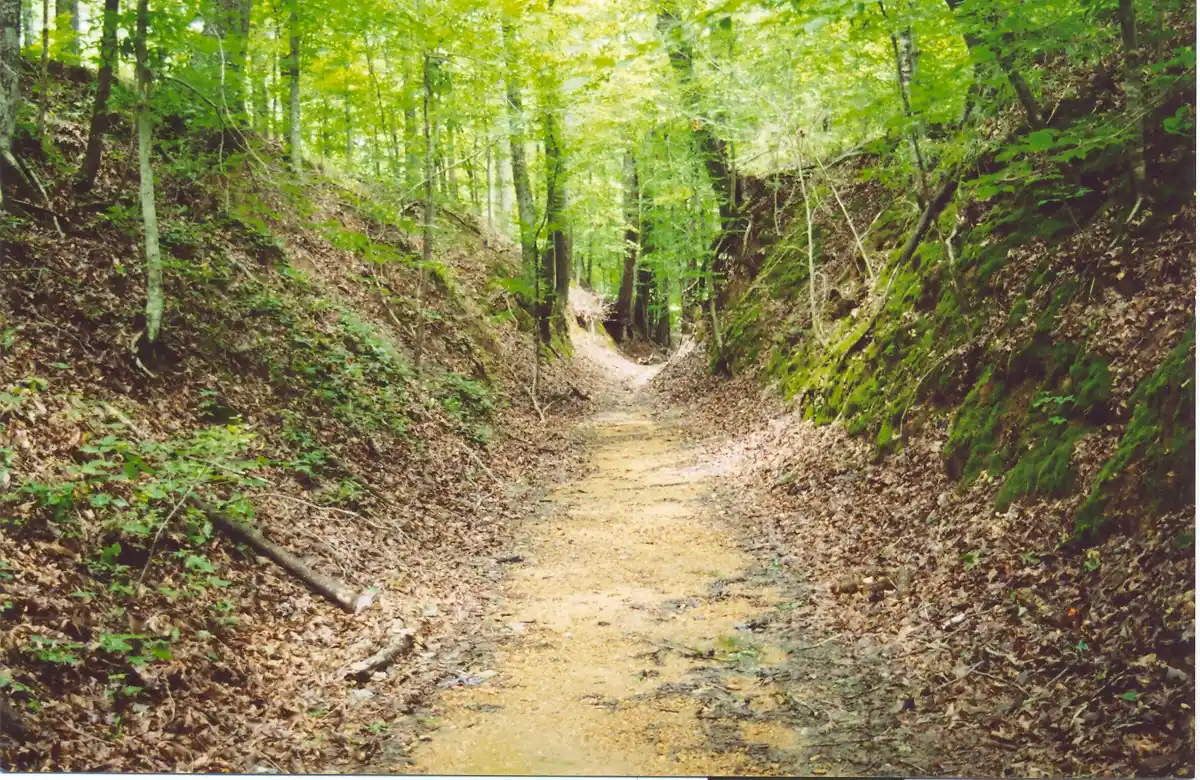
Official info →- Walk the Sunken Trace
~0.5 mi · flat · the historic Old Trace · HikeWalk a stretch of the atmospheric Sunken Trace, where centuries of foot and hoof traffic wore the path deep into the earth. It is a short, flat, evocative section of the historic Old Trace up the Parkway.
Official info → 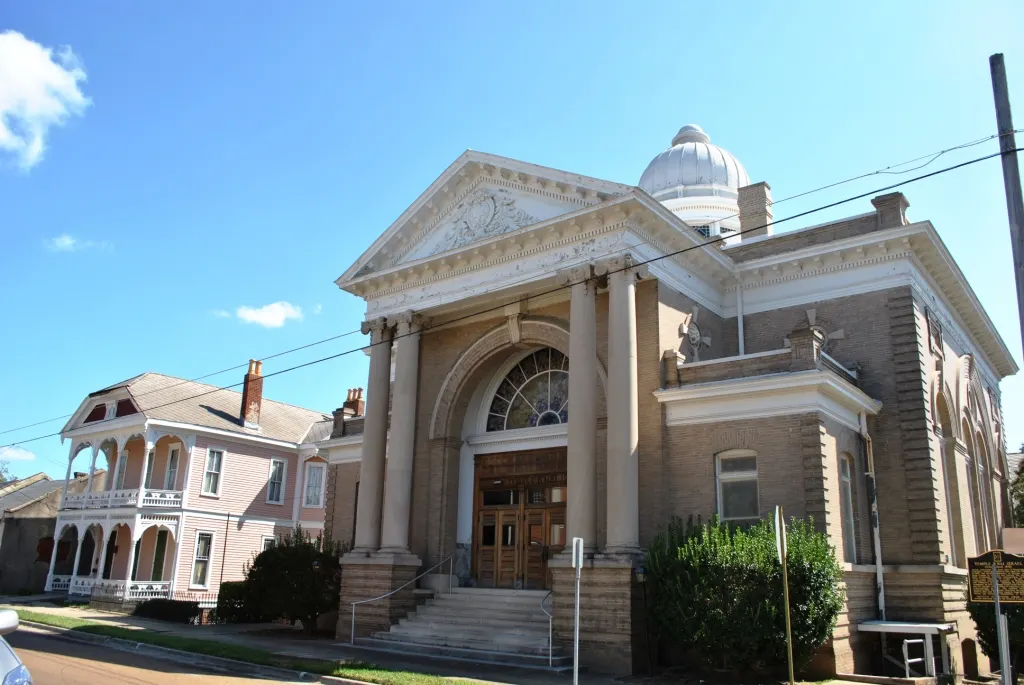 Elisa.rolle / CC BY-SA 3.0Overnight in Natchez
Historic B&Bs & hotels · lodgeCheck into a historic Natchez B&B or a river-bluff hotel, then organize your backpack, food, and water for tomorrow's overnight on the Natchez Trace. Trace campgrounds are primitive with limited or no potable water.
Hike the Natchez Trace Trail & camp at Rocky Springs
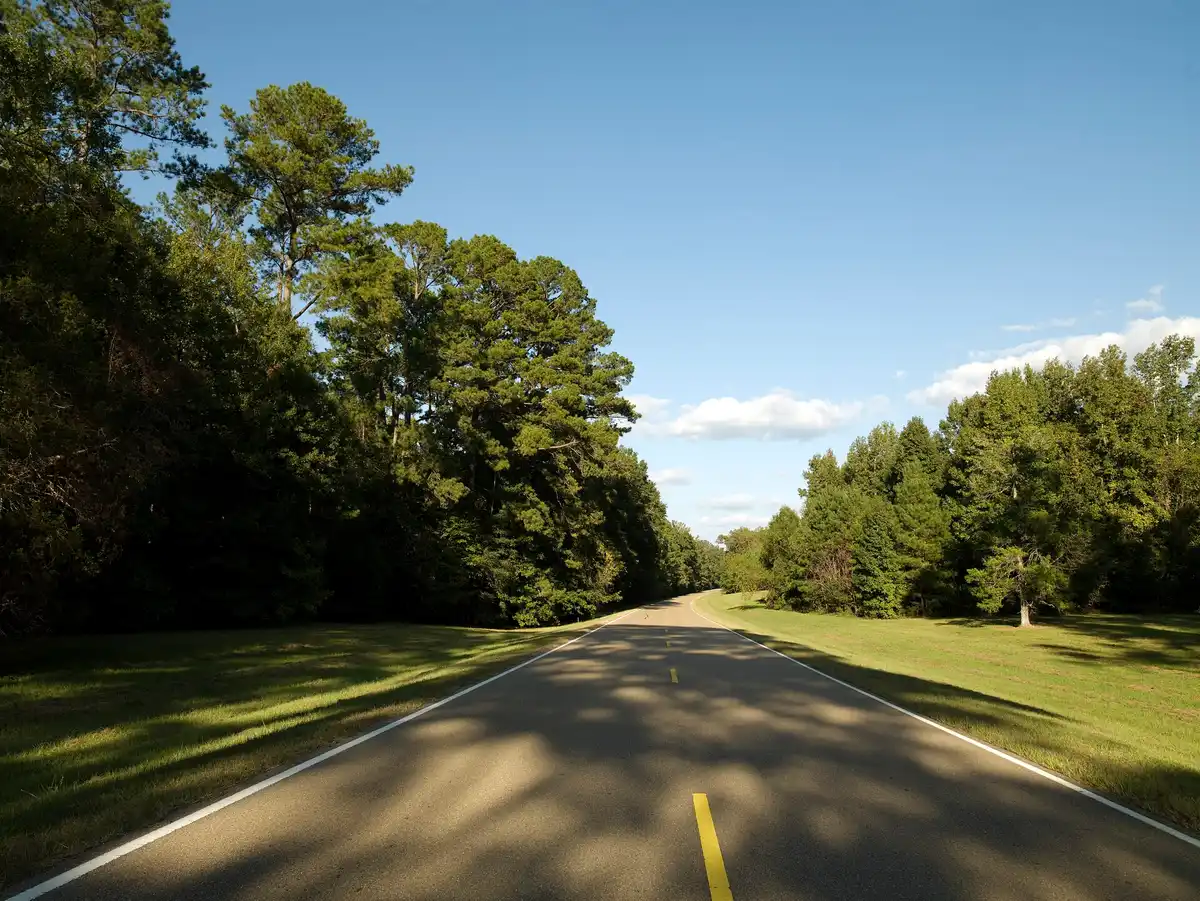
Drive north to Rocky Springs (Parkway milepost 54.8) and hike an out-and-back stretch of the Natchez Trace National Scenic Trail. The Rocky Springs section winds through hardwood forest, over rolling hills, and past a ghost-town site and historic markers.
Not the order you want? Drag a stop, or use the arrows beside it. Stops move between days too.
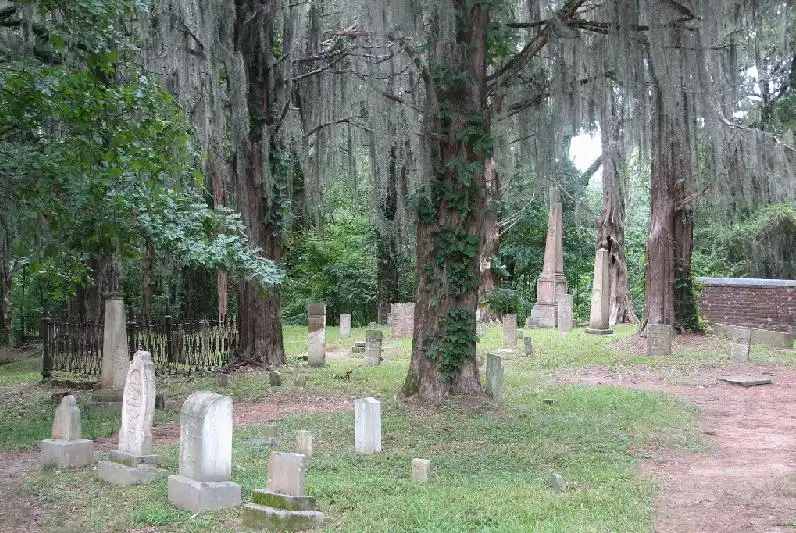 NatalieMaynor from Jac / CC BY 2.0Drive to Rocky Springs trailhead
~60 mi · 1.5 hr · Parkway MP 54.8 · DriveDrive north on the Natchez Trace Parkway to Rocky Springs (milepost 54.8), the trailhead for a stretch of the Natchez Trace National Scenic Trail. Rocky Springs also has a historic ghost-town site and natural spring.
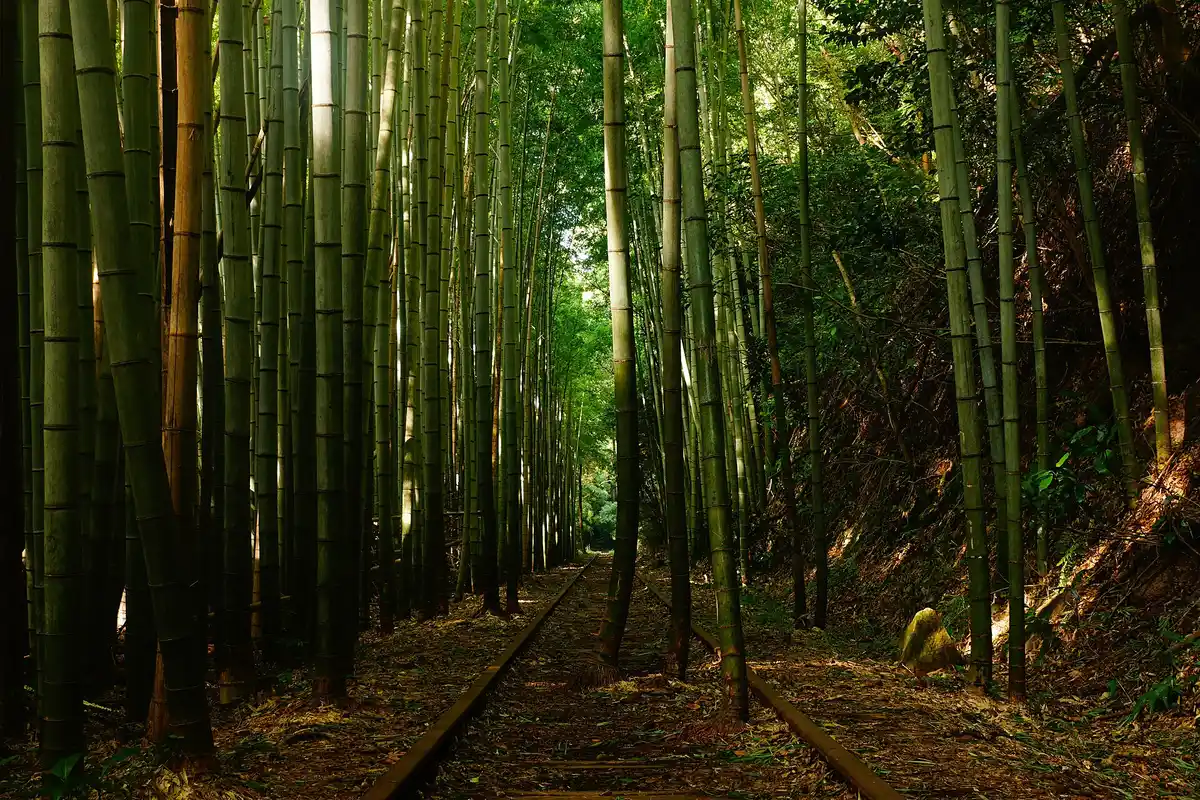 rikky_photography / CC BY 4.0Hike the Rocky Springs section (out and back)
~10–12 mi · 6–8 hr · moderate · HikeHike an out-and-back section of the Natchez Trace National Scenic Trail with a day pack through hardwood forest, over rolling hills, and past historic markers. Water sources are limited, so carry enough or a reliable filter, and self-register where posted.
See the trail →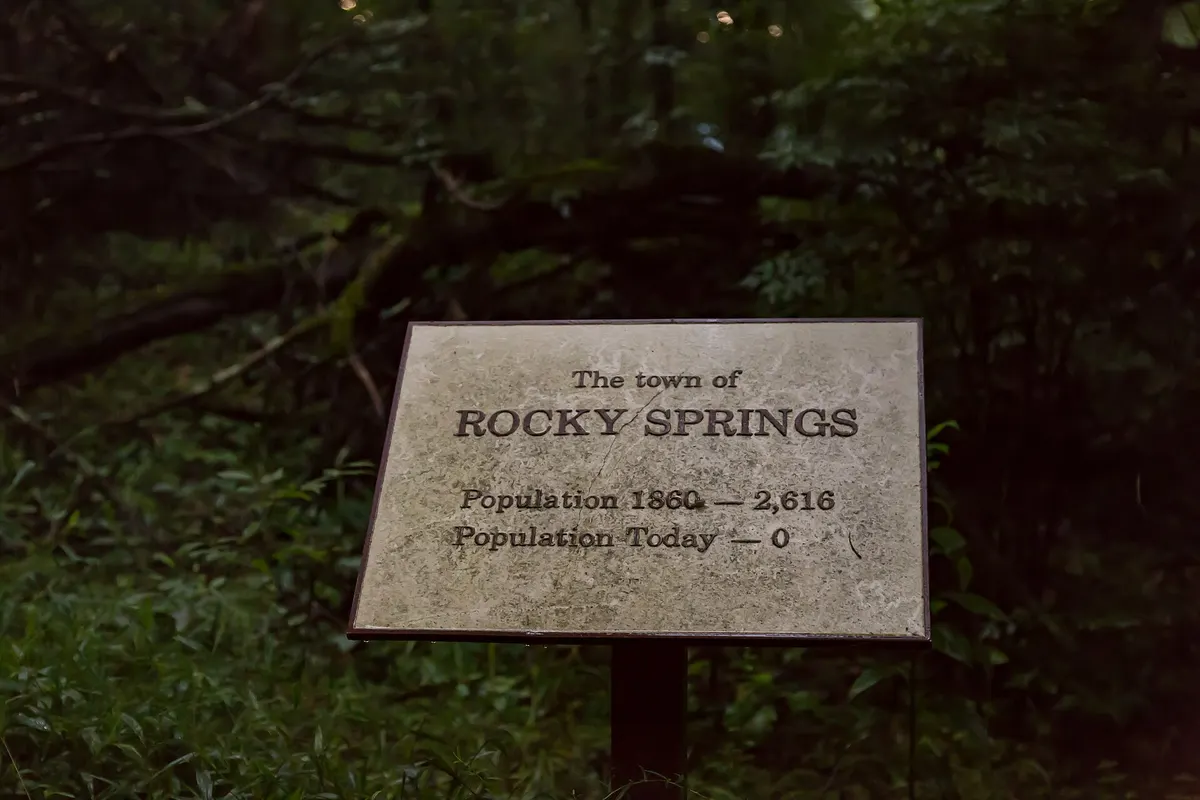 Tony Webster from Minn / CC BY-SA 2.0Camp at Rocky Springs Campground
Free · first-come · restrooms & drinking water · lodgeCamp at the free, first-come Rocky Springs Campground: 22 sites for tents and RVs, restrooms and drinking water, no reservations. It is busiest on spring and fall weekends, so have a backup plan.
Hike out & drive to Tishomingo
Take an easy morning walk around the old Rocky Springs town site and spring, then start the trip's longest driving leg, roughly 5 hours northeast to Tishomingo State Park in the Appalachian foothills of the state's far corner.
Not the order you want? Drag a stop, or use the arrows beside it. Stops move between days too.
- Rocky Springs town site & spring
Short self-guiding trails · ~1 hr · HikeWalk the short self-guiding trails through the old Rocky Springs town site to the spring and a stretch of the Old Natchez Trace before the long drive. Do a thorough tick check before you load up.
- Drive Rocky Springs → Tishomingo
~270 mi · ~5 hr · longest drive day · DriveStart the trip's longest driving leg, about 5 hours northeast to Tishomingo State Park in the Appalachian foothills of the far corner of the state, a landscape of sandstone bluffs and clear streams unlike the coastal plain. Fuel up and pack road food.
- Check into Tishomingo State Park
Cabins & campsites · reserve ahead · lodgeCheck into a cabin or campsite at Tishomingo State Park and rest up for the via ferrata. Cabins and campsites book out on spring and fall weekends, so reserve 3–6 months ahead.
Tishomingo via ferrata & Bear Creek trails
Climb Mississippi's only via ferrata at Tishomingo State Park, a guided fixed-cable route along the rock faces above Bear Creek Canyon. Reservations are mandatory and all climbing gear (harness, helmet, lanyard) is provided; check the park's minimum age and weight requirements.
Not the order you want? Drag a stop, or use the arrows beside it. Stops move between days too.
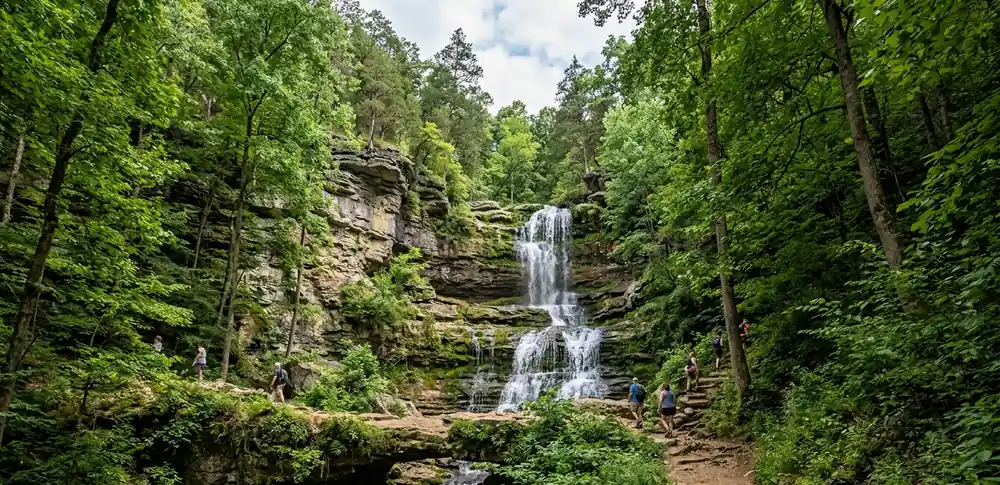
 Fredlyfish4 / CC BY-SA 4.0Tishomingo via ferrata (guided)
2–3 hr · reservations required · gear provided · activityClimb Mississippi's only via ferrata, a guided fixed-cable route along the rock faces above Bear Creek Canyon at Tishomingo State Park. Reservations are mandatory and all climbing gear (harness, helmet, lanyard) is provided.
Operator info →- Outcroppings / Bear Creek Trail
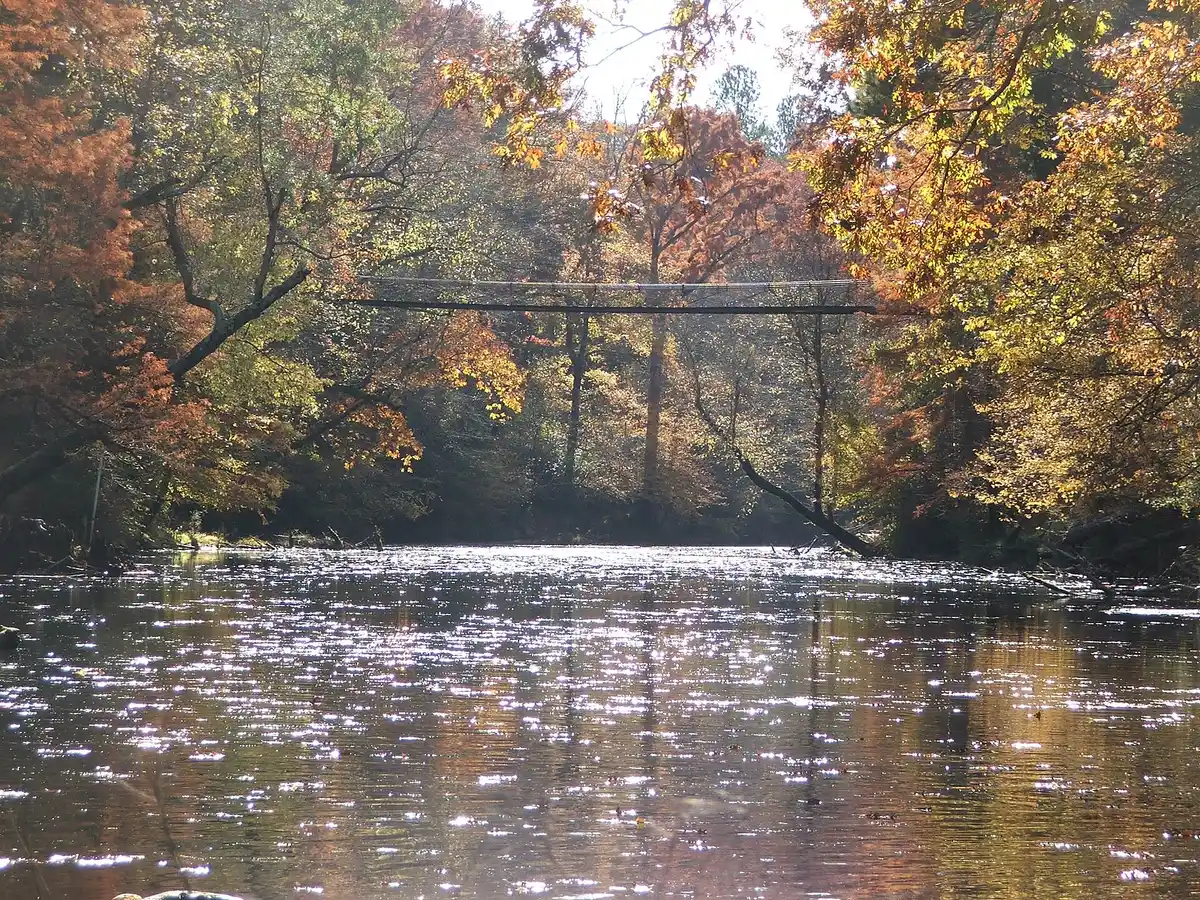
Moderate · sandstone bluffs & swinging bridge · HikeIn the afternoon, explore the park's sandstone outcroppings on the Outcroppings / Bear Creek Trail and cross the historic swinging bridge over the creek. The rock formations are the geologic highlight of the park.
See the trail → 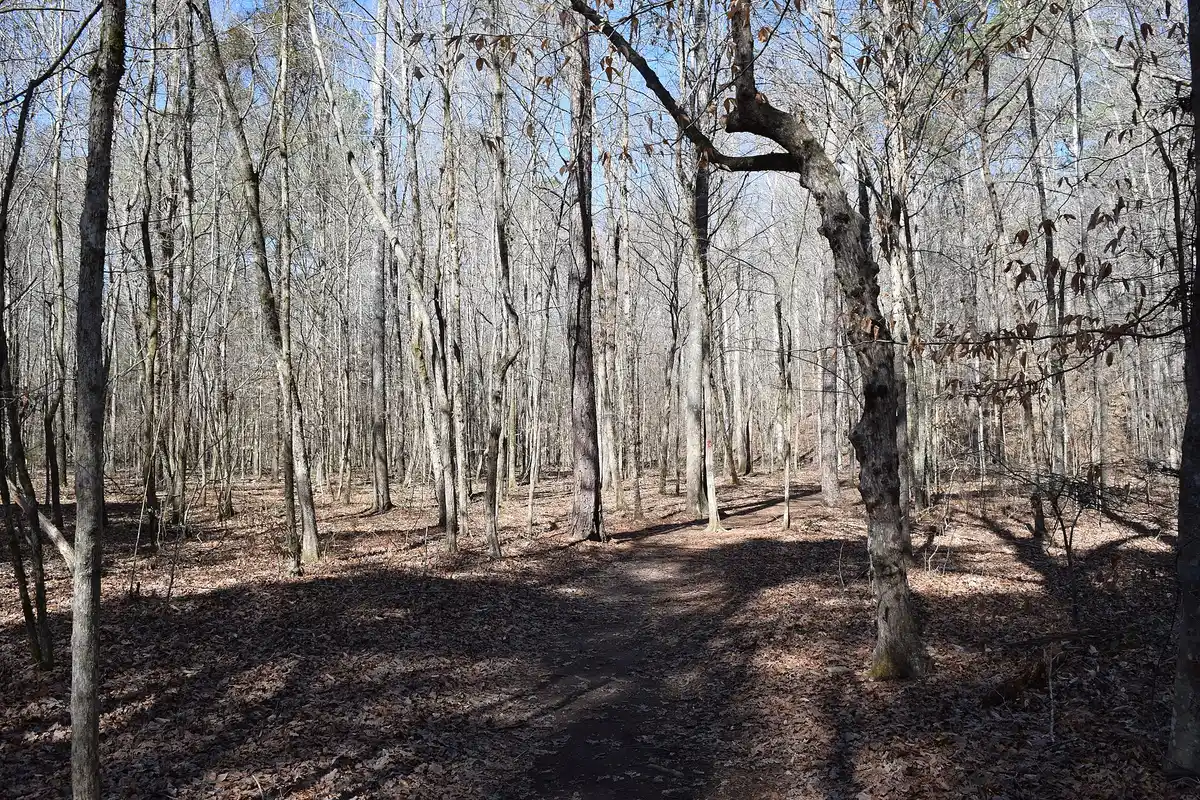 Fredlyfish4 / CC BY-SA 4.0Second night at Tishomingo
Dark skies · stargazing · lodgeSpend a second night at Tishomingo in the peaceful Appalachian foothills. Light pollution is minimal, so it is a great spot for stargazing, and the park store has basic supplies.
Final hike & drive to your airport
Take a short final hike, the Swinging Bridge Trail or the in-park section of the Natchez Trace Trail, then break camp. Depending on your flight, drive to the airport that fits best.
Not the order you want? Drag a stop, or use the arrows beside it. Stops move between days too.
- Morning Swinging Bridge Trail
1–2 hr · easy · optional last hike · HikeTake a short final hike, the Swinging Bridge Trail or the in-park section of the Natchez Trace Trail, then break camp. An easy way to squeeze one more walk in before the drive out.
 Drive to Memphis (MEM)
~125 mi · 2.5 hr · closest major airport · DriveDrive to Memphis International Airport (MEM), the closest major hub (~2.5 hr) with the most direct flights. Jackson (JAN) is an alternative at about 3 hours if it fits your return better. Top off fuel near Tupelo and allow time for the rental return.
Book the 9 nights
Beds near the trailheads are the one thing on this trip that genuinely runs out. Everything else can be decided later.
Tell us your dates and we will do the checking. We find what is still open near each trailhead and email you this plan back with a booking link for each night. Nothing is charged and you decide at the end.
Request to bookWhat to pack for Mississippi
Built from this route, not a generic list. Every line says why it is here.
On every day of this trip
On your feet
Because you are sleeping out 2 nights
For the 7 nights under a roof
For the driving days
Essential permits, seasons & planning.
Free but planned permits
Black Creek Wilderness camping is free and self-issued at the landing kiosks. The Ship Island ferry is a day trip: camping is not allowed on West Ship Island. Tishomingo State Park camping and the via ferrata both require reservations.
Go spring or fall
March–May and September–November bring moderate temperatures, lower humidity, and fewer bugs. Summer (June–August) means intense heat, humidity, thunderstorms, and hurricane risk that make multi-day trips brutal. Winters are mild but can bring cold snaps and occasional ice.
Leave No Trace everywhere
On Black Creek and Ship Island especially, pack out all trash, bury human waste away from water, minimize fire impact, and respect wildlife. Camp on Black Creek sandbars above the waterline and use only designated primitive sites on Ship Island and the Trace.
Water is the constant
Black Creek water needs filtering, Ship Island has none for sale, and Natchez Trace campgrounds have limited or no potable water. Carry or treat your own on every backcountry leg, and top off in town before each one.
This is a driving trip
Plan on roughly 700 miles: JAN → Hattiesburg (1.5 hr), Hattiesburg → Gulfport (1.5 hr), Gulfport → Natchez (3.5 hr), Natchez area → Tishomingo (~5 hr), then out via Memphis (1.5 hr) or Jackson (3 hr). A reliable car with decent clearance helps on access roads.
Book the standout activities
The Ship Island ferry, Tishomingo cabins, and the via ferrata all sell out on peak-season weekends. Reserve accommodations and the via ferrata 3–6 months out, and buy ferry tickets a few weeks ahead.
Watch for strainers on Black Creek
Winding coastal-plain streams like Black Creek are often choked with fallen cypress strainers, downed trees lying in the current that can pin and flip a hull. Carry a lightweight folding saw in your dry storage to clear a path when needed, keep your bow pointed away from downed timber, and wear thick water shoes so you can safely drag the canoe over the shallow sandbars.
Mississippi: questions before you go
Mississippi kayaking: the questions people ask most.
Costs vary with accommodation (camping vs. hotels), rental car, and activity fees. Budget roughly $100–$200 per person per day (excluding flights) for a mid-range trip covering rentals, park fees, and food. Camping and self-catering bring that down; the free Black Creek and Trace campgrounds and reserved Ship Island sites keep several nights cheap.
A free, self-issued permit for primitive camping in the Black Creek Wilderness (available at the landings), a ferry ticket for the Ship Island day trip (no camping on West Ship Island), and reservations for camping and the via ferrata at Tishomingo State Park. Natchez Trace campgrounds are free and first-come. Always confirm current requirements on the official park sites.
It is rated moderate. It includes a two-day paddle with sandbar camping on Black Creek, an overnight backpack on the Natchez Trace, and a guided via ferrata. You should have prior experience with paddling, backpacking, and heights, and be in good shape; daily activity runs roughly 4–12 miles of hiking or paddling.
Spring (March–May) and fall (September–November) are ideal: moderate temperatures, lower humidity, and fewer insects. Summer brings intense heat, humidity, thunderstorms, and hurricane season, which makes the multi-day outdoor legs punishing. Winter is mild but can have cold snaps and occasional ice.
Yes for paddling, canoe and kayak rentals are available from Black Creek outfitters near Hattiesburg and Brooklyn, and many will run your shuttle. Backpacking gear is harder to rent locally, so bring your own for the Natchez Trace overnight. The via ferrata provides all climbing gear (harness, helmet, lanyard).
Jackson-Medgar Wiley Evers International (JAN) is the most central and works well for arrival near Hattiesburg. Because the trip ends at Tishomingo in the far northeast, flying home from Memphis International (MEM), about 1.5 hours away, is usually easiest. New Orleans (MSY) is another option for the southern Gulf Coast legs.
Yes. Tell us your dates and we check what is still open for the plan on this page, then send it back with a booking link for each night and the total. Nothing is charged and nothing is held, and you pay the normal rate.
Pick how you want to go.
Same 10-day route. Same 14 stops.
- 1 night, a campsite near Hattiesburg
- $22
- 3 nights, a campsite near Gulfport
- $66
- 1 night, a campsite near Natchez
- $22
- 2 nights, a campsite near Tishomingo
- $44
- 2 nights, the campsite on the route
- $44
- Gulfport to Ship Island ferry, round trip
- Priced when you book
- Rental car, 10 days
- $600
- Gas, about 858 miles
- $120
- 1 night, a room in Hattiesburg
- from $70
- 3 nights, a room in Gulfport
- from $405
- 1 night, a room in Natchez
- from $125
- 2 nights, a room in Tishomingo
- from $220
- 2 nights, campsites on the nights the route camps
- $44
- Gulfport to Ship Island ferry, round trip
- Priced when you book
- Rental car, 10 days
- $600
- Gas, about 858 miles
- $120
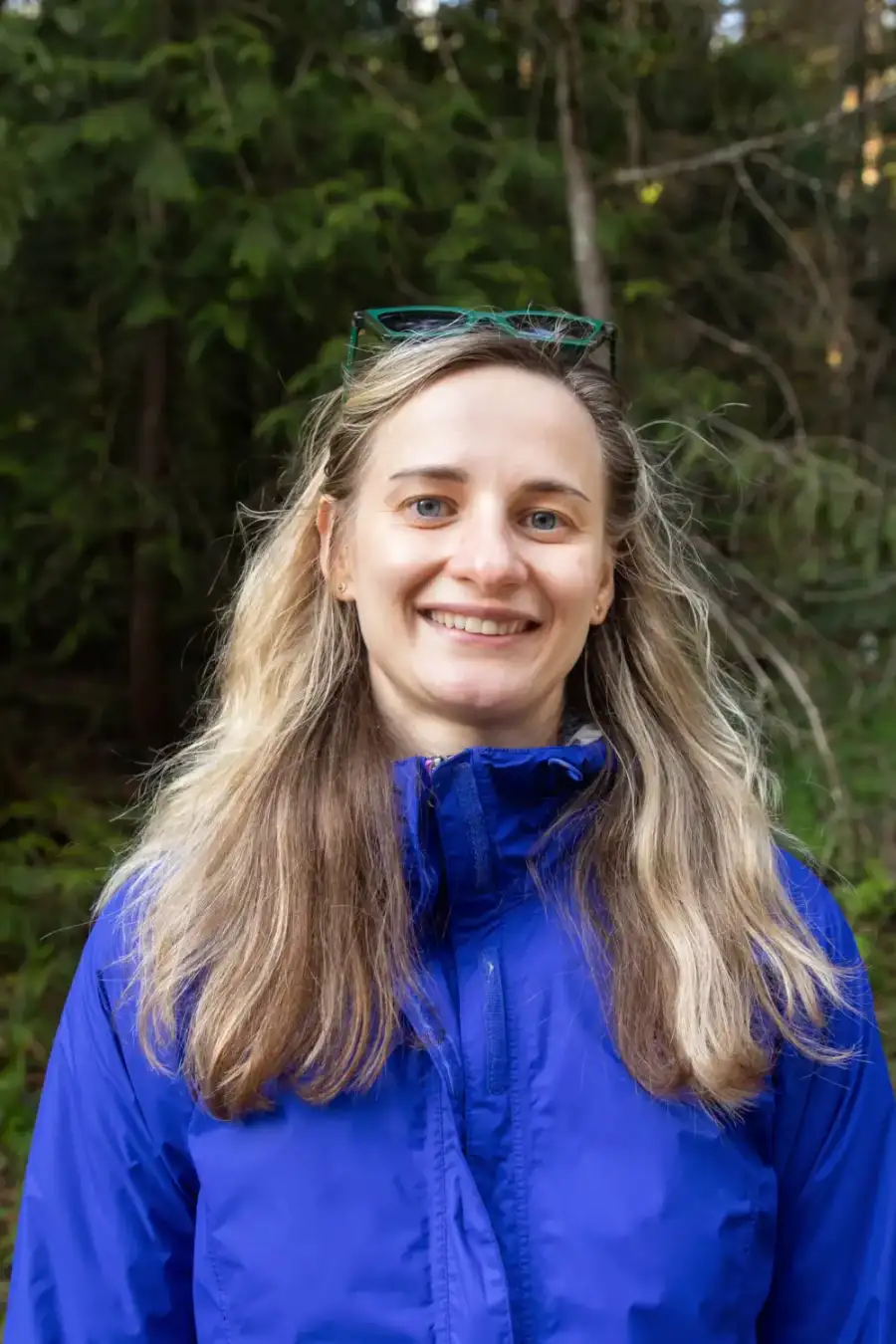
- A private local guide, rooms and campsites booked
- Included
- Airport pickup and every drive
- Included
- Park, permit and campsite fees paid
- Included
- All the gear and the trail meals
- Included
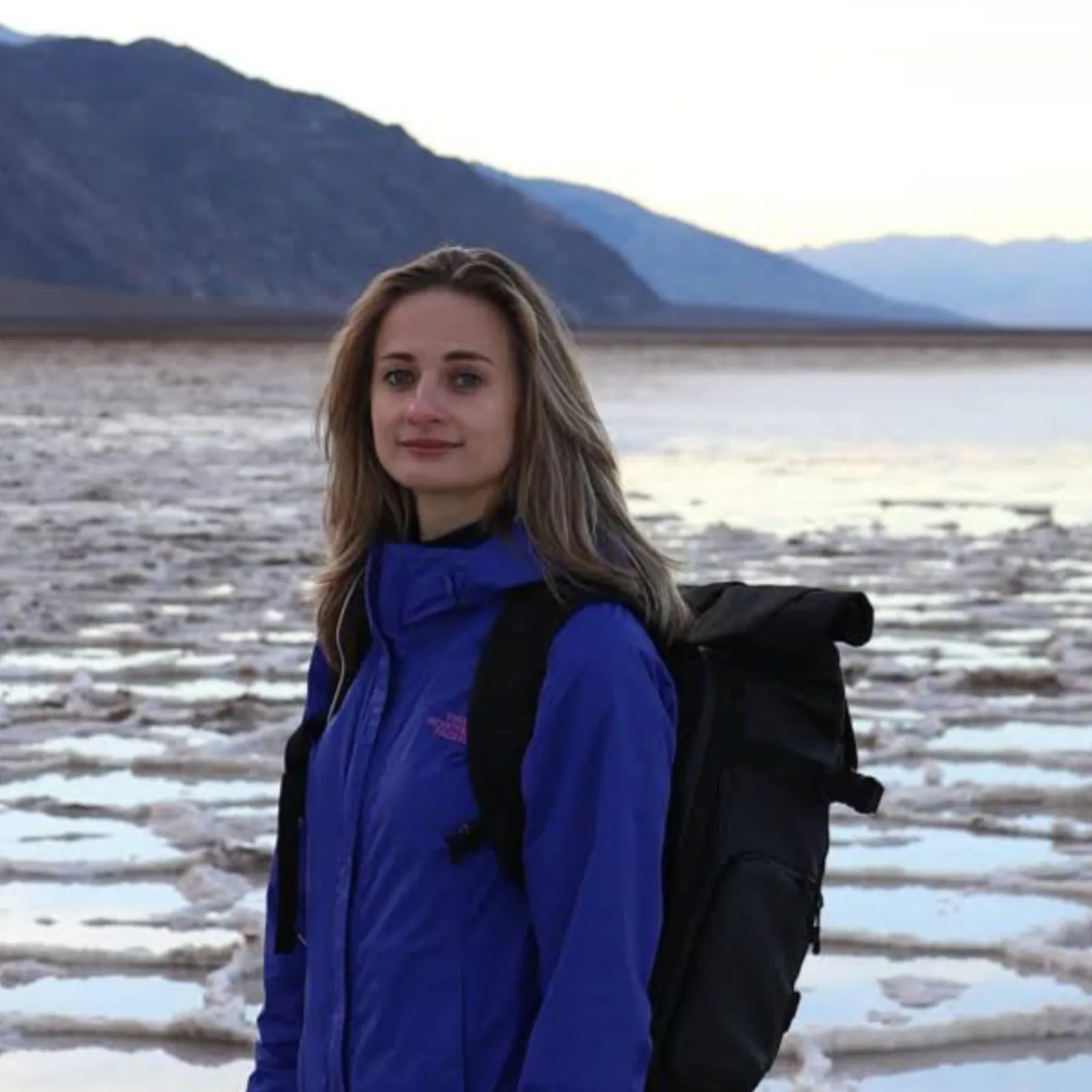
Written and walked by Yulia Vasilyeva · Co-founder · Lead planner and guide
Three years leading guided hikes in the Pacific Northwest, rated 5.0 by 20+ verified guests, and she builds every custom itinerary herself. Based in Seattle.
Last checked October 2026
You might also love these
Other itineraries near this one.
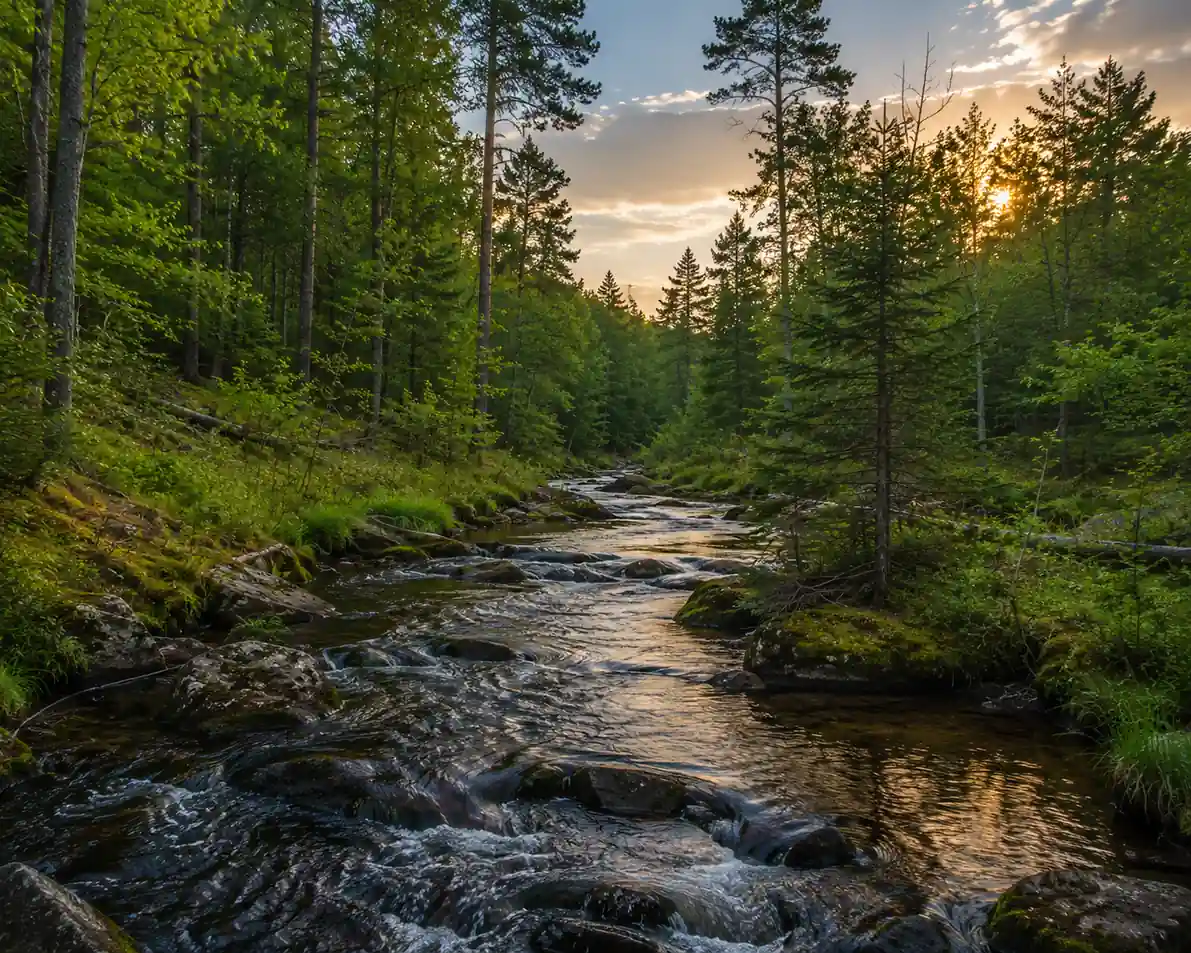
Black Creek Wilderness Mississippi: 6-Day Float & Backpacking Itinerary
A 6-day Black Creek Wilderness itinerary in Mississippi's De Soto National Forest: paddle the 21-mile Wild & Scenic float from Big Creek…
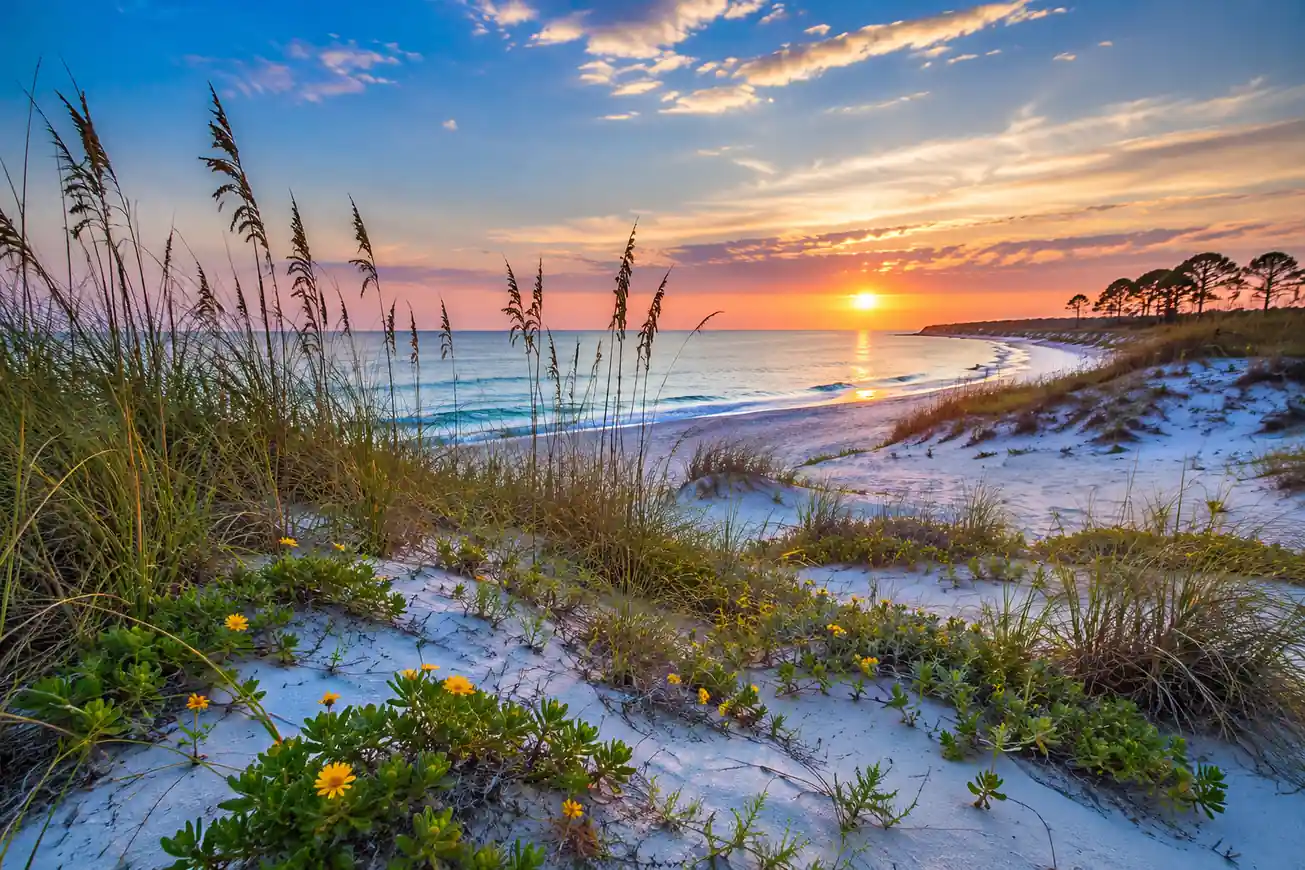
Gulf Islands National Seashore: 3-Day Ship Island & Camping Itinerary
A 3-day Gulf Islands National Seashore weekend in Mississippi: the Ship Island ferry to Fort Massachusetts and the beach, then a night…

New Orleans Itinerary: 3 Days in the City and Swamp
City Park and the Couturie Forest, the Lafitte Greenway on a bike, and a free national park swamp full of alligators half an hour from…
What adventurers say about us.
All reviews are from verified guests. ★★★★★ 5.0 average from 20+ bookings.
"Felt like going out with a really knowledgeable friend who just happens to know everything about the area. No awkward tour-guide energy, just a magnificent day."
"Yulia is an incredible guide. She knew every trail, every viewpoint, and exactly how to pace the day for our group. The photos she took of us were stunning. 100% booking again."
"I was visiting Seattle solo and this was the best decision I made on the trip. Yulia picked me up, had snacks, and took us to a trail I never would have found on my own. Absolute must-do."
"We did this as a couple's trip and it was perfect. Yulia adapted everything to us, our pace, our interests, our photo obsession. The mountain views were unreal."
"Phenomenal experience. Yulia has deep local knowledge and a real passion for the outdoors. She went out of her way to show us the hidden gems tourists never see. Will remember this forever."
"I've done a few guided hikes and this was by far the best. Yulia is warm, funny, and genuinely expert. The trail she chose had the most insane wildflower bloom, we got so lucky."
Fees, reservation windows, shuttle dates and trail closures are planning estimates. Confirm hours, road status and any reservations with the land manager before you go.
What other travelers are saying
Be the first to leave a tip or question for the next traveler.
Was this helpful?
One tap. It goes straight to Yulia and Margarita.
You can't hike it if you can't get the permit.
The best hikes in America run on lotteries that open once a year and sell out in minutes. Every trail runs on its own calendar. Pick the ones you want and we do the watching.
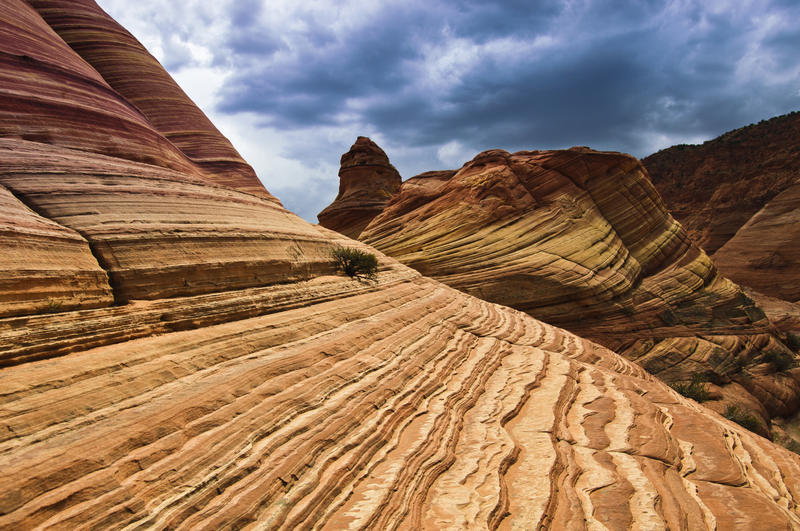 The WaveCoyote Buttes North · Arizona / UtahPermitLotterybrutal odds
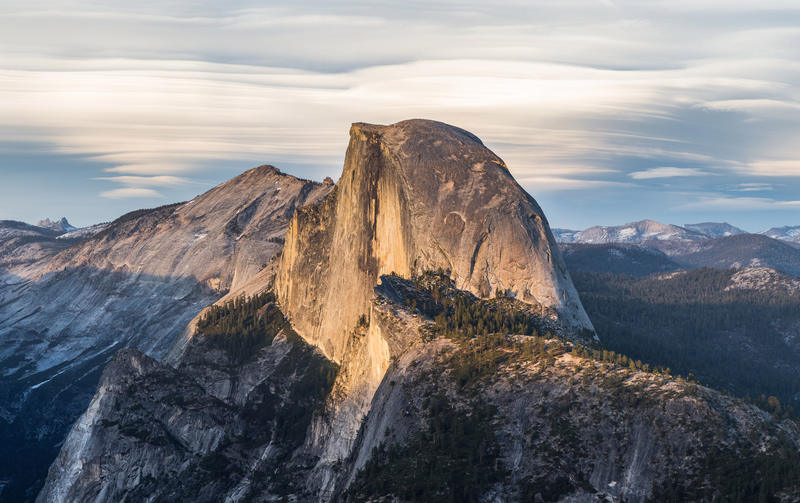 Half Dome CablesYosemite NP · CaliforniaPermitOpens Mar 1fair odds
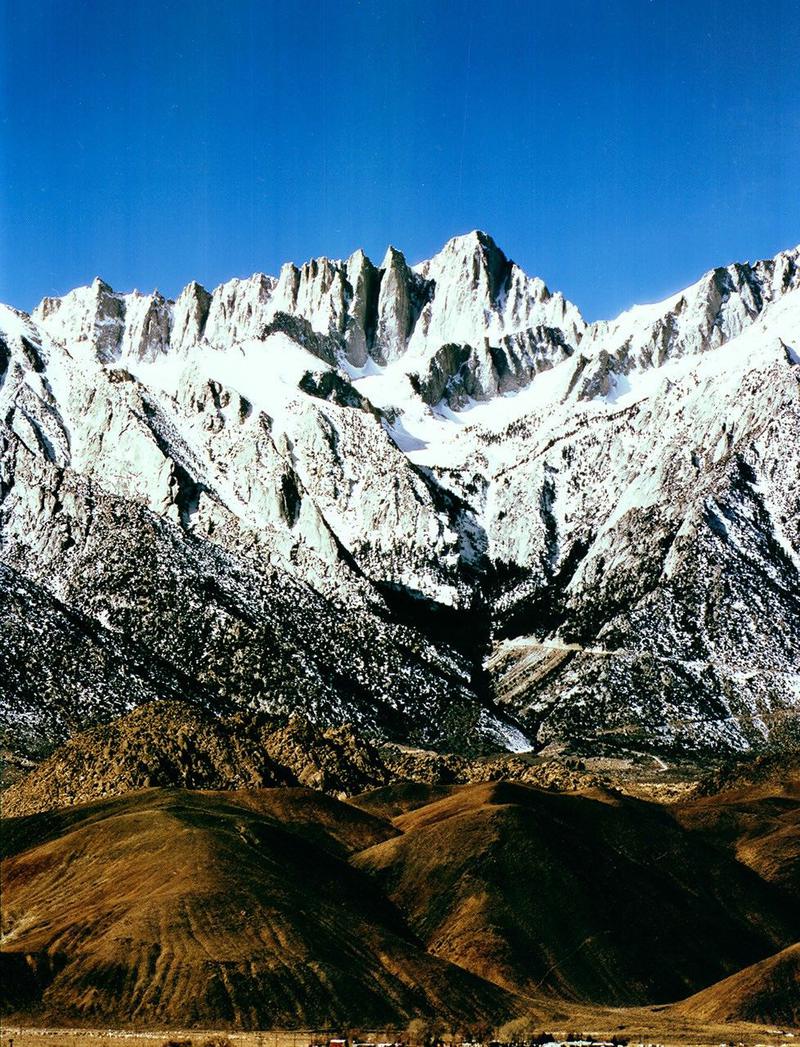 Mt. WhitneyInyo NF · CaliforniaPermitOpens Feb 1tough odds
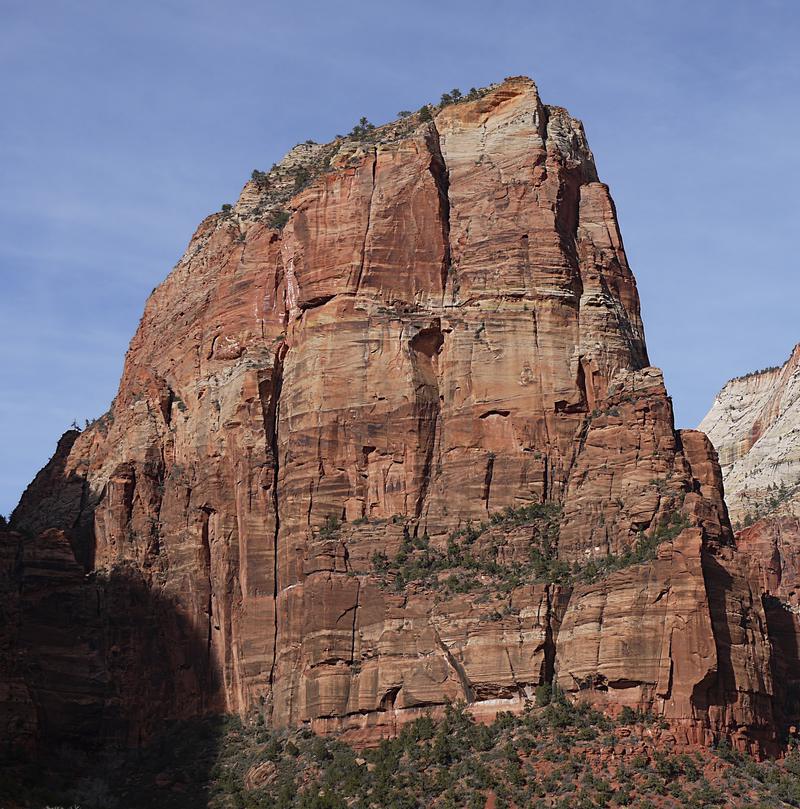 Angels LandingZion NP · UtahPermitLotterytough odds
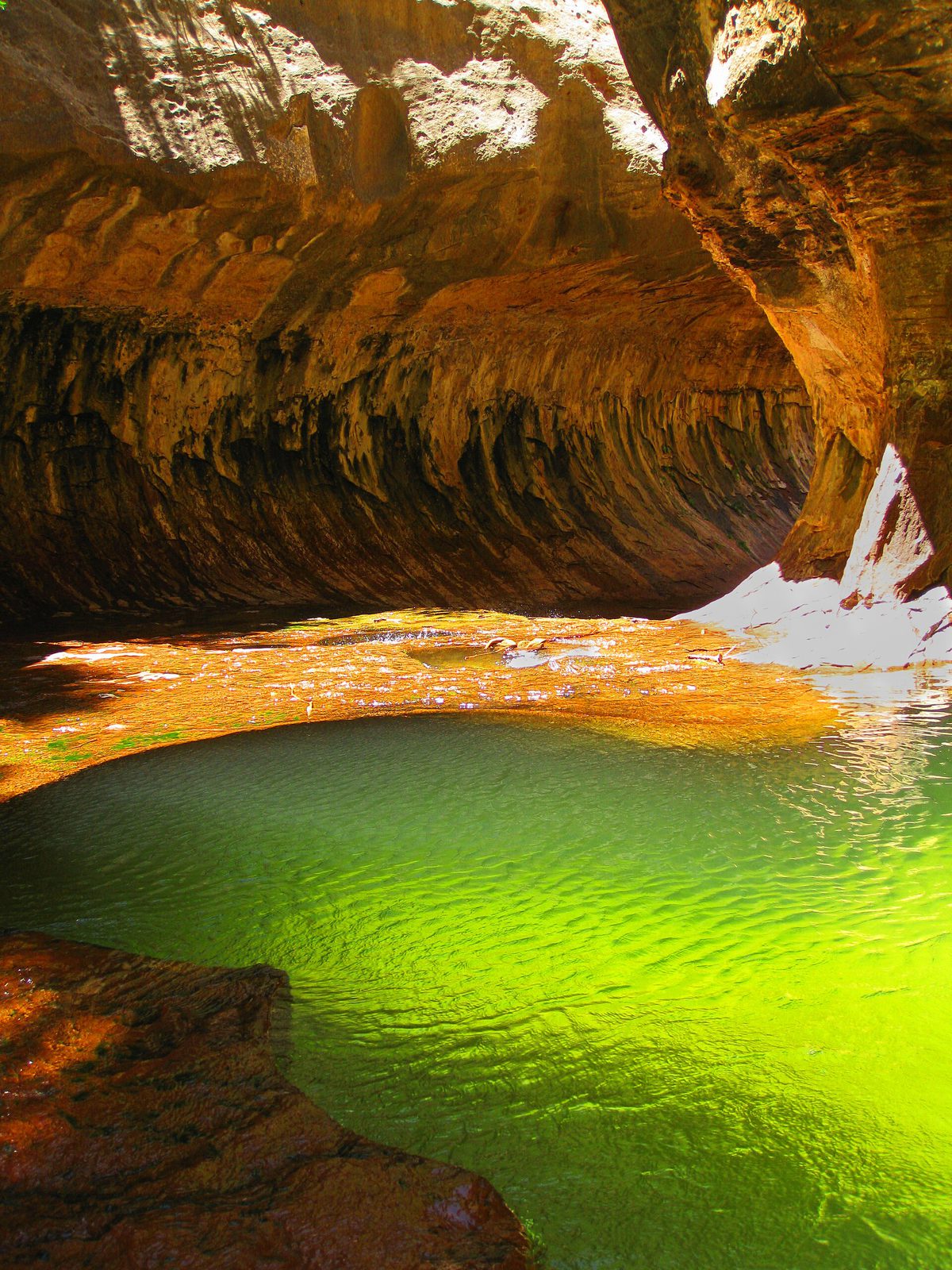 The SubwayZion NP · UtahPermitLotterytough odds
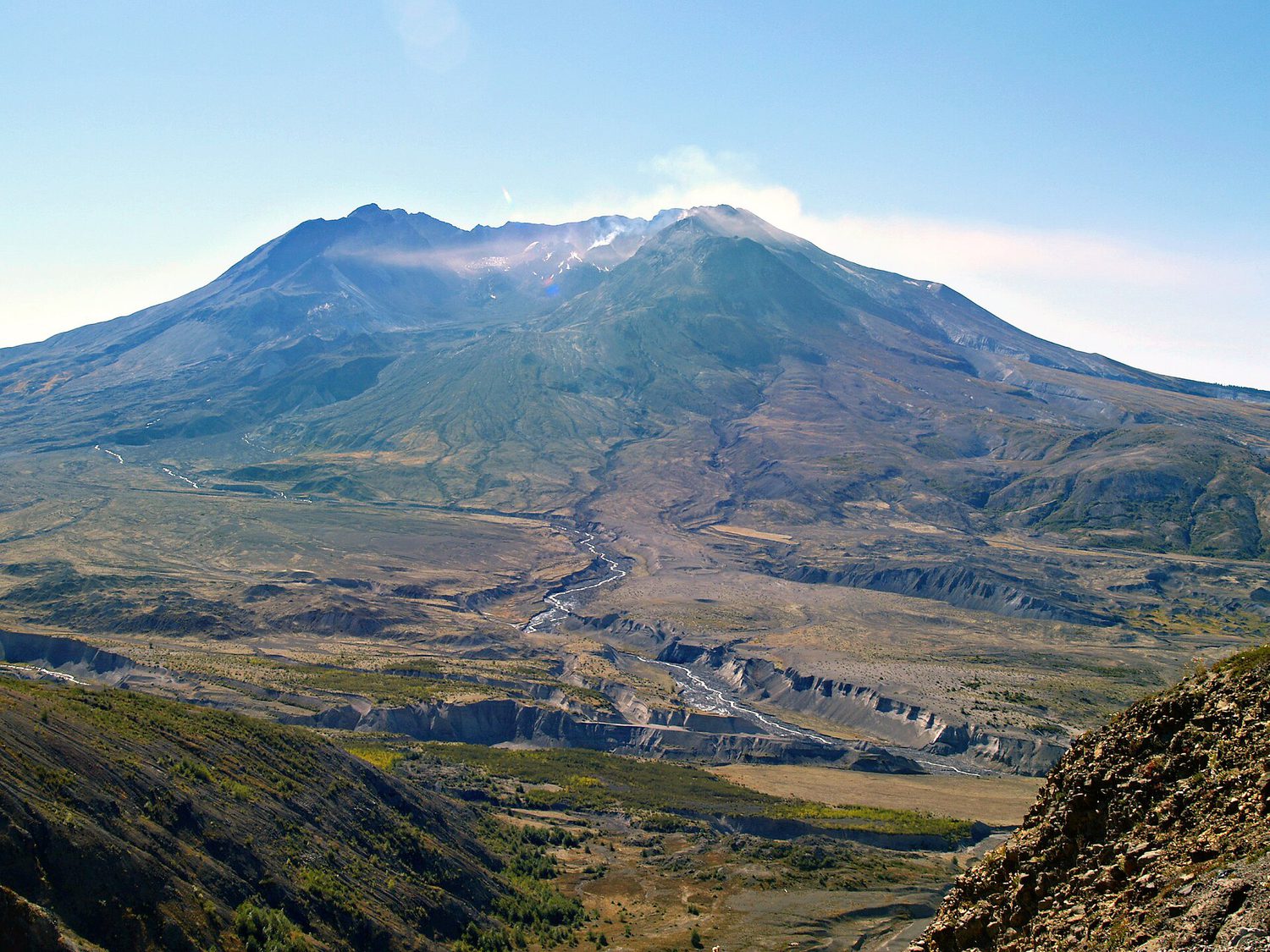 Mount St. Helens Summit ClimbGifford Pinchot NF · WashingtonPermitReservationtough odds
How it works
- An email the morning each window opens, never the day after.
- A 14-day heads-up so you can line up your group and dates.
- Win odds and a ranked backup plan for every trail you pick.
Didn't win? We keep watching. We check recreation.gov every day for The Enchantments, Half Dome and Angels Landing, and email you the moment a sold-out date frees up. Cancellations are the second chance most people never hear about.