Black Hills Backpacking Map
Sixty miles of the Centennial Trail, ending on the roof of South Dakota.
6-day Black Hills backpacking itinerary along the most scenic 60-mile section of the Centennial Trail (#89), from French Creek Horse Camp through Custer State Park and the Black Hills National Forest to a summit of Black Elk Peak (7,242 ft), the highest point in South Dakota.
“I’ve requested to book a Chain Lakes Loop guide on ExplorOFF, and it was the best idea ever! I highly recommend going with their guided option since you get a real human connection on the trail and don’t have to worry about a thing. Yulia was great to talk to!”
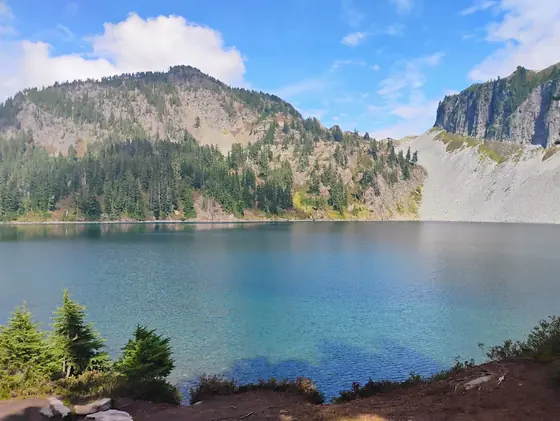
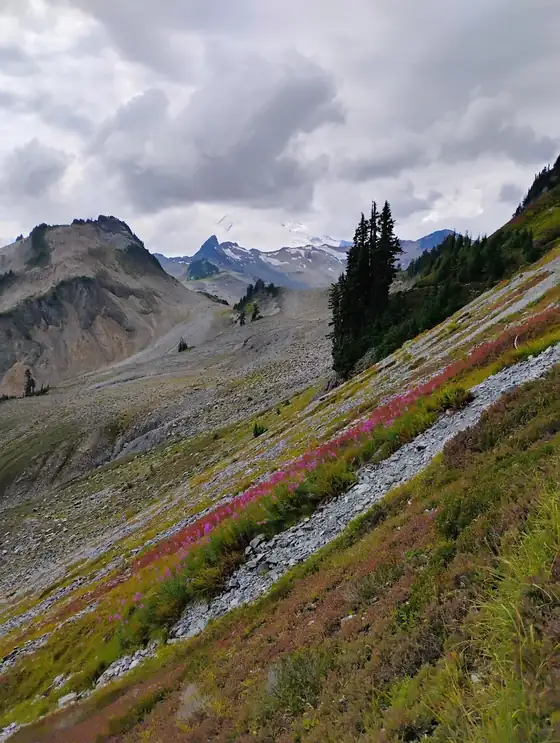
 17 stops on a real mapEvery stop pinned in order→
Black Hills: every stop pinned in order.
French Creek Horse Camp → Black Elk Peak · Centennial Trail · South Dakota
Every stop on this trip, in order, opens as one driving route in the Google Maps app. No copying addresses across one at a time.
Black Hills in photos: 2 of the stops.
Plan and book your 6 days in Black Hills, one step at a time
How 6 days in Black Hills split up
Plan 6 days for Black Hills. Distance: ~60 miles. High point: 7,242 ft. Permits: Required. This 6-day Black Hills backpacking itinerary follows the most scenic 60-mile stretch of the Centennial Trail (#89), a point-to-point route through Custer State Park and the Black Hills National Forest. Base your logistics out of Custer, South Dakota, and use a shuttle so you can hike the section linearly without doubling back to your car. The full Centennial Trail South Dakota runs roughly 111 miles from near Bear Butte by Sturgis south to Wind Cave National Park, and this plan hikes its most scenic southern section. Use the interactive Centennial Trail South Dakota map below to follow every stop.
Day 1: Arrive in Custer & Shuttle Logistics
4 stops · Day one
Day 2: French Creek to Iron Creek
3 stops · Day two
Day 3: Iron Creek to Grizzly Bear Creek
2 stops · Day three
Day 4: Grizzly Bear Creek to Badger Hole
3 stops · Day four
Day 5: Badger Hole to Black Elk Peak Area
2 stops · Day five
Day 6: Black Elk Peak Summit & Departure
3 stops · Day six
Arrive in Custer & Shuttle Logistics
Fly into Rapid City Regional Airport (RAP) and drive about an hour southwest to Custer, South Dakota, your base town. Check into pre-booked lodging, organize gear, and pick up any last-minute resupply and fuel in town.
Not the order you want? Drag a stop, or use the arrows beside it. Stops move between days too.
- Drive from
~50 mi to Custer · about 1 hour · car required · DriveFly into Rapid City Regional Airport (RAP), the closest major airport, and drive about an hour southwest to Custer, South Dakota. Rental cars are available at the airport, and a car is required for this trip since the trailheads have no public transit.
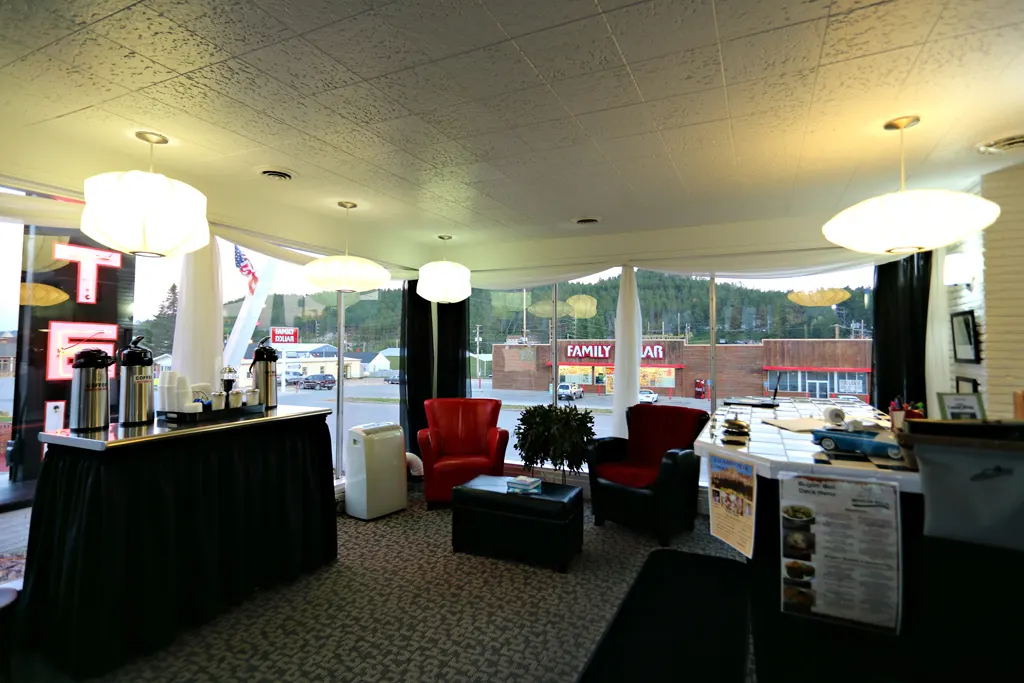 Jerry Huddleston from / CC BY 2.0Check into Custer, SD
Base town · book cabins and motels ahead · lodgeCuster is your base town for logistics, with numerous motels and cabins plus last-minute resupply and fuel. Spend the afternoon organizing gear and reviewing trail maps before you head into the backcountry.
- Arrange trailhead shuttle
Local outfitters · book ahead · activityCoordinate with a local shuttle service to drop you at the French Creek Horse Camp trailhead and pick you up near Sylvan Lake. A one-way shuttle lets you hike the Centennial Trail linearly without returning for your vehicle.
 Sunrise hot air balloon over the Black Hills
Optional · 2 to 3 hr with about 1 hr aloft · 4.96 from 535 reviews · activitySee the whole Centennial Trail country from above before you walk it: Black Hills Balloons launches at dawn from Custer and drifts over the granite spires and pine ridges of Custer State Park. Flights go around sunrise, so this works if you reach Custer the night before, or on a spare morning after you come off the trail. It is weather dependent, and the company confirms by text the evening before.
Book this →
French Creek to Iron Creek
Start your backpacking section from French Creek Horse Camp on Trail #89. The trail immediately enters a landscape of rolling hills, open meadows, and shaded ponderosa pine, with moderate elevation changes and several small creek crossings.
Not the order you want? Drag a stop, or use the arrows beside it. Stops move between days too.
- French Creek Horse Camp trailhead
Southern terminus · Custer State Park · ViewpointYour section begins at French Creek Horse Camp inside Custer State Park. Make sure you have a valid park entrance license ($25 per vehicle for 1 to 7 days) and your backcountry camping permit before starting north on Trail #89.
Official info → - Centennial Trail #89, French Creek to Iron Creek
~11 mi · ~1,200 ft gain · 5–7 hours · HikeHike about 11 miles north on the well-marked Trail #89 through rolling hills, open meadows, and shaded ponderosa pine, with several small creek crossings. The initial miles are generally gentle, but water can be limited, so carry enough and filter what you collect.
See the trail → - Overnight at Iron Creek Horse Camp
Designated backcountry site · Custer State Park · lodgeSet up camp at Iron Creek Horse Camp, a designated backcountry site within Custer State Park with basic camping and no developed facilities. A Custer State Park backcountry permit is required, and any water source should be filtered.
Iron Creek to Grizzly Bear Creek
Continue north on the Centennial Trail, pushing deeper into Custer State Park. Today's ~10 miles feature more prominent granite outcroppings, deeper forest, and a mix of ascents and descents as the trail winds through rugged terrain.
Not the order you want? Drag a stop, or use the arrows beside it. Stops move between days too.
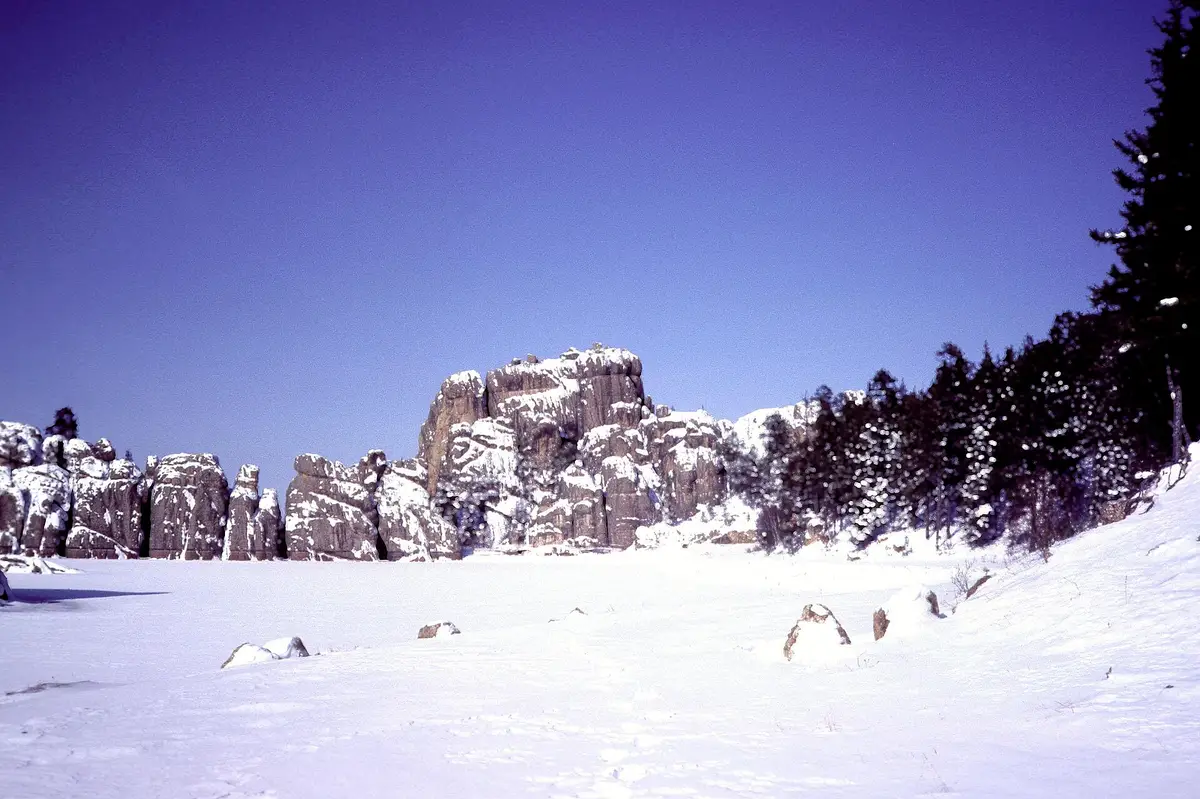
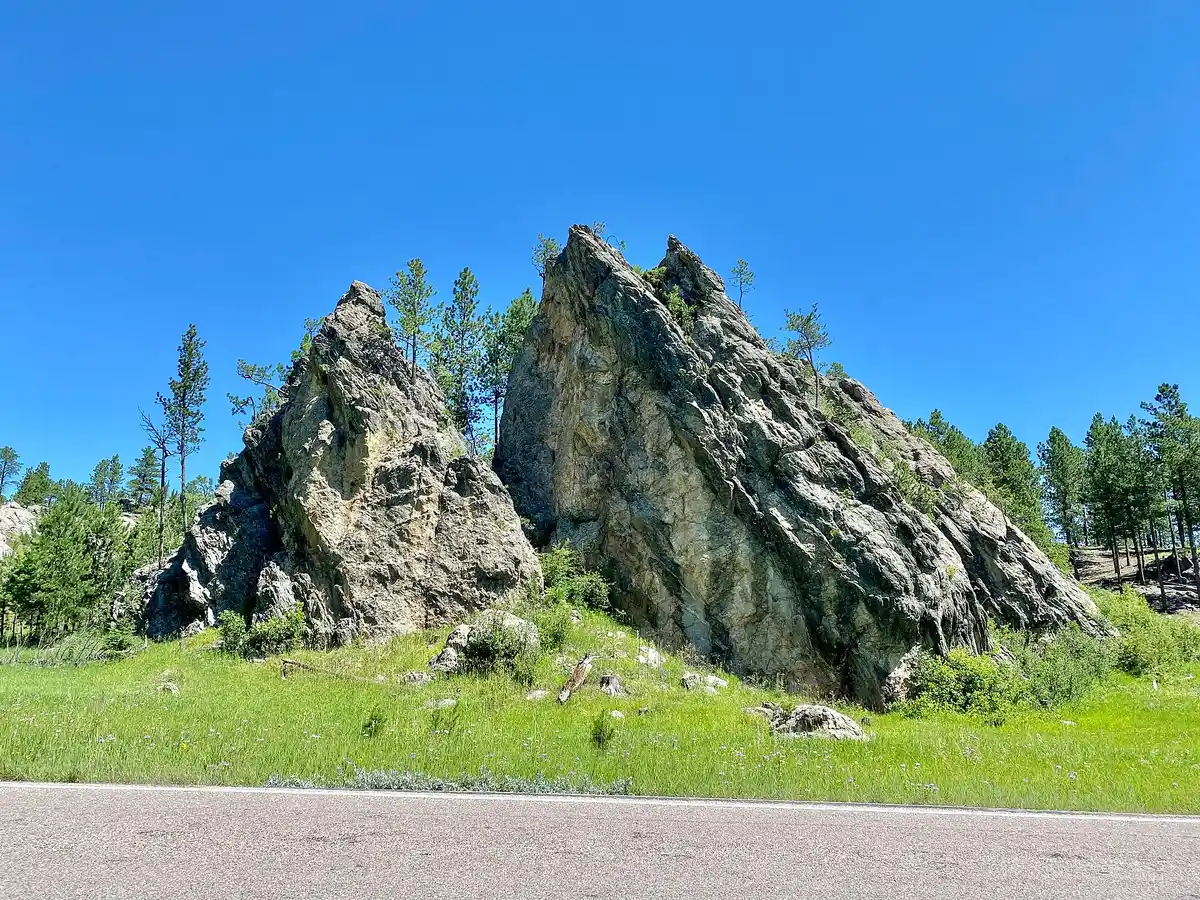 w_lemay / CC BY-SA 2.0Centennial Trail through Custer State Park
~10 mi · ~900 ft gain · 5–6 hours · HikeContinue north on Trail #89 through more prominent granite outcroppings and deeper forest. Expect a mix of ascents and descents as the trail winds through Custer's rugged terrain, with chances to spot deer and wild turkeys.
- Overnight near Grizzly Bear Creek
Primitive backcountry site · Custer State Park · lodgeFind a primitive campsite near Grizzly Bear Creek, an undeveloped area with no facilities. Camp on a durable surface away from water and follow Leave No Trace strictly. Water may be limited, so filter everything you collect.
Grizzly Bear Creek to Badger Hole
Today's ~10 miles bring you closer to the heart of the Black Hills National Forest as the trail transitions out of Custer State Park. Expect an undulating path through dense ponderosa pine, some open areas, and good odds of spotting deer and wild turkeys.
Not the order you want? Drag a stop, or use the arrows beside it. Stops move between days too.
- Centennial Trail into Black Hills National Forest
~10 mi · ~700 ft gain · 5–6 hours · HikeThe trail gradually transitions from Custer State Park into the Black Hills National Forest. The landscape stays primarily ponderosa pine forest with some open areas and rolling terrain, and you may encounter wild turkeys along the way.
- Black Hills National Forest permit
Self-issue at trailhead · separate from CSP · ViewpointObtain the backcountry permit for camping within the Black Hills National Forest, separate from your Custer State Park permit. These are often self-issued at trailheads or available at Forest Service offices. Check for fire restrictions before camping.
Official info → - Overnight at Badger Hole
Backcountry site · Black Hills National Forest · lodgeCamp at Badger Hole, a backcountry area within the Black Hills National Forest with a relatively open, flat spot for tents. A Black Hills National Forest permit is required, there are no facilities, and food should be stored securely.
Badger Hole to Black Elk Peak Area
This is the biggest day, roughly 12 miles with the trip's largest sustained climbs as the Centennial Trail approaches the Black Elk Wilderness. The trail ascends steadily through increasingly rugged terrain and impressive rock formations, with views opening up as you gain elevation.
Not the order you want? Drag a stop, or use the arrows beside it. Stops move between days too.
- Centennial Trail to the Black Elk Peak area
~12 mi · ~1,500 ft gain · 6–8 hours · HikeToday is the longest and most challenging day, about 12 miles with the trip's biggest sustained climbs as the trail approaches the Black Elk Wilderness. Expect rugged terrain, impressive rock formations, and views that open up as you gain elevation.
- Overnight near Black Elk Peak
Designated backcountry site · Black Hills NF · lodgeEstablish camp at a designated backcountry site near the Black Elk Peak area, positioning yourself for an early-morning summit bid. Temperatures are cooler at elevation, so pack warm layers, and a Black Hills National Forest permit is required.
Black Elk Peak Summit & Departure
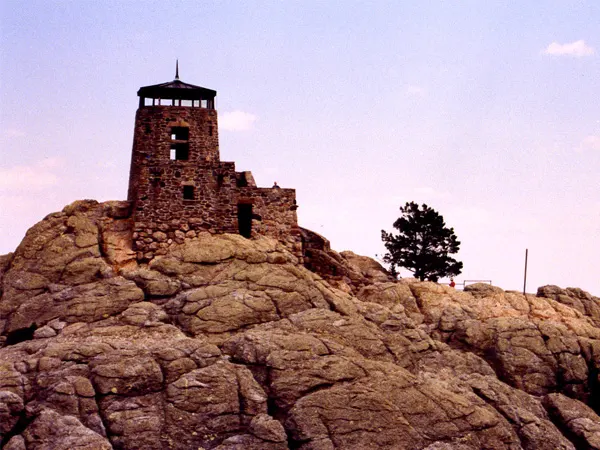
Start early for the ascent of Black Elk Peak (7,242 ft), the highest point in South Dakota and a site sacred to the Lakota. The climb is steep but well-maintained, topping out at a historic stone fire tower with 360-degree views over the Black Hills. Formerly called Harney Peak, it was renamed in 2016 to honor the Oglala Lakota holy man Black Elk.
Not the order you want? Drag a stop, or use the arrows beside it. Stops move between days too.
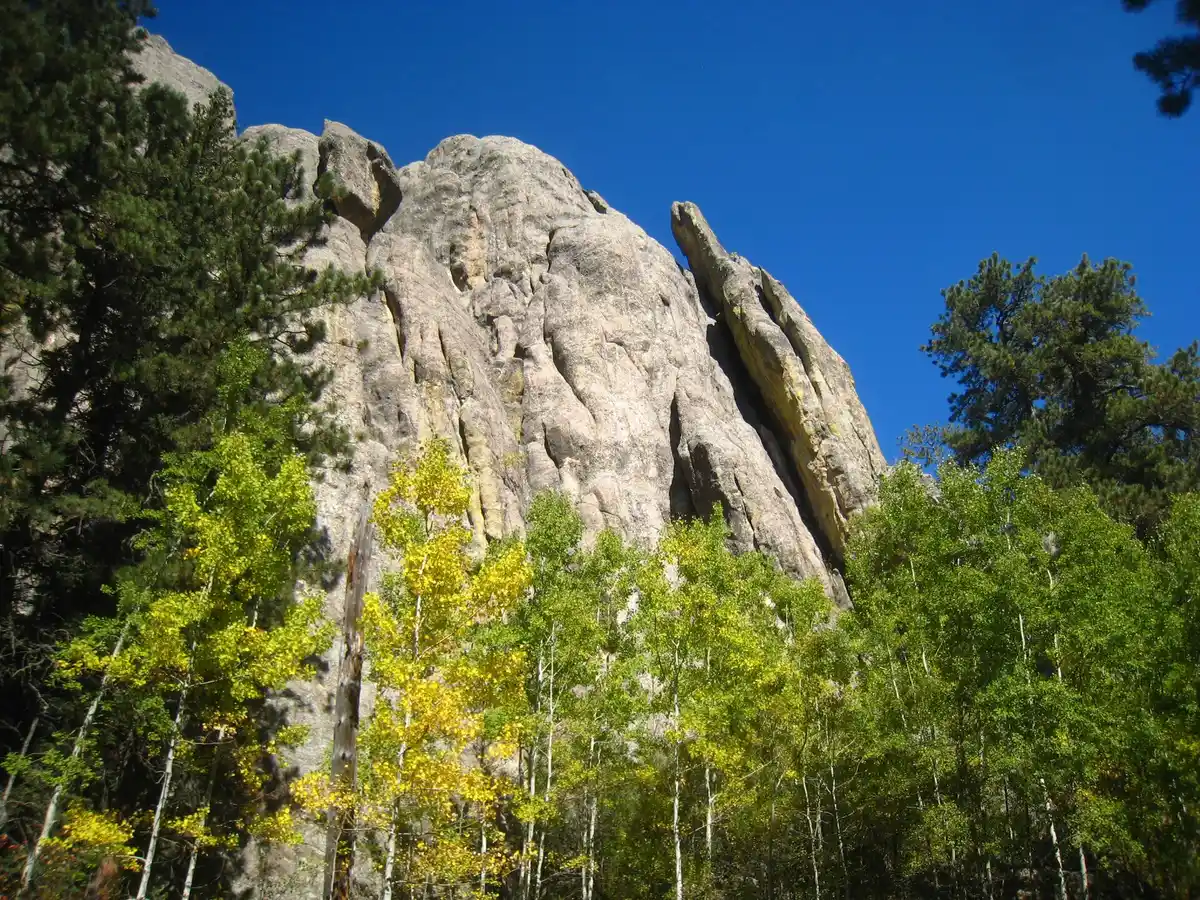 Chris M Morris / CC BY 2.0Summit Black Elk Peak (7,242 ft)
Highest point in SD · historic fire tower · HikeStart early to summit Black Elk Peak (7,242 ft), the highest point in South Dakota and the highest summit east of the Rockies. The steep but well-maintained climb tops out at a historic stone fire tower with 360-degree views. Formerly Harney Peak, it was renamed in 2016 to honor the Oglala Lakota holy man Black Elk, and remains sacred to the Lakota.
See the trail →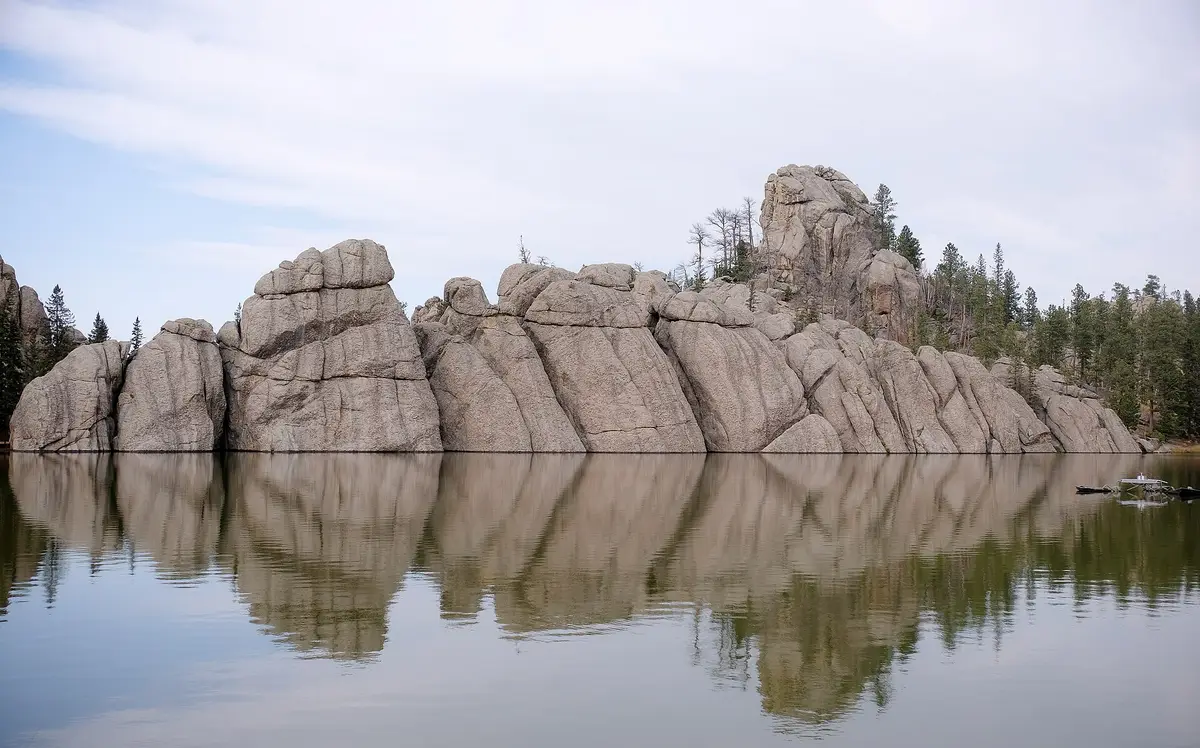 Sharon Mollerus / CC BY 2.0Descend to Sylvan Lake
~4 mi · ~1,000 ft descent · Trail #9 · ViewpointAfter the summit, descend via Trail #9 toward the Sylvan Lake area, a scenic granite-ringed hub in Custer State Park. The descent is gradual but can be rocky in sections, and Sylvan Lake connects to several other park trails.
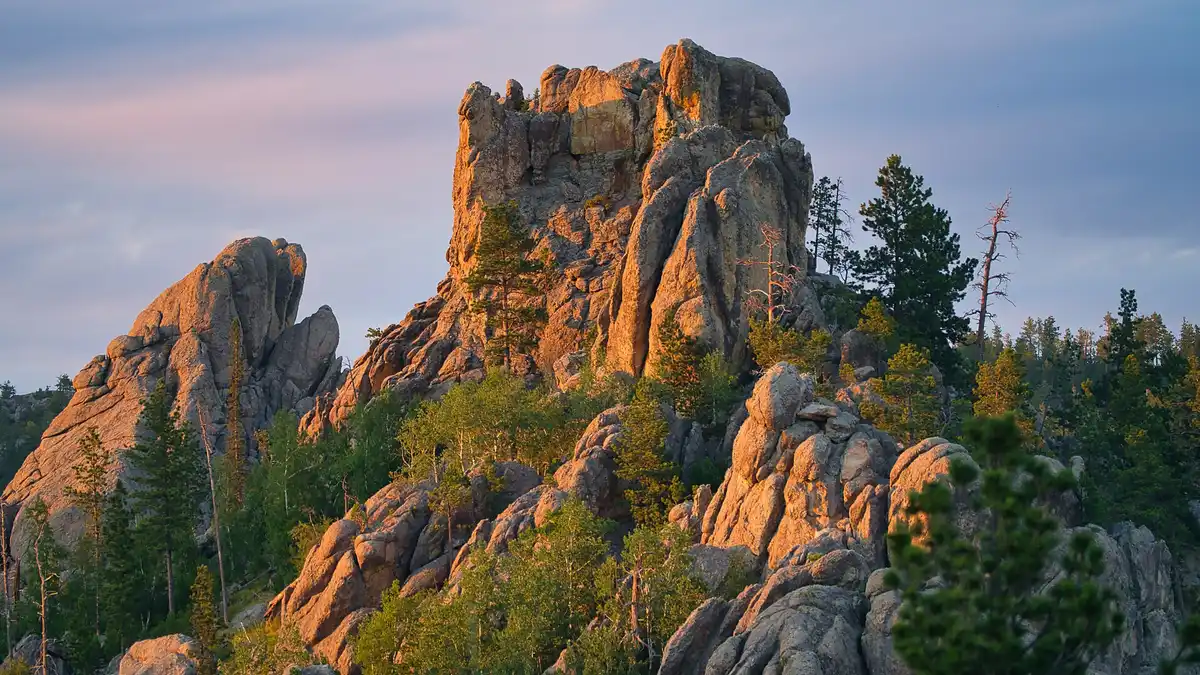 Shuttle pick-up & departure
From Sylvan Lake · back to Custer or Rapid City · DriveMeet your pre-arranged shuttle near Sylvan Lake for transport back to Custer or directly to Rapid City Regional Airport. Confirm the pick-up time in advance, allow ample time for travel to the airport, and consider a celebratory meal in Custer.
Book the 1 night under a roof
Most nights on this trip are in a tent. Reserve any campsite the route needs, and the room either side of it if you want one.
Tell us your dates and we will do the calling: the rooms either side, and the guided days in between. Nothing is charged and you decide at the end.
Request to bookWhat to pack for Black Hills
Built from this route, not a generic list. Every line says why it is here.
On every day of this trip
On your feet
Because you are sleeping out 4 nights
For the 1 night under a roof
For the drive to the trailhead
Essential permits, water & backcountry rules.
Two permit systems
Backcountry camping permits are required for both Custer State Park and the Black Hills National Forest. Reserve Custer State Park permits in advance, often 3–6 months out for peak season, through the South Dakota Game, Fish and Parks website. Black Hills National Forest permits are typically self-issued at trailheads or available at Forest Service offices.
Park entrance license & shuttle
A Custer State Park entrance license is required for all vehicles, $25 per vehicle for 1 to 7 days, separate from camping permits. Because the route is point-to-point, arrange a trailhead shuttle from a local outfitter so you can hike linearly without returning for your car.
Plan your water carefully
Water sources along the Centennial Trail can be seasonal and unreliable, especially in late summer and dry spells. Carry a filter or purification tablets, treat all natural water, and be ready to carry enough for long stretches between reliable creeks.
Wildlife & food storage
The Black Hills are home to bison in Custer State Park, plus deer, mountain goats, wild turkeys, and occasionally black bears or mountain lions. Store food in a bear canister or hung bag away from camp and keep a safe distance from all wildlife, especially bison. Unlike black bears, bison are massive and unpredictable, and they sometimes wander right onto the singletrack, so give them a wide berth and detour well around any on the trail.
Summit Black Elk Peak at first light
Black Elk Peak is a highly exposed granite high point, and afternoon thunderstorms can build fast in the summer high country. Aim to summit at first light on your final morning so you are off the open rock and away from the stone fire tower before storms roll in. Lightning is a real hazard on the exposed top, so turn around and descend if clouds start to gather.
Fire restrictions & Leave No Trace
Check for fire restrictions before and during your trip, as campfires may be prohibited in dry months. Cook on a camp stove, pack out all trash, dig catholes 6–8 inches deep and 200 feet from water, and camp on durable surfaces at designated sites where available.
Go in the shoulder seasons
The best backpacking windows are May–June and September–October, with moderate temperatures, lower insect activity, and thinner crowds. Summers can be hot and stormy; winters bring snow and ice that make much of the trail inaccessible without specialized gear.
Black Hills: questions before you go
Black Hills backpacking: the questions people ask most.
The Centennial Trail runs north to south through the Black Hills of western South Dakota, roughly from Bear Butte State Park near Sturgis down to Wind Cave National Park. It covers about 111 miles in total. This itinerary hikes the most scenic 60-mile southern section through Custer State Park and the Black Hills National Forest. For a Centennial Trail South Dakota map, the free interactive planner on this page maps the whole route stop by stop, and South Dakota Game, Fish and Parks and the US Forest Service both publish official trail maps.
The full Centennial Trail South Dakota is roughly 111 miles, running across the Black Hills from near Bear Butte in the north to Wind Cave National Park in the south. This 6-day backpacking plan covers about 60 miles of it, the most scenic stretch, from French Creek Horse Camp up to Black Elk Peak, the highest point in the state.
Yes. Some backpackers thru-hike the full South Dakota Centennial Trail over roughly 7 to 10 days, while others tackle it in shorter sections. This itinerary focuses on the scenic 60-mile southern half. Water is the main constraint on the whole trail, so plan your resupply and filtering carefully whether you hike one section or the entire route.
This 60-mile section of the Centennial Trail is rated moderate to strenuous. The difficulty comes from daily mileage of 10–12 miles, cumulative elevation gain and loss, and carrying a full pack over six days. Previous backpacking experience is highly recommended.
Yes. Backcountry camping permits are required for both Custer State Park and the Black Hills National Forest. Reserve Custer State Park permits online 3–6 months in advance for peak season (roughly May–October). Black Hills National Forest permits are often self-issued at trailheads or available at ranger stations. Check both agencies' websites for current requirements.
The best windows are the shoulder seasons, May–June and September–October, when temperatures are moderate, insects are fewer, and trails are less crowded. Summers (July–August) can be hot and humid with afternoon thunderstorms, and winters bring snow and ice that make much of the trail inaccessible without specialized winter gear.
Because the Centennial Trail is a linear route, not a loop, most backpackers base in Custer and arrange a local trailhead shuttle to drop them at French Creek Horse Camp and pick them up near Sylvan Lake. This avoids leaving a car at either end. Confirm both drop-off and pick-up times and locations in advance.
Water sources can be seasonal and unreliable, especially in late summer or during dry spells. Always carry a filter or purification tablets, treat all natural water, and be prepared to carry enough for long stretches between known sources. Plan your water strategy each day.
The Black Hills are home to bison in Custer State Park, plus deer, mountain goats, wild turkeys, and occasionally black bears or mountain lions. Practice safe food storage with a bear canister or hung bag, and keep a safe distance from all wildlife, especially bison, which are large and unpredictable. Bison sometimes graze right on the singletrack, so never try to pass close by, detour widely around them instead.
Black Hills water sources are erratic and shift with the season. Creeks that run full and clear in May can drop to a trickle or turn stagnant by August or September. A reliable move is to call the Black Hills National Forest ranger district about a week before you leave to ask which creeks are currently flowing, so you are not rationing water on a 12-mile day. Always carry a filter and plan your supply for each dry stretch.
Camping in the high country near the peak can get sharply cold after dark, and high-elevation winds add to the chill even outside of winter. Bring a sleeping bag rated to at least 20F, along with warm layers, in late spring and early autumn, not just for deep summer. A warm sleep system also makes the pre-dawn summit start far more comfortable.
Tell us your dates and we ask a local guide who works this area what they can do on your days and what it costs. If nobody is free, we tell you. Asking is free: no card, no deposit, and nothing is held until you say yes.
Pick how you want to go.
Same 6-day route. Same 10 stops.
- 5 nights, sites along the route
- $110
- Sunrise hot air balloon
- $750
- Rental car, 6 days
- $360
- Gas, about 57 miles
- $10
- A private local guide, campsites booked
- Included
- Airport pickup and every drive
- Included
- Park, permit and campsite fees paid
- Included
- All the gear and the trail meals
- Included
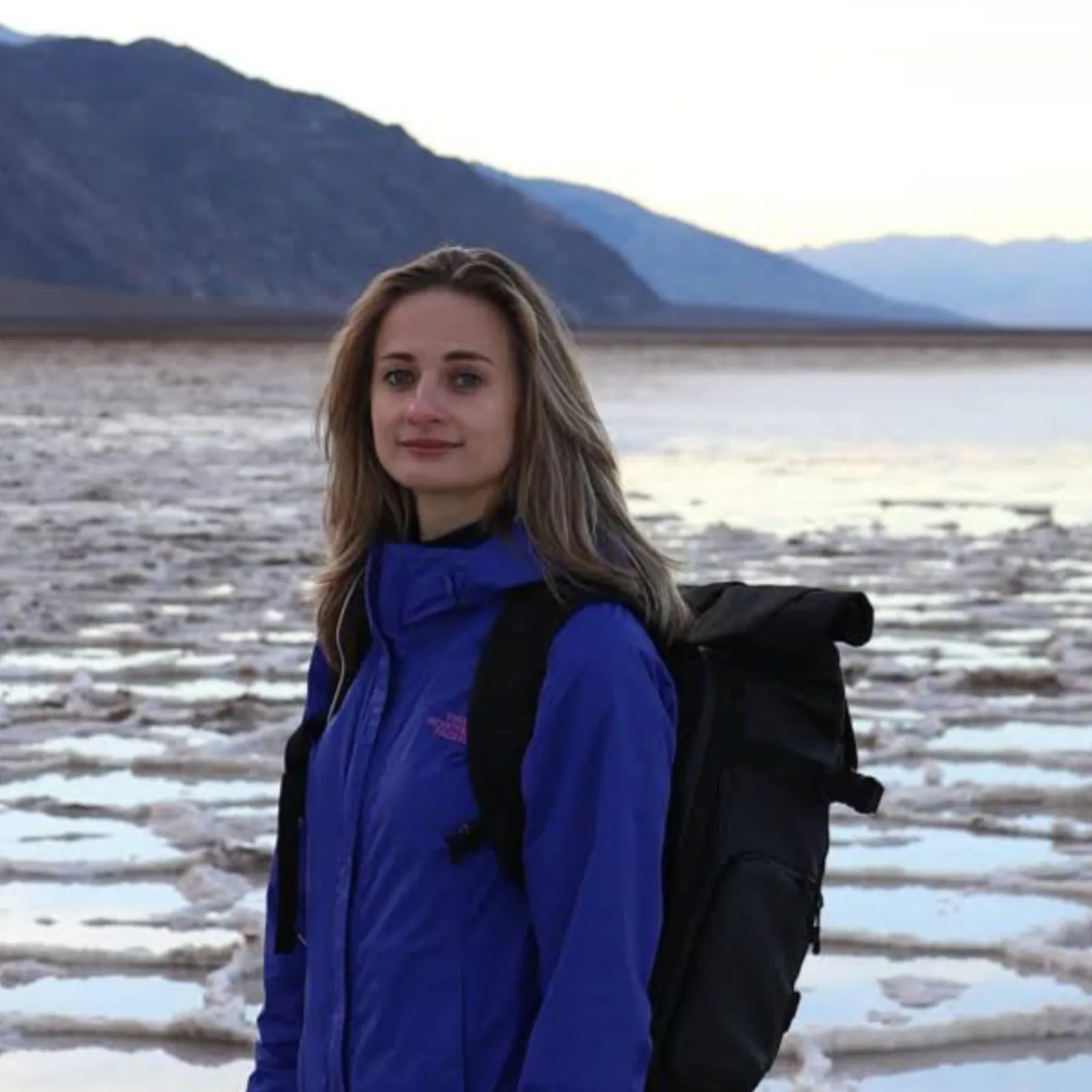
Written and walked by Yulia Vasilyeva · Co-founder · Lead planner and guide
Three years leading guided hikes in the Pacific Northwest, rated 5.0 by 20+ verified guests, and she builds every custom itinerary herself. Based in Seattle.
Last checked September 2026
You might also love these
Other itineraries near this one.

South Dakota Wilderness: A 10-Day Road Trip Itinerary
A 10-day South Dakota road trip itinerary that loops the badlands, caves, granite spires, and free-roaming bison: Badlands National…
Badlands & Black Hills: 3-Day Road Trip Itinerary
A 3-day Badlands and Black Hills road trip itinerary from Rapid City: Badlands Loop Road, Custer State Park wildlife, Crazy Horse, Mount…
Pine Ridge Nebraska Backpacking: 3-Day Soldier Creek Wilderness Loop
A 3-day Pine Ridge backpacking itinerary through the Soldier Creek Wilderness near Fort Robinson: the ~11-mile Boots & Saddle and…
Guides for this tripBest Time to Visit the Black HillsBlack Hills Hikes
What adventurers say about us.
All reviews are from verified guests. ★★★★★ 5.0 average from 20+ bookings.
"Felt like going out with a really knowledgeable friend who just happens to know everything about the area. No awkward tour-guide energy, just a magnificent day."
"Yulia is an incredible guide. She knew every trail, every viewpoint, and exactly how to pace the day for our group. The photos she took of us were stunning. 100% booking again."
"I was visiting Seattle solo and this was the best decision I made on the trip. Yulia picked me up, had snacks, and took us to a trail I never would have found on my own. Absolute must-do."
"We did this as a couple's trip and it was perfect. Yulia adapted everything to us, our pace, our interests, our photo obsession. The mountain views were unreal."
"Phenomenal experience. Yulia has deep local knowledge and a real passion for the outdoors. She went out of her way to show us the hidden gems tourists never see. Will remember this forever."
"I've done a few guided hikes and this was by far the best. Yulia is warm, funny, and genuinely expert. The trail she chose had the most insane wildflower bloom, we got so lucky."
Fees, reservation windows, shuttle dates and trail closures are planning estimates. Confirm hours, road status and any reservations with the land manager before you go.
What other travelers are saying
Be the first to leave a tip or question for the next traveler.
Was this helpful?
One tap. It goes straight to Yulia and Margarita.
You can't hike it if you can't get the permit.
The best hikes in America run on lotteries that open once a year and sell out in minutes. Every trail runs on its own calendar. Pick the ones you want and we do the watching.
 The WaveCoyote Buttes North · Arizona / UtahPermitLotterybrutal odds
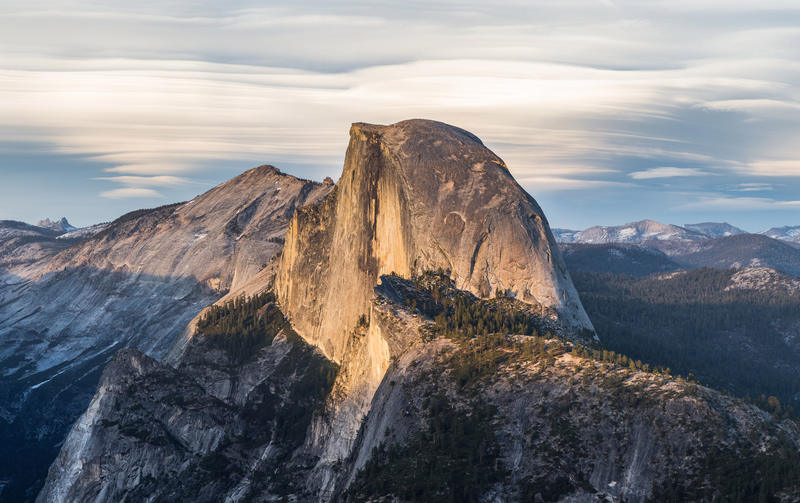 Half Dome CablesYosemite NP · CaliforniaPermitOpens Mar 1fair odds
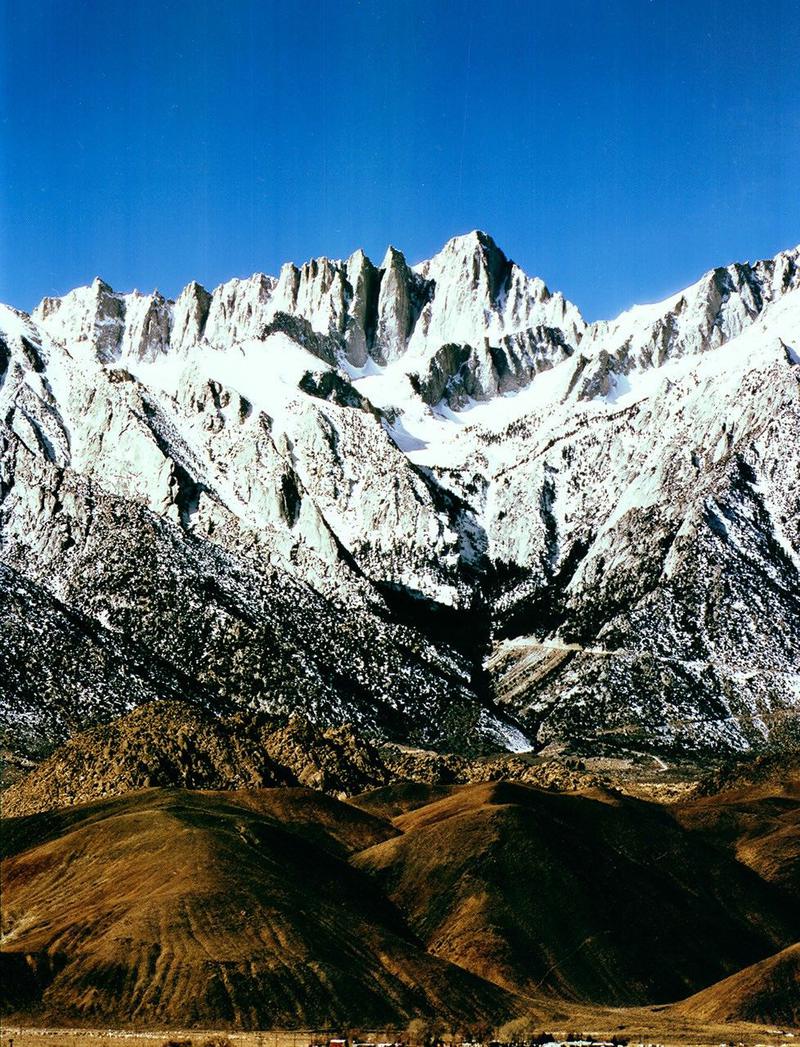 Mt. WhitneyInyo NF · CaliforniaPermitOpens Feb 1tough odds
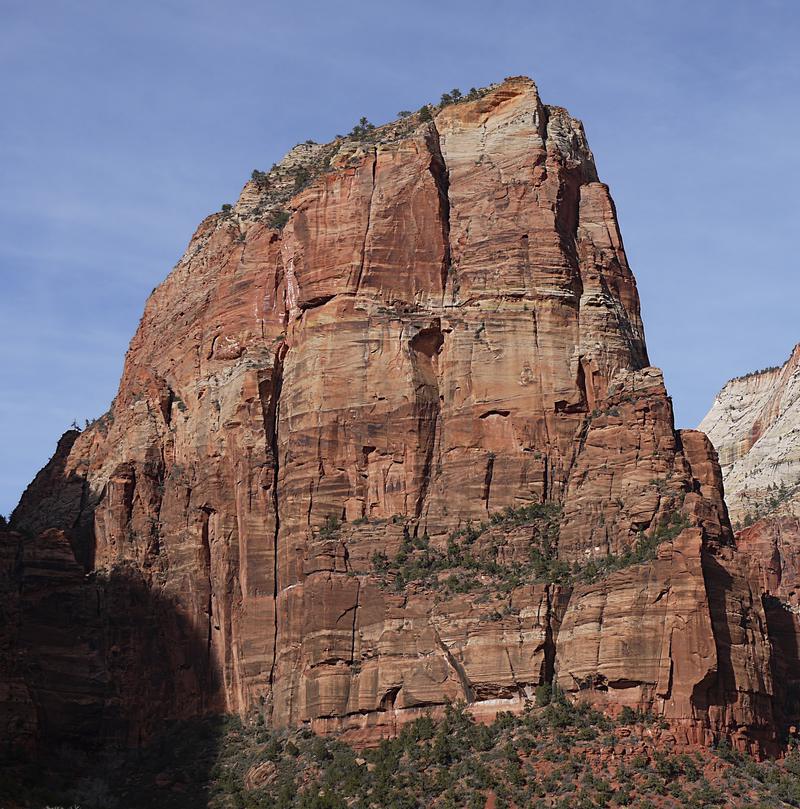 Angels LandingZion NP · UtahPermitLotterytough odds
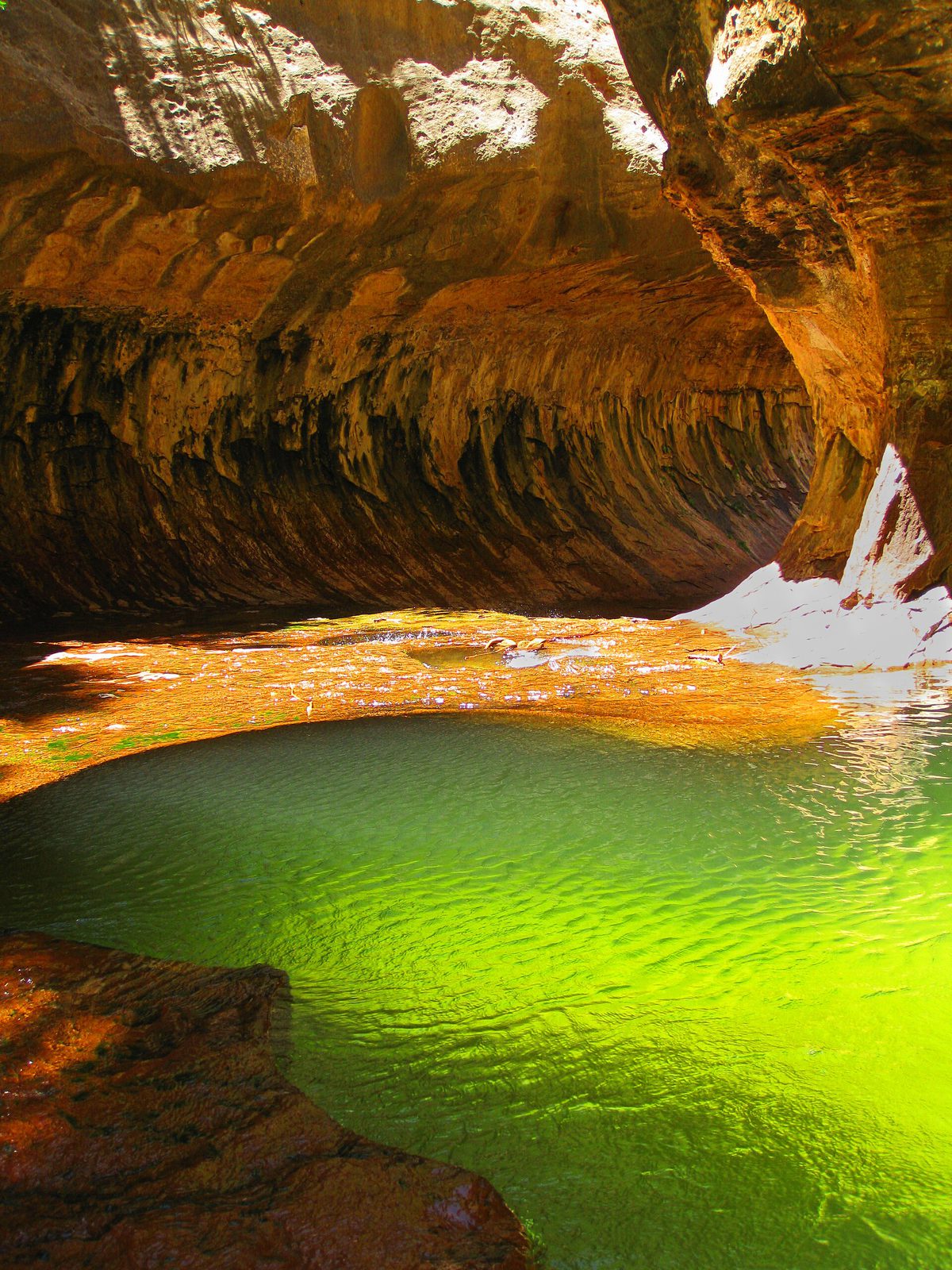 The SubwayZion NP · UtahPermitLotterytough odds
 Mount St. Helens Summit ClimbGifford Pinchot NF · WashingtonPermitReservationtough odds
How it works
- An email the morning each window opens, never the day after.
- A 14-day heads-up so you can line up your group and dates.
- Win odds and a ranked backup plan for every trail you pick.
Didn't win? We keep watching. We check recreation.gov every day for The Enchantments, Half Dome and Angels Landing, and email you the moment a sold-out date frees up. Cancellations are the second chance most people never hear about.