Seven Days, Five Parks: The Utah Southwest Loop
One loop, five national parks, across red rock Utah.
A 7-day national park road trip through Utah: Arches and Canyonlands out of Moab, the Colorado River, then Capitol Reef, Bryce Canyon, and Zion as you loop west.
“I’ve requested to book a Chain Lakes Loop guide on ExplorOFF, and it was the best idea ever! I highly recommend going with their guided option since you get a real human connection on the trail and don’t have to worry about a thing. Yulia was great to talk to!”
 24 stops on a real mapEvery stop pinned in order→
National Park Road Trip: every stop pinned in order.
Arches, Canyonlands, Moab, Capitol Reef, Bryce & Zion · Utah
Every stop on this trip, in order, opens as one driving route in the Google Maps app. No copying addresses across one at a time.
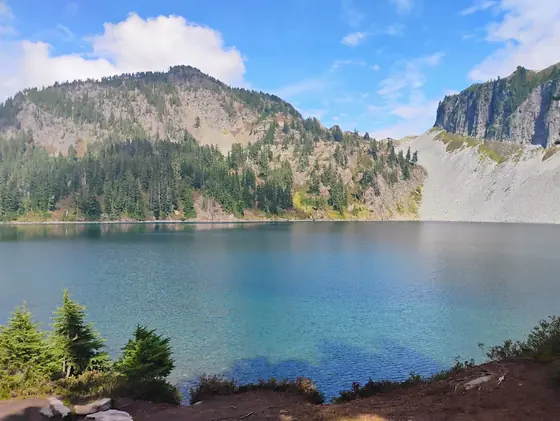
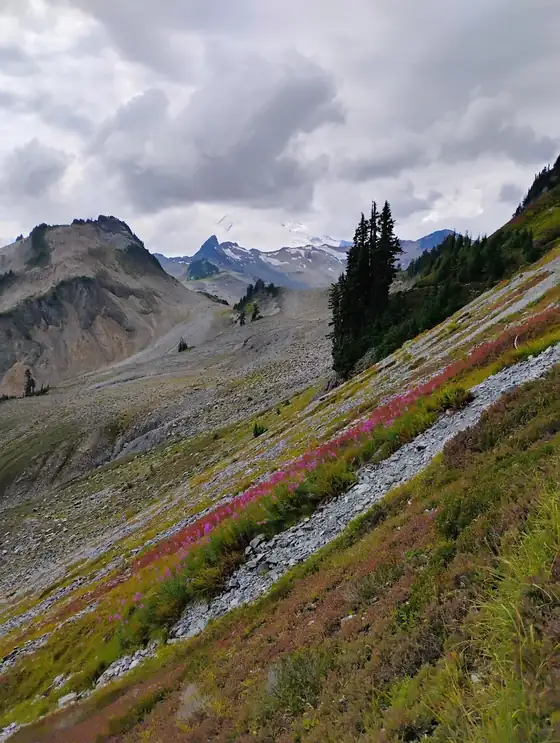
National Park Road Trip in photos: 5 of the stops.


Plan and book your 7 days in National Parks, one step at a time
- At Bryce Canyon, Wall Street and the Bryce Connector Trail to the Peekaboo Loop are closed until further notice after a weather event. Do the Navajo Loop on its Two Bridges side with Queens Garden. Source
- Canyonlands lists a Grand View Point remodel for late summer to early fall 2026, so expect construction at the day 3 overlook. Source
How 7 days in National Parks split up
Plan 7 days for National Parks. Total distance: ~700 mi. Difficulty: Moderate. Parks pass: $80 / year. This is the most iconic national park road trip in the country: Utah's Mighty 5 plus Moab, a red rock loop that strings together Arches, Canyonlands, Capitol Reef, Bryce Canyon, and Zion across some of the most dramatic desert landscapes on earth. You start in Moab, the adventure hub of the Colorado Plateau, and loop west, trading delicate arches and canyon overlooks for hoodoos and slot canyons as you go.
Day 1: Arrive in Moab & first light in Arches
3 stops · Day one
Day 2: Arches in depth · Delicate Arch & Devils Garden
3 stops · Day two
Day 3: Canyonlands · Mesa Arch sunrise & Island in the Sky
3 stops · Day three
Day 4: Moab · the Colorado River & mountain biking
3 stops · Day four
Day 5: Capitol Reef · the Waterpocket Fold & scenic drive
4 stops · Day five
Day 6: Bryce Canyon · the hoodoo amphitheater
4 stops · Day six
Day 7: Zion · towering walls & the drive home
4 stops · Day seven
Arrive in Moab & first light in Arches
Fly into Salt Lake City (SLC) and make the roughly 3.5- to 4-hour drive south to Moab, or shorten the trip by flying into Moab (CNY) or Grand Junction (GJT) just across the Colorado line. Moab is the basecamp for this whole leg, a red rock adventure town wedged between Arches and Canyonlands on the banks of the Colorado River.
Not the order you want? Drag a stop, or use the arrows beside it. Stops move between days too.
- Drive from
~3.5–4 hr · fuel up & stock water · DriveFly into Salt Lake City (SLC) and drive about 3.5 to 4 hours south to Moab, or shorten the trip by flying into Moab (CNY) or Grand Junction (GJT) just across the Colorado line. Moab is the basecamp for this whole leg, a red rock adventure town between Arches and Canyonlands on the Colorado River.
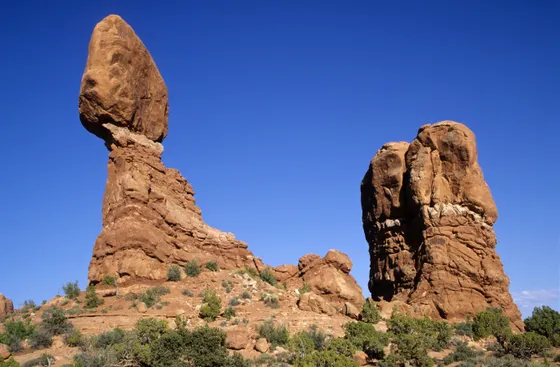
- The Windows & Balanced Rock
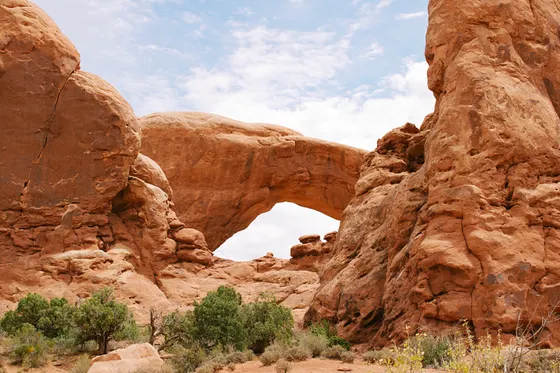
Easy walks · big arches up close · ViewpointSpend your first evening in Arches National Park, minutes from town. Arches does not require a timed-entry reservation in 2026, so you can drive in at any time, though the Fiery Furnace and Devils Garden Campground still need their own reservations. Start with The Windows and Balanced Rock for an easy first taste as the light goes gold.
- Stay in Moab
Adventure hub · books up fast · lodgeBase in Moab, the adventure hub of the Colorado Plateau, wedged between Arches and Canyonlands on the banks of the Colorado River. It is your basecamp for the first four nights, with restaurants, outfitters, gas, and water all in one place. Book early, because Moab fills fast on weekends.
Arches in depth · Delicate Arch & Devils Garden
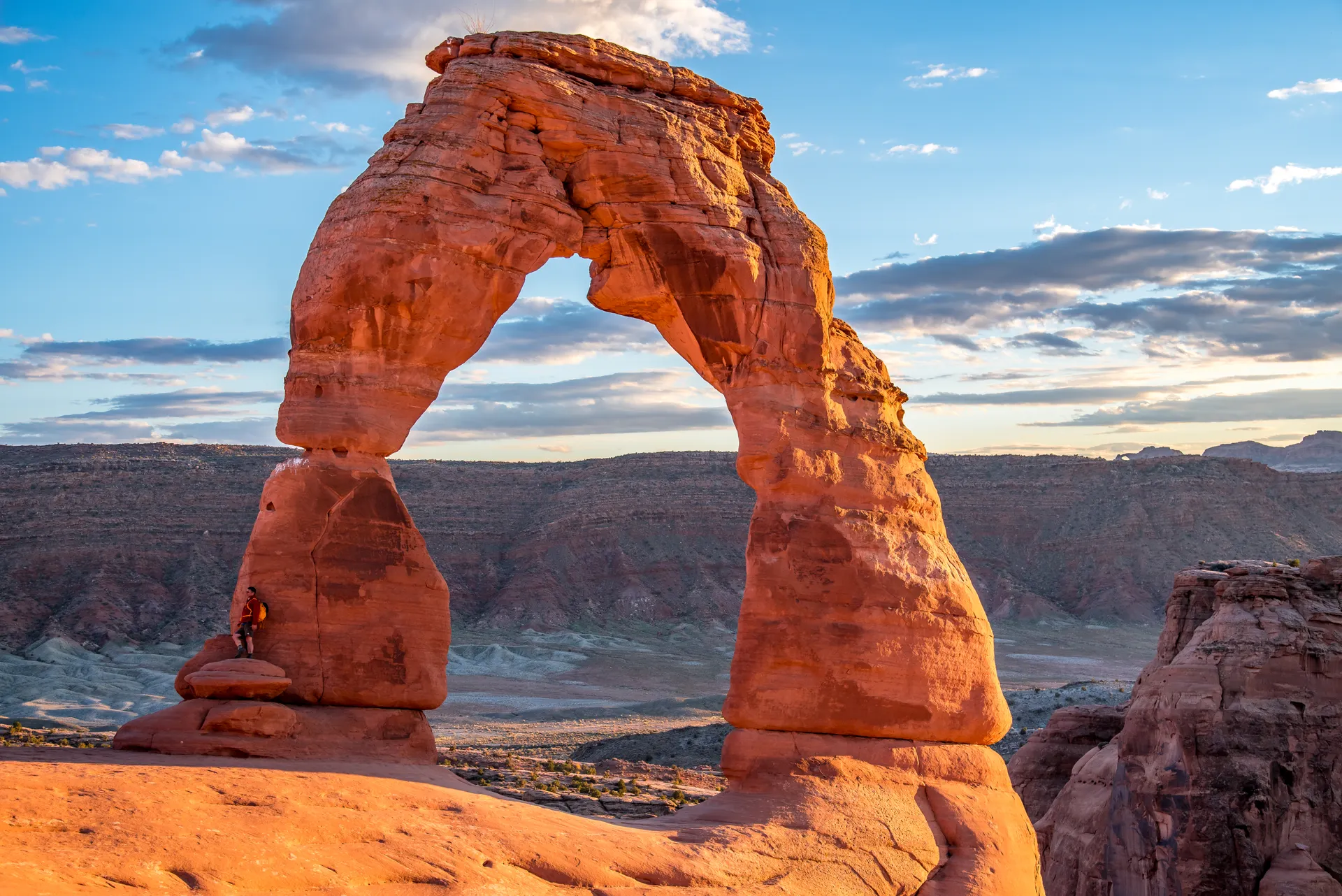
Spend a full day in Arches. The signature hike is to Delicate Arch (about 3 miles round trip, moderate, no shade), the freestanding arch on Utah's license plate. The climb up the slickrock is exposed and hot, so go at sunrise or in the late afternoon and carry plenty of water. Sunset at the arch is one of the great experiences in the park, but the lot fills early.
Not the order you want? Drag a stop, or use the arrows beside it. Stops move between days too.
- Delicate Arch Trail
~3 mi RT · moderate · no shade · HikeThe signature hike in Arches is to Delicate Arch (about 3 miles round trip, moderate, no shade), the freestanding arch on Utah's license plate. The slickrock climb is exposed and hot, so go at sunrise or late afternoon and carry plenty of water. Sunset at the arch is unforgettable, but the lot fills early.
 Devils Garden & Landscape Arch
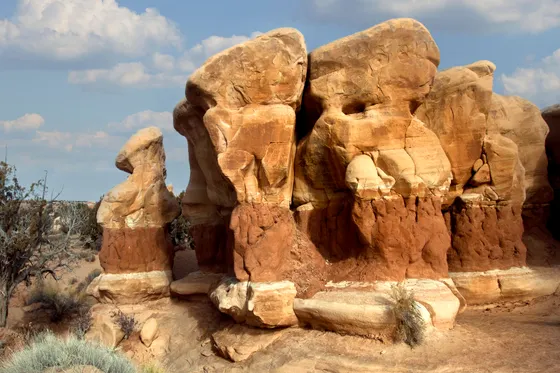
Trail network through the fins · HikeIn the cooler part of the day, explore the Devils Garden at the end of the scenic road, home to Landscape Arch and a network of trails through the fins. Landscape Arch is an easy walk; the full loop is longer and more rugged. Start early, because by midday the desert heat and the crowds both peak.
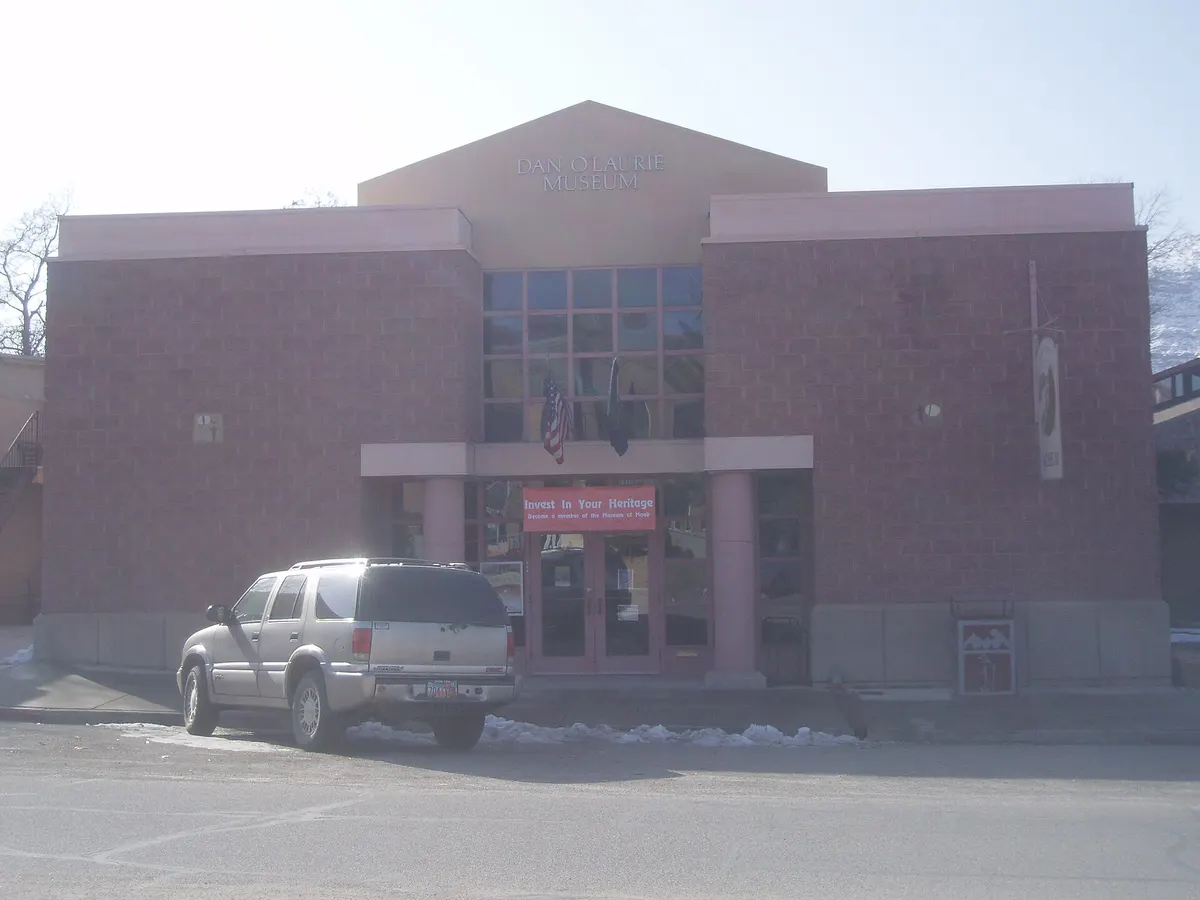 Second night in Moab
Stay put for dawn trailheads · lodgeStay a second night in Moab so you can hit the Arches and Canyonlands trailheads at dawn, before the lots fill and the heat builds. Keeping the same base means no packing up between back-to-back park days.
Canyonlands · Mesa Arch sunrise & Island in the Sky
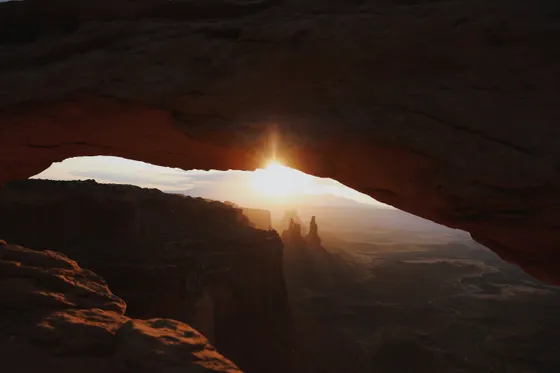
Wake before dawn and drive about 40 minutes to the Island in the Sky district of Canyonlands National Park, a high mesa that floats above a vast maze of canyons carved by the Colorado and Green Rivers. The classic photographer's stop is Mesa Arch at sunrise (about a 0.5-mile round-trip walk), where the rising sun lights the underside of the arch in fiery orange over the canyon below.
Not the order you want? Drag a stop, or use the arrows beside it. Stops move between days too.
- Mesa Arch at sunrise
~0.5 mi RT · glows orange at dawn · HikeWake before dawn and drive about 40 minutes to the Island in the Sky district of Canyonlands. The classic stop is Mesa Arch at sunrise (about a 0.5-mile round-trip walk), where the rising sun lights the underside of the arch in fiery orange over the canyon below. Arrive 30 to 45 minutes early to claim a spot at the railing.
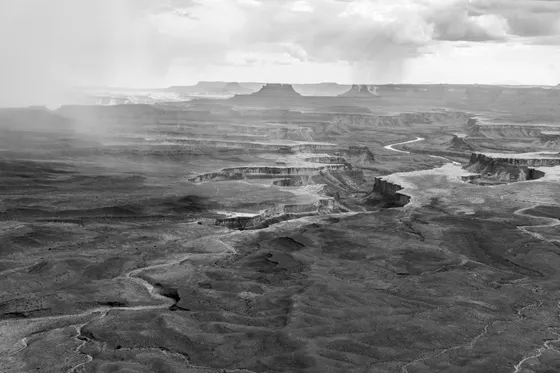 Grand View Point
End-of-road panorama · biggest view · ViewpointSpend the morning chasing overlooks along the mesa rim. Grand View Point at the end of the road has the biggest panorama in the park, with the canyons of the Colorado and Green Rivers dropping away in every direction. Add the short walk to Green River Overlook before driving back toward Moab in the heat of the day.
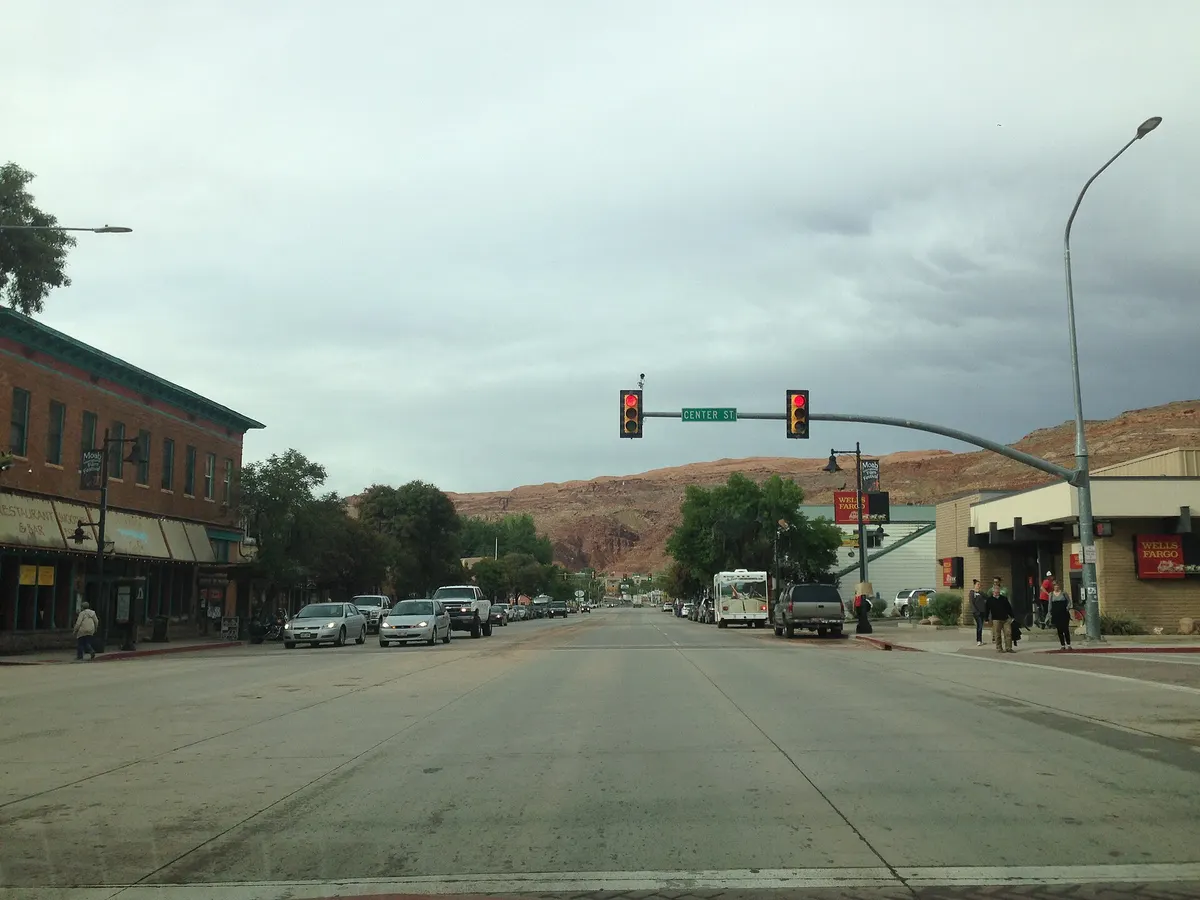 Famartin / CC BY-SA 3.0Third night in Moab
Last night before the loop west · lodgeSpend a third night in Moab before the river day and the loop west to Capitol Reef. Island in the Sky has no water and no gas, so refuel and restock back in town. Tonight, rest up for a slower day on the Colorado River tomorrow.
Moab · the Colorado River & mountain biking
Slow down for a day in Moab, the adventure capital of the Colorado Plateau. The town sits on the Colorado River, and the best way to feel the scale of the canyons is from the water. Book a guided raft or kayak trip with Wild West Voyages for a half-day float between red rock walls, an easy, scenic way to cool off in the desert heat.
Not the order you want? Drag a stop, or use the arrows beside it. Stops move between days too.
- Colorado River raft / kayak · Wild West Voyages
Guided float · book ahead · activityBook a guided raft or kayak trip on the Colorado River with Wild West Voyages, a Moab outfitter, for a half-day float between red rock walls. It is an easy, scenic way to feel the scale of the canyons and cool off in the desert heat. Reserve ahead, especially on weekends, and aim for a morning slot.
Book this → 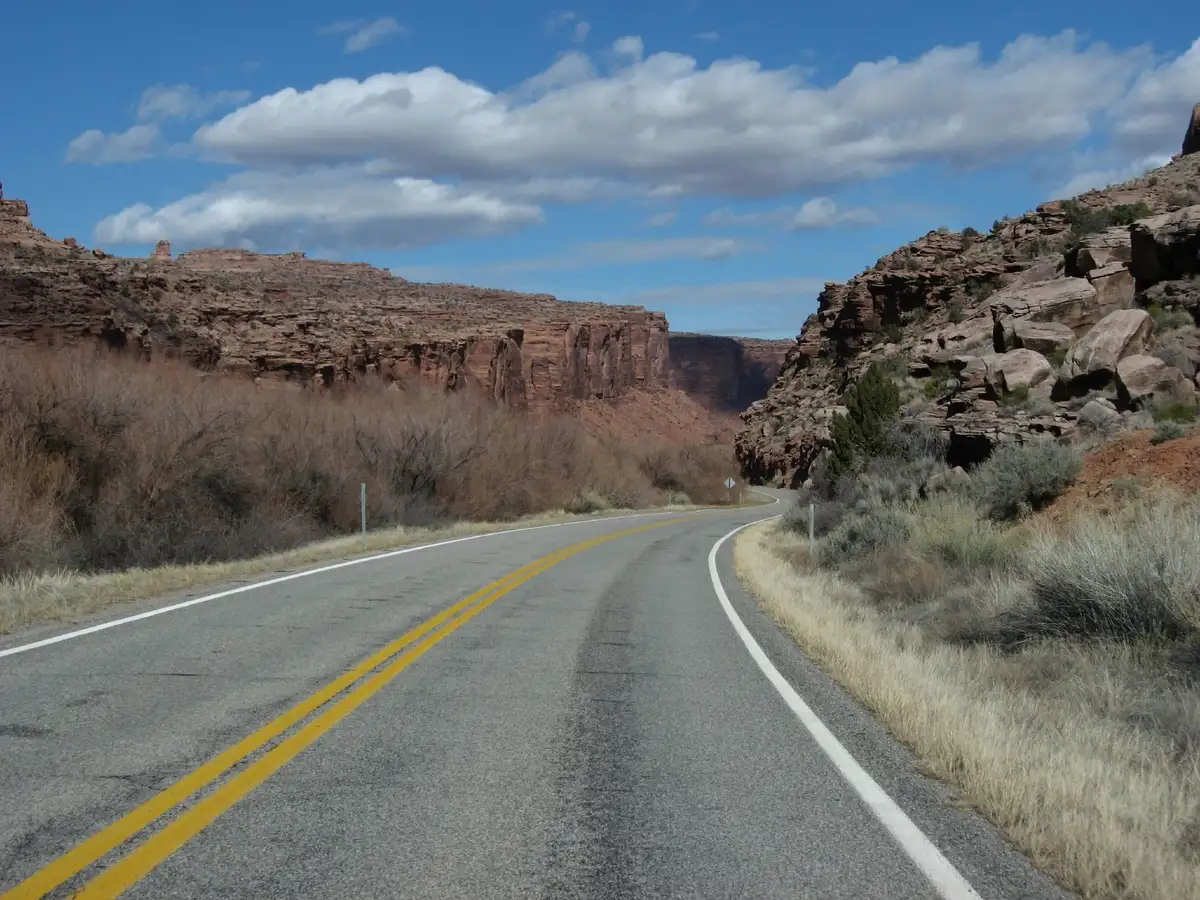 Ken Lund from Reno, Ne / CC BY-SA 2.0Colorado River scenic byway (Hwy 128)
River-hugging drive northeast of town · DrivePrefer to stay on four wheels, or have a free afternoon? Drive the Colorado River scenic byway (Highway 128) northeast out of town, a stunning stretch of pavement that hugs the river beneath towering canyon walls. Moab is also one of the world's great mountain biking towns if you want to ride instead.
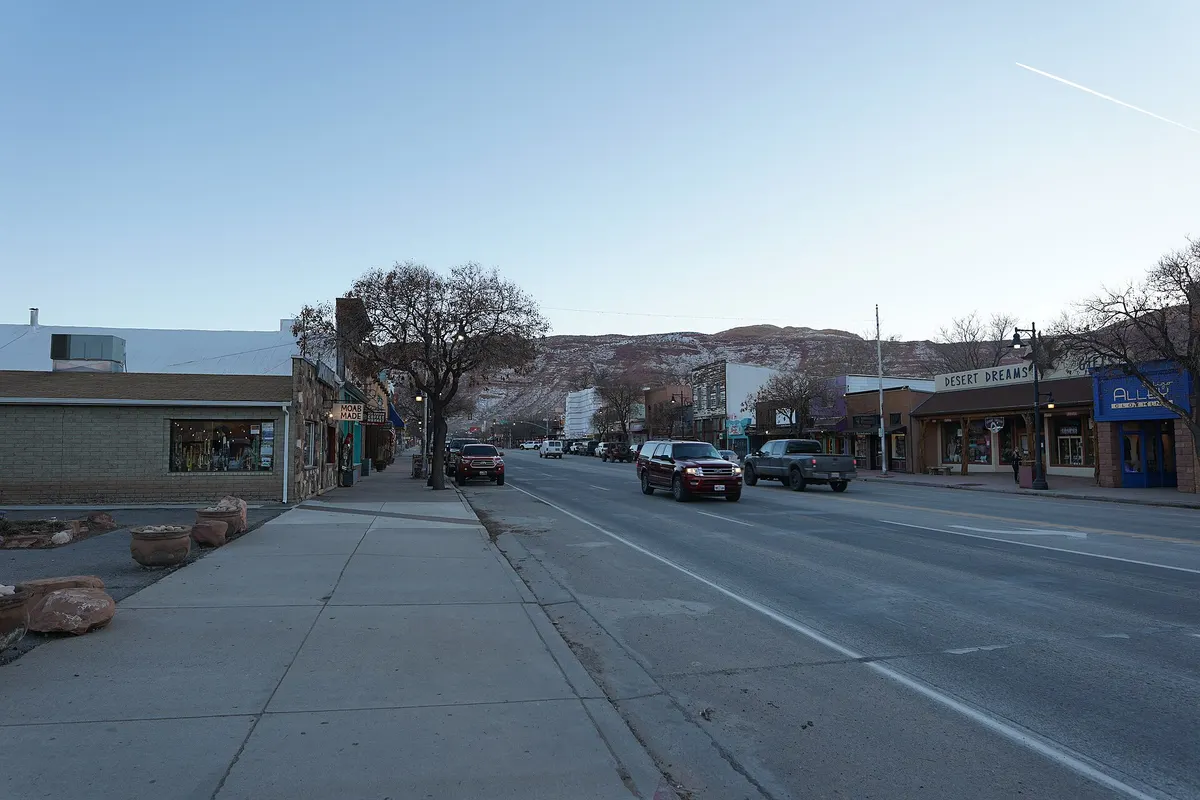 Steven Baltakatei Sand / CC BY-SA 4.0Last night in Moab
Fuel up before the drive to Capitol Reef · lodgeYour last night in Moab before the loop west. Fill the gas tank and restock water before you leave, because the drive to Capitol Reef crosses long, empty desert with few services. Tomorrow the trip trades arches for the Waterpocket Fold.
Capitol Reef · the Waterpocket Fold & scenic drive
Leave Moab and drive west about 2.5 hours to Capitol Reef National Park, the quietest and most underrated of Utah's Mighty 5. The park protects the Waterpocket Fold, a 100-mile wrinkle in the earth's crust, along with the green historic orchards of Fruita, where in season you can pick apples, pears, and peaches in the shadow of red cliffs.
Not the order you want? Drag a stop, or use the arrows beside it. Stops move between days too.
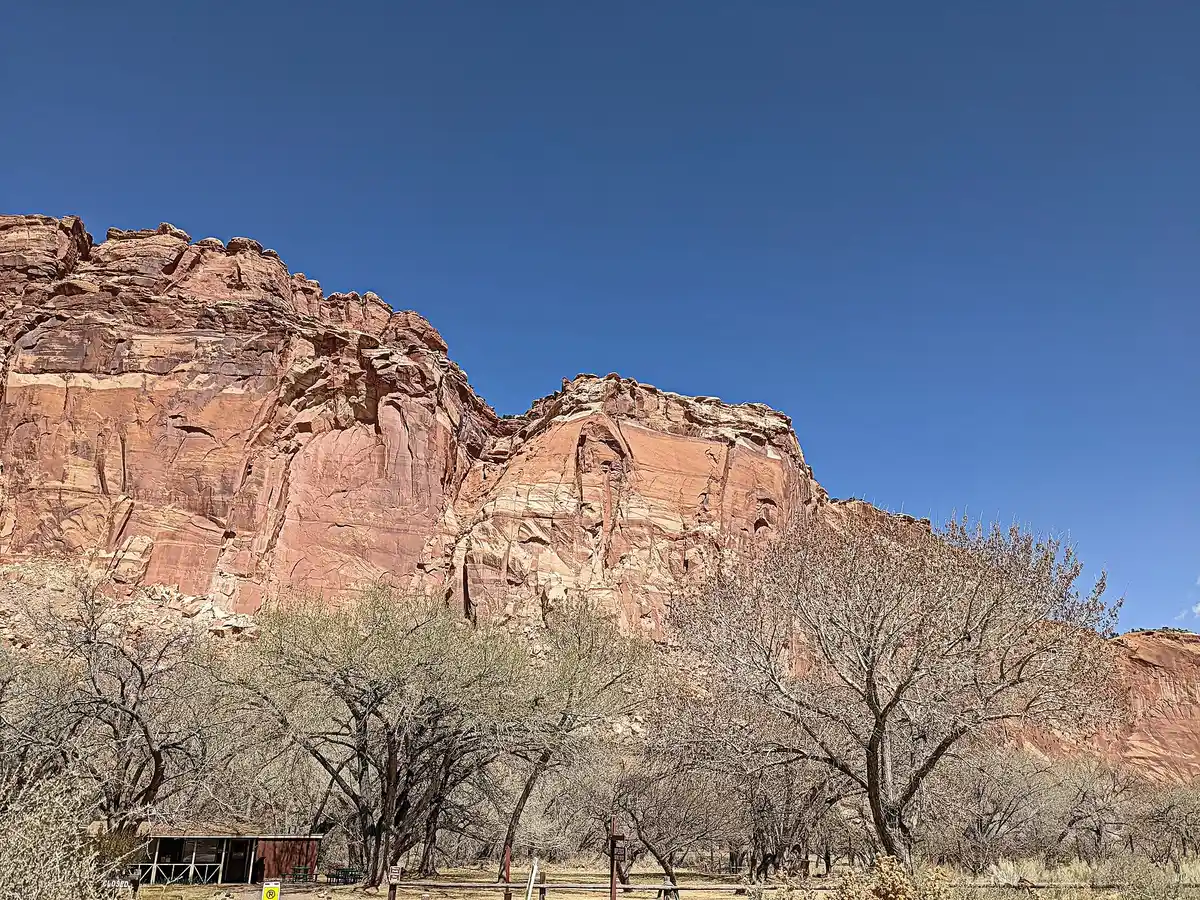 bobistraveling / CC BY 2.0Drive Moab to Capitol Reef
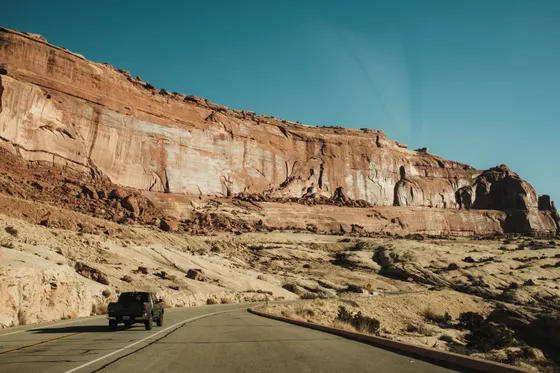
~2.5 hr west · empty desert · DriveLeave Moab and drive west about 2.5 hours to Capitol Reef National Park, the quietest of Utah's Mighty 5. The route crosses long, empty desert with few services, so fuel up and grab snacks and water before you go. The park protects the Waterpocket Fold, a 100-mile wrinkle in the earth's crust.
 Scenic Drive & Fruita orchards
Towering walls · pick fruit in season · ViewpointDrive the Capitol Reef Scenic Drive south past towering canyon walls, and stop at the green historic orchards of Fruita, where in season you can pick apples, pears, and peaches in the shadow of red cliffs. It is a peaceful, underrated stop between the bigger-name parks.
 Hickman Bridge Trail
~1.8 mi RT · natural bridge · HikeHike up to Hickman Bridge (about 1.8 miles round trip), a natural bridge above the Fremont River, or walk into the Capitol Gorge between the canyon walls. Like everywhere on this trip, hike it early before the midday heat builds.
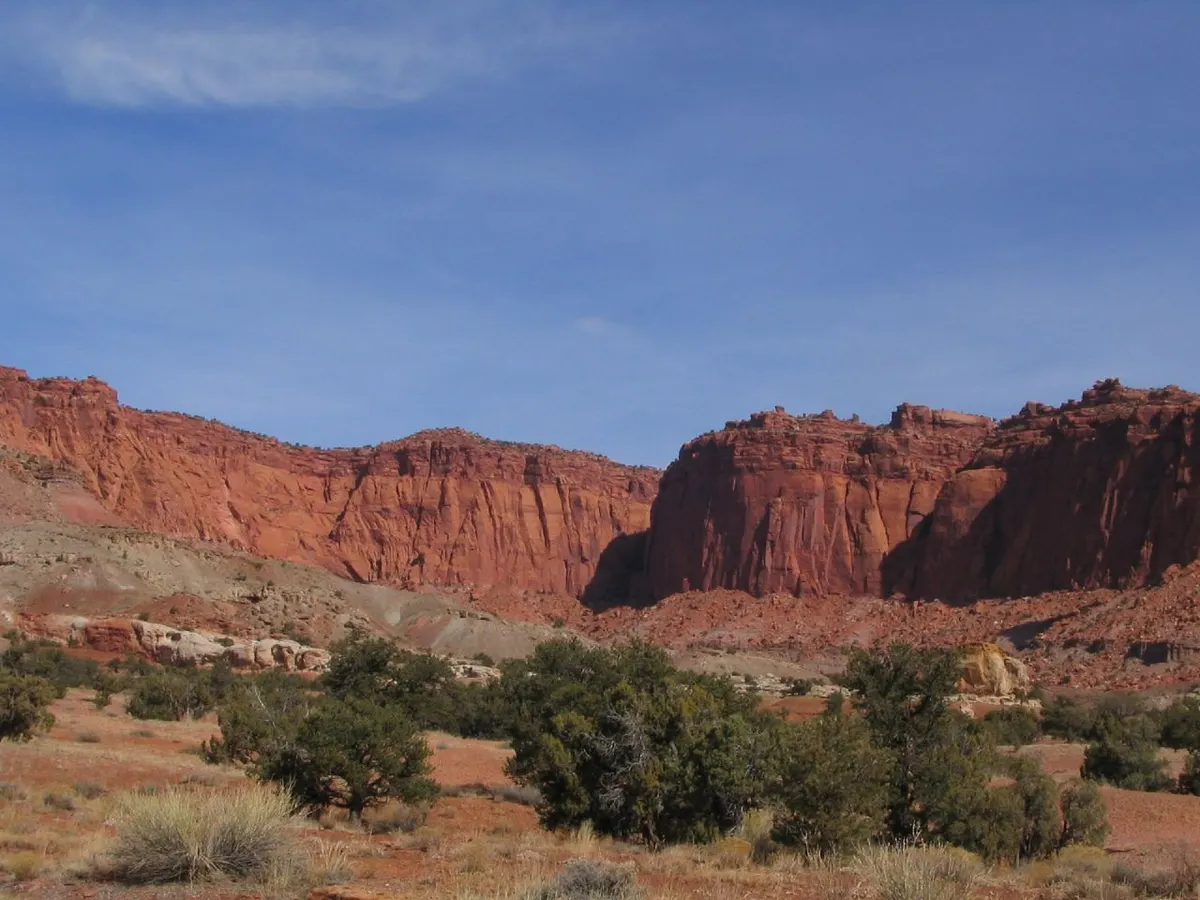 Ken Lund from Reno, Ne / CC BY-SA 2.0Stay in Torrey
Gateway town just west of the park · lodgeBase for the night in Torrey, the small gateway town just west of Capitol Reef. It sets you up for the drive to Bryce in the morning, with a handful of lodges and restaurants. Fuel up here before the next desert leg.
Bryce Canyon · the hoodoo amphitheater
Drive about 2.5 hours southwest to Bryce Canyon National Park, where thousands of orange-and-pink stone spires called hoodoos fill a series of natural amphitheaters carved into the edge of a high plateau. At over 8,000 feet, Bryce is much cooler than the desert parks, so pack a layer even in summer.
Not the order you want? Drag a stop, or use the arrows beside it. Stops move between days too.
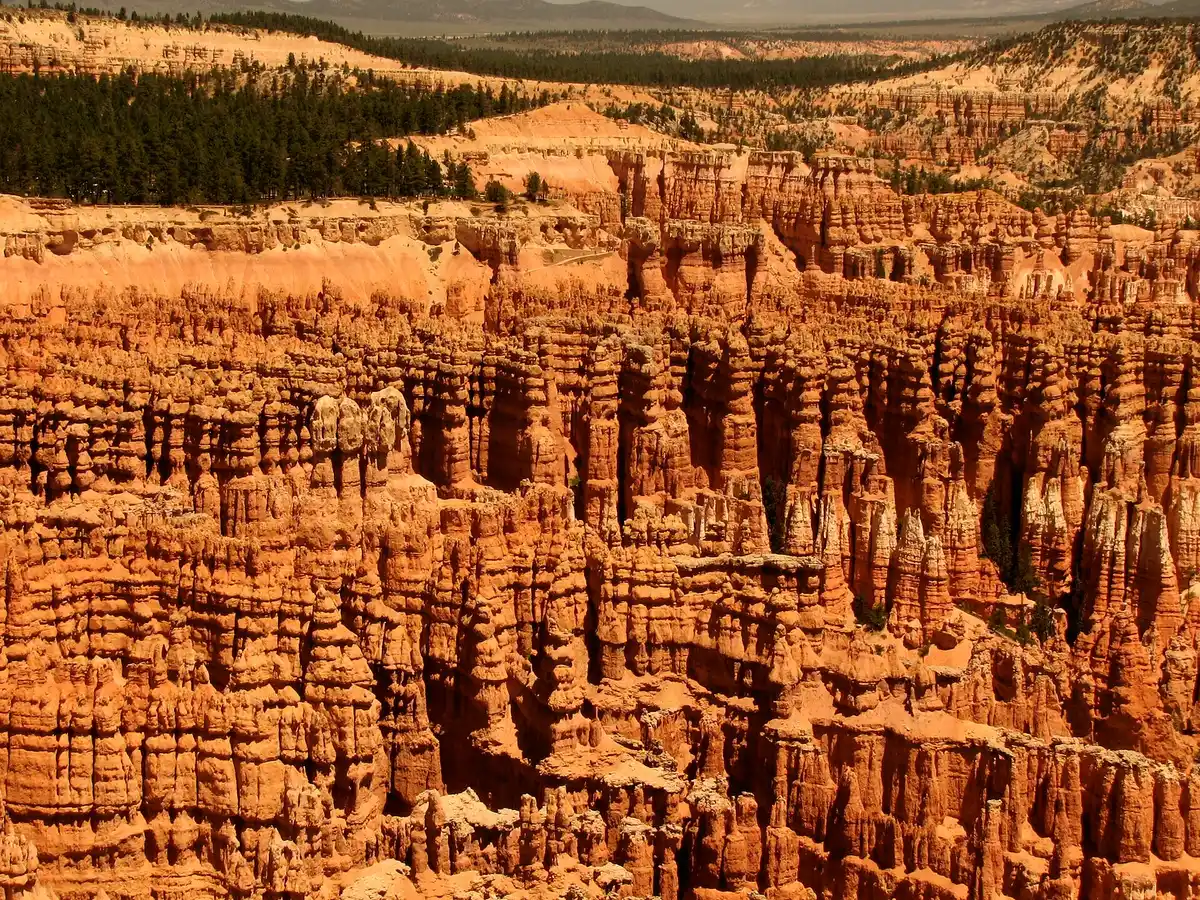 CGP Grey from London, / CC BY 2.0Drive Capitol Reef to Bryce Canyon
~2.5 hr · climbs to over 8,000 ft · DriveDrive about 2.5 hours southwest to Bryce Canyon National Park, climbing onto a high plateau over 8,000 feet. Bryce is much cooler than the desert parks, so pack a layer even in summer. Thousands of orange-and-pink hoodoos fill a series of natural amphitheaters carved into the plateau edge.
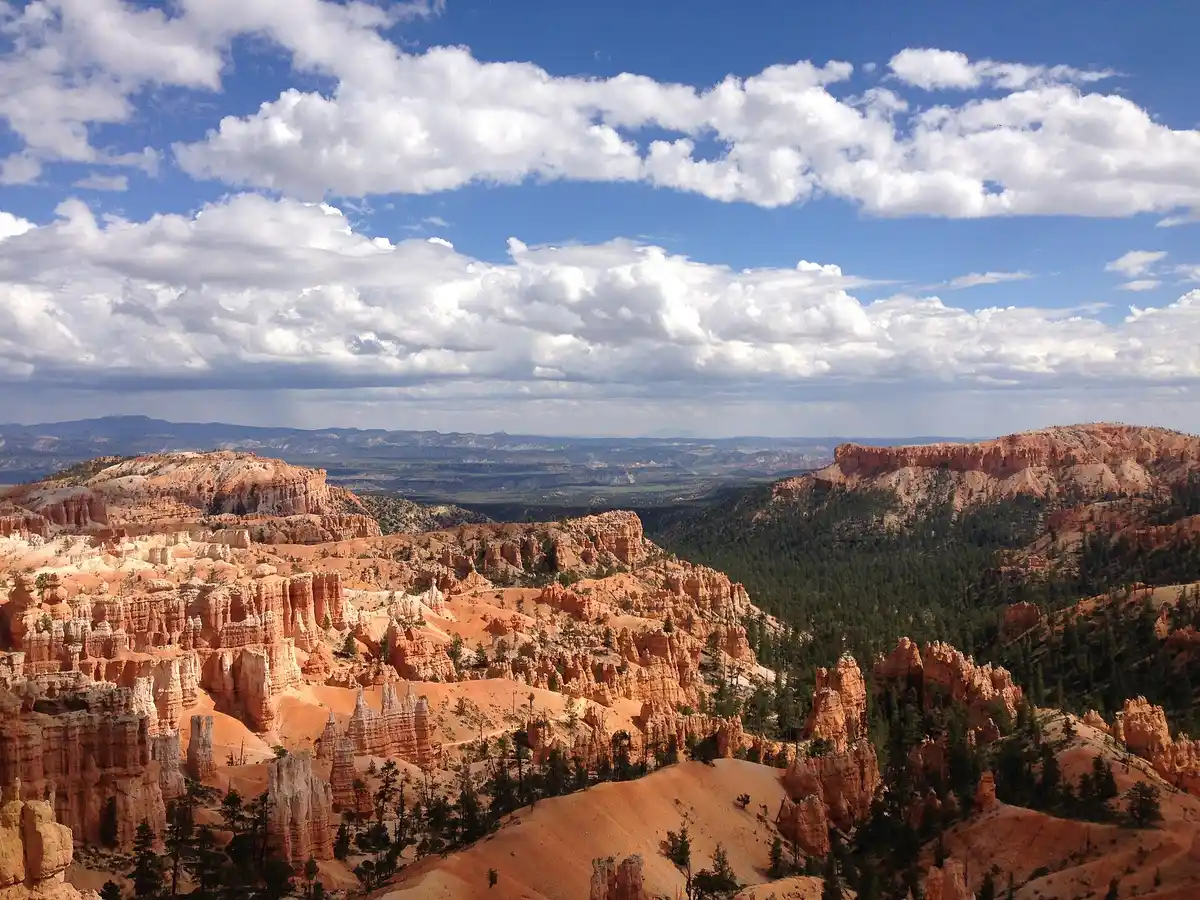 Famartin / CC BY-SA 3.0Sunrise & Sunset Point rim walk
Classic amphitheater overview · ViewpointWalk the rim between Sunrise Point and Sunset Point for the classic overview of the hoodoo amphitheater. Both are stunning at their namesake hours, when low-angle light sets the whole amphitheater glowing orange. Time your visit around sunrise or sunset for the best of it.
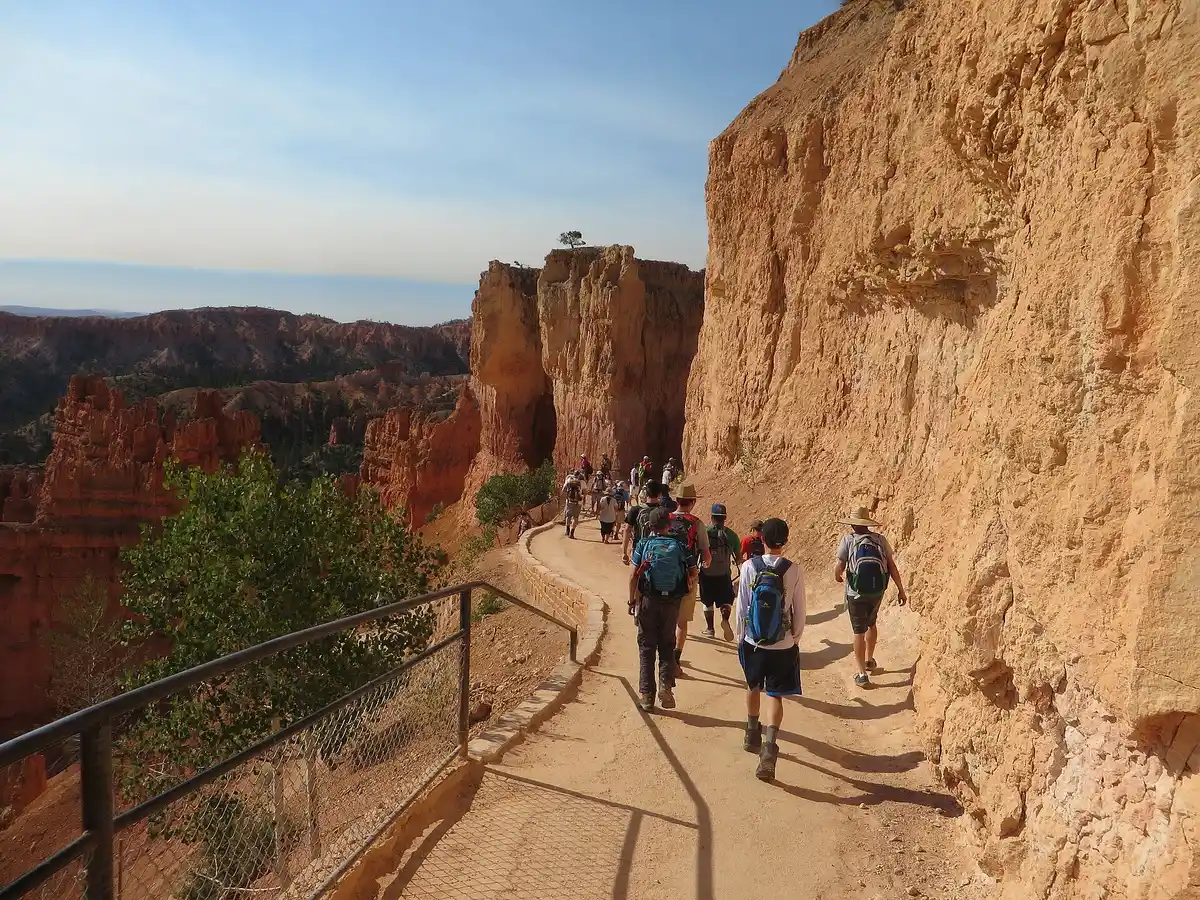 Ken Lund from Reno, Ne / CC BY-SA 2.0Queens Garden & Navajo Loop
~3 mi · Wall Street side closed, use Two Bridges · HikeDrop down into the hoodoos on the combined Queens Garden and Navajo Loop (about 3 miles), widely rated the best short hike in the park. Go down the Queens Garden trail and back up the Navajo switchbacks for the best of the route among the spires.
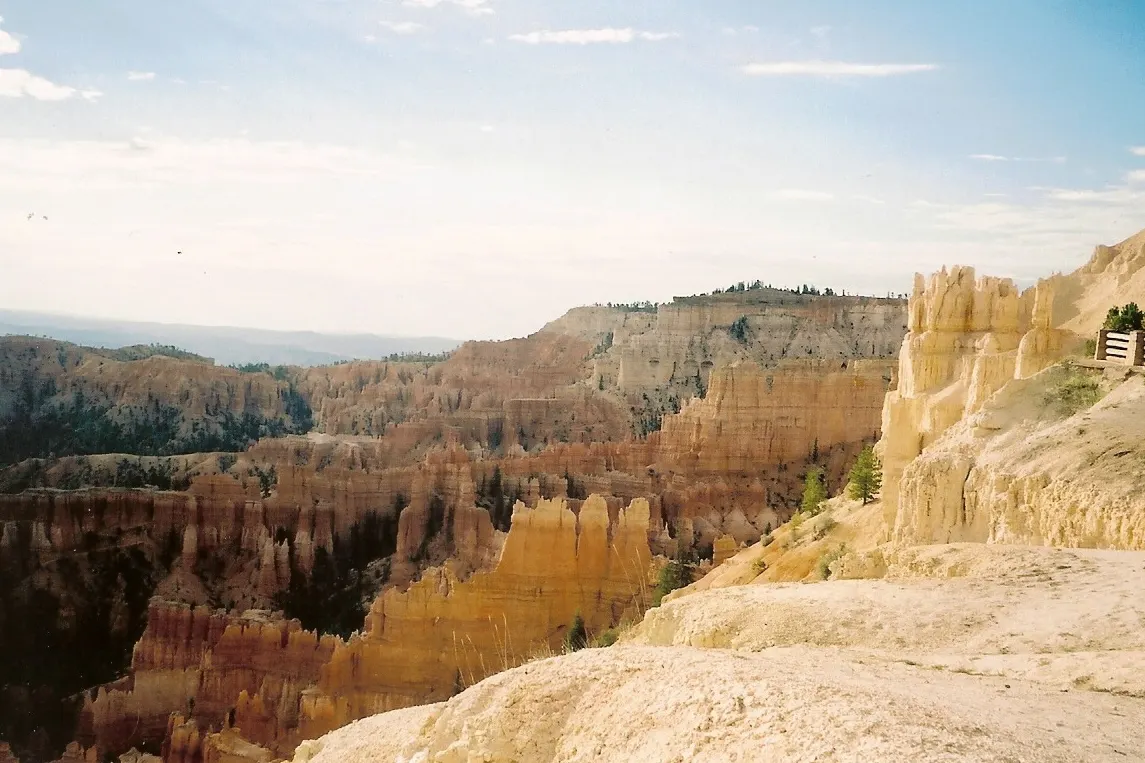 Ken Lund from Reno, Ne / CC BY-SA 2.0Stay in Bryce Canyon City
At the park entrance · cooler nights · lodgeStay near the park in Bryce Canyon City or a nearby town. At over 8,000 feet the nights are cool even in summer, so this is a welcome break from the desert heat. Fuel up here before the drive to Zion in the morning.
Zion · towering walls & the drive home
Finish big at Zion National Park, about 1.5 hours southwest of Bryce, where the road plunges into a deep canyon between 2,000-foot sandstone walls. Most of Zion Canyon is car-free, so park and ride the shuttle up the canyon, hopping off at the overlooks, the Emerald Pools, and the Riverside Walk to the mouth of the Narrows.
Not the order you want? Drag a stop, or use the arrows beside it. Stops move between days too.
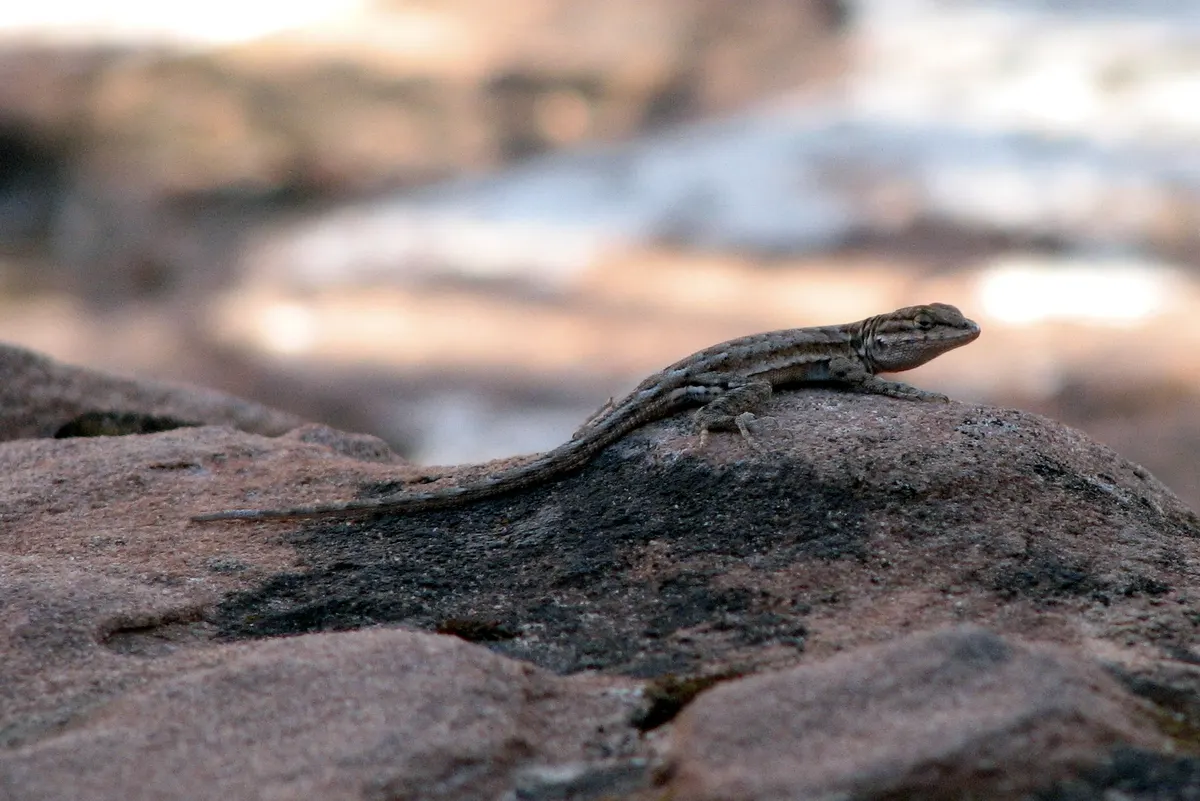 CGP Grey / CC BY 2.0Drive Bryce to Zion
~1 hr 45 southwest · DriveDrive about 1 hour 45 minutes southwest to Zion National Park, where the road plunges into a deep canyon between 2,000-foot sandstone walls. Most of Zion Canyon is car-free in the busy season, so park in Springdale or at the visitor center and ride the free shuttle up the canyon.
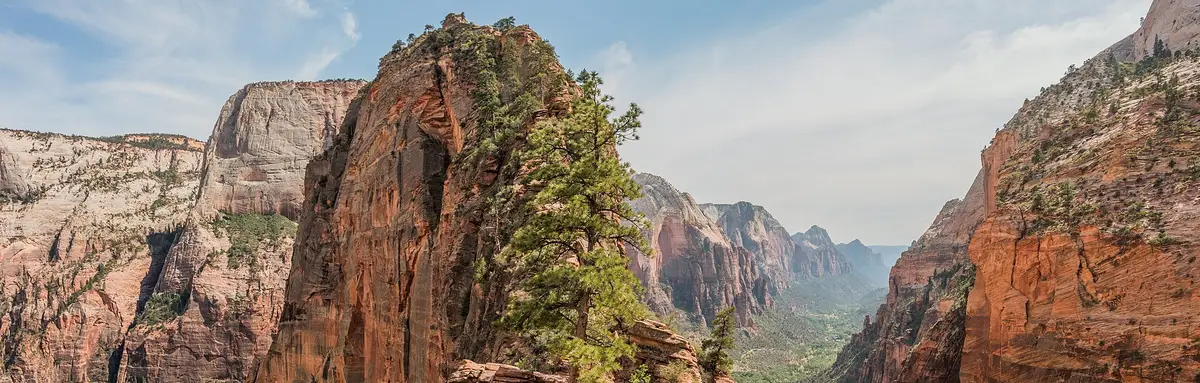 Tyler Lee / CC BY-SA 4.0Zion Canyon shuttle & overlooks
Emerald Pools · Riverside Walk · ViewpointRide the shuttle up the car-free canyon, hopping off at the overlooks, the Emerald Pools, and the Riverside Walk to the mouth of the Narrows. With energy and a head for heights, the classic adventures are the Narrows, a wade up the Virgin River, and Angels Landing, a chain-assisted scramble that needs a permit booked ahead on recreation.gov.
 Andrey Zharkikh from S / CC BY 2.0Springdale: dinner, fuel, or an extra night
Right outside the Zion gate · ViewpointBase in Springdale right outside the Zion gate, a walkable town of lodges and restaurants with a shuttle straight into the park. It is the ideal end-of-trip base if you want a full day in Zion before the airport run.
- Getting home: Las Vegas or Salt Lake City
LAS ~3 hr 15 · SLC ~4.5 hr · DriveFrom Zion it is about 3 hours 15 minutes southwest to Las Vegas (LAS) or about 4.5 hours north back to Salt Lake City (SLC). Fuel up in Springdale and start the drive out with daylight to spare. Las Vegas is the natural finish for a one-way loop from Salt Lake City.
Book the 6 nights
Beds near the trailheads are the one thing on this trip that genuinely runs out. Everything else can be decided later.
Tell us your dates and we will do the checking. We find what is still open near each trailhead and email you this plan back with a booking link for each night. Nothing is charged and you decide at the end.
Request to bookWhat to pack for National Parks
Built from this route, not a generic list. Every line says why it is here.
On every day of this trip
On your feet
Because you are sleeping indoors
For the driving days
Specific to National Parks
What we actually learned on the road.
Get the America the Beautiful pass
This road trip hits five national parks, so skip per-park fees and buy the annual America the Beautiful pass ($80). It covers entry to all of them and pays off after just three parks. Buy it at the first entrance station or online ahead of time.
No Arches timed entry in 2026, but Fiery Furnace still needs one
Arches National Park dropped its timed-entry reservation for 2026, so you can drive in at any time during operating hours. Fiery Furnace permits and Devils Garden Campground reservations are still required and release in advance on recreation.gov, so book those the moment your dates are set.
Gas up between every park
There is no gas inside the national parks and the stretches between them are long and empty. Fill up in Moab, Torrey, Bryce Canyon City, and Springdale, and top off whenever you pass a station so you are never caught short in the desert.
Carry far more water than you think
The desert trails are exposed and brutally dry. Carry at least two to three liters of water per person per day, and more on exposed hikes like Delicate Arch. There is no water on most trails, and heat is the number one danger out here.
Go in spring or fall, hike at dawn
Spring and fall bring comfortable days and cool nights, the best time for this trip. Summer is dangerous on the desert trails, with temperatures over 100°F, so hike at dawn and use the midday heat for the long drives between parks. Bryce stays cool year-round at altitude.
Book lodging in the gateway towns early
Moab, Torrey, Bryce Canyon City, and Springdale all fill fast in peak season, especially on weekends. Book your stays as soon as your dates are firm, and reserve any in-park campgrounds through recreation.gov well in advance.
National Park Road Trip: questions before you go
National Parks road trip itinerary: the questions people ask most.
The most iconic national park road trip is Utah's Mighty 5 plus Moab: a red rock loop linking Arches, Canyonlands, Capitol Reef, Bryce Canyon, and Zion. You can drive it in about 7 days starting from Moab and looping west to Zion, with Salt Lake City, Las Vegas, or Moab as your gateway airports. It packs more dramatic, varied desert scenery into one week than almost any other route in the country.
Seven days is the sweet spot to see all five Mighty 5 parks without rushing. That gives you two to three days around Moab for Arches and Canyonlands plus a Colorado River day, then a day each for Capitol Reef, Bryce Canyon, and Zion as you loop west. With ten days you can slow down, add hikes, and build in rest days; with five days, focus on Moab's parks plus Zion.
Spring (April to May) and fall (September to October) are ideal, with comfortable days and cool nights. Summer is dangerous on the desert trails, with temperatures regularly over 100°F, so any summer trip means hiking at dawn and driving in the heat of the day. Winter is quiet and beautiful but brings snow and icy trails at Bryce Canyon's higher elevations.
Not in 2026. Arches dropped its timed-entry reservation for general park access, so you can drive in at any time during operating hours. Fiery Furnace permits (self-guided and ranger-led) and Devils Garden Campground reservations are still required and release in advance on recreation.gov, so book those as soon as your dates are set. The rule has changed before, so confirm on the park website ahead of your trip.
Salt Lake City (SLC) is the most common starting point, about 3.5 to 4 hours from Moab with the most flights. Las Vegas (LAS) is the natural finish, about 2.5 to 3 hours from Zion at the western end of the loop. For a shorter drive into Moab you can fly into Moab's small Canyonlands Field (CNY) or Grand Junction, Colorado (GJT) just across the state line.
The drives are manageable but long and remote. Moab to Capitol Reef is about 2.5 hours, Capitol Reef to Bryce Canyon about 2.5 hours, and Bryce to Zion about 1.5 hours. Within the Moab area, Arches and Canyonlands are both under 40 minutes from town. There is no gas inside the parks, so fill up in the gateway towns before each leg.
The highlights are Delicate Arch in Arches (about 3 miles round trip), Mesa Arch at sunrise and Grand View Point in Canyonlands, Hickman Bridge in Capitol Reef, the Queens Garden and Navajo Loop in Bryce Canyon, and the Narrows or Angels Landing in Zion. Most are short to moderate, but Angels Landing needs a permit and the Narrows requires checking river flows.
Yes. The route is full of short, scenic walks and big overlooks that work well for families: The Windows and Balanced Rock in Arches, Mesa Arch and Grand View Point in Canyonlands, the Fruita orchards in Capitol Reef, and the rim walks at Bryce. A guided river float in Moab is an easy, fun break. Save the exposed or strenuous hikes for older kids and manage the desert heat with early starts and plenty of water.
Summer is the real hazard on this route. In July and August the long arch and canyon trails in Zion and Arches can climb well past 100°F, and heat exhaustion is a genuine danger on exposed slickrock with no shade. If you can, shift to the cooler shoulder windows of April, May, or October. If you must go in summer, finish your hikes by 10 AM and retreat to the air conditioning of the car through the worst of the midday heat.
Utah's Mighty 5 (Zion, Bryce Canyon, Capitol Reef, Canyonlands, and Arches) loop naturally with Moab as the eastern hub, which is the route this itinerary follows. The Grand Canyon's South Rim in Arizona adds on from the Zion end, about 4.5 hours away via Kanab. Most travelers either keep this trip to the five Utah parks and treat the Grand Canyon as a separate Arizona leg, or extend the loop by two to three days to fold it in.
Yes. Tell us your dates and we check what is still open for the plan on this page, then send it back with a booking link for each night and the total. Nothing is charged and nothing is held, and you pay the normal rate.
Pick how you want to go.
Same 7-day route. Same 12 stops.
- 4 nights, a campsite near Moab
- $100
- 1 night, a campsite near Torrey
- $25
- 1 night, a campsite near Bryce Canyon City
- $30
- Colorado River raft / kayak · Wild West Voyages
- Priced when you book
- Rental car, 7 days
- $420
- Gas, about 915 miles
- $180
- Park entry, one car
- $80
- 4 nights, a room in Moab
- from $940
- 1 night, a room in Torrey
- from $190
- 1 night, a room in Bryce Canyon City
- from $185
- Colorado River raft / kayak · Wild West Voyages
- Priced when you book
- Rental car, 7 days
- $420
- Gas, about 915 miles
- $180
- Park entry, one car
- $80

- A private local guide, rooms and campsites booked
- Included
- Airport pickup and every drive
- Included
- Park, permit and campsite fees paid
- Included
- All the gear and the trail meals
- Included
Written and walked by Yulia Vasilyeva · Co-founder · Lead planner and guide
Three years leading guided hikes in the Pacific Northwest, rated 5.0 by 20+ verified guests, and she builds every custom itinerary herself. Based in Seattle.
Last checked October 2026
You might also love these
Other itineraries near this one.

Capitol Reef Itinerary: 2 Days in the Waterpocket Fold
Two days through Utah's most underrated national park: the Scenic Drive into Capitol Gorge, Grand Wash and Cassidy Arch, Hickman Bridge,…

Utah's Mighty Five: Family Road Trip (7–10 Days)
All five Utah national parks designed for families, easy canyon hikes, dramatic views, and short drives between parks.
Utah Mighty Five: 5-Day National Parks Road Trip
Zion, Bryce Canyon, Capitol Reef, Arches & Canyonlands in one epic loop. The most photogenic 700 miles in America.
Guides for this tripBest Moab Day HikesBest Time to Visit Zion National Park on a Utah Road TripBryce Canyon Hiking GuideHow to Plan Gas Stops on a Road Trip
What adventurers say about us.
All reviews are from verified guests. ★★★★★ 5.0 average from 20+ bookings.
"Felt like going out with a really knowledgeable friend who just happens to know everything about the area. No awkward tour-guide energy, just a magnificent day."
"Yulia is an incredible guide. She knew every trail, every viewpoint, and exactly how to pace the day for our group. The photos she took of us were stunning. 100% booking again."
"I was visiting Seattle solo and this was the best decision I made on the trip. Yulia picked me up, had snacks, and took us to a trail I never would have found on my own. Absolute must-do."
"We did this as a couple's trip and it was perfect. Yulia adapted everything to us, our pace, our interests, our photo obsession. The mountain views were unreal."
"Phenomenal experience. Yulia has deep local knowledge and a real passion for the outdoors. She went out of her way to show us the hidden gems tourists never see. Will remember this forever."
"I've done a few guided hikes and this was by far the best. Yulia is warm, funny, and genuinely expert. The trail she chose had the most insane wildflower bloom, we got so lucky."
Fees, reservation windows, shuttle dates and trail closures are planning estimates. Confirm hours, road status and any reservations with the land manager before you go.
What other travelers are saying
Be the first to leave a tip or question for the next traveler.
Was this helpful?
One tap. It goes straight to Yulia and Margarita.
You can't hike it if you can't get the permit.
The best hikes in America run on lotteries that open once a year and sell out in minutes. Every trail runs on its own calendar. Pick the ones you want and we do the watching.
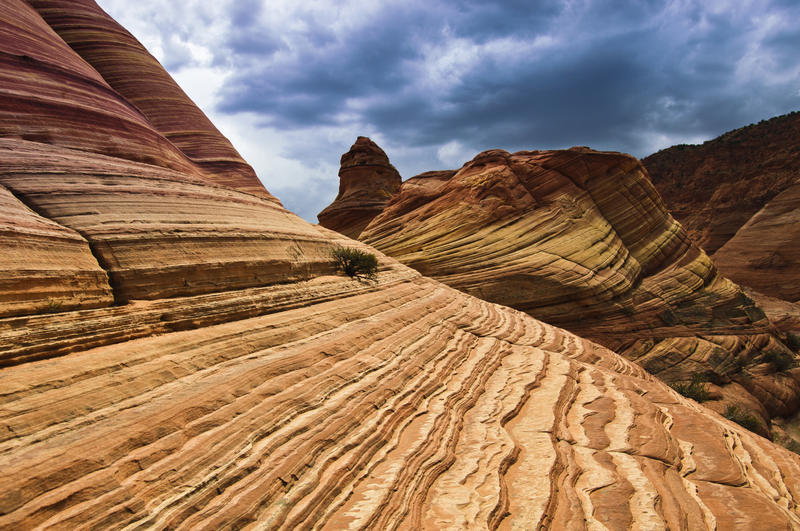 The WaveCoyote Buttes North · Arizona / UtahPermitLotterybrutal odds
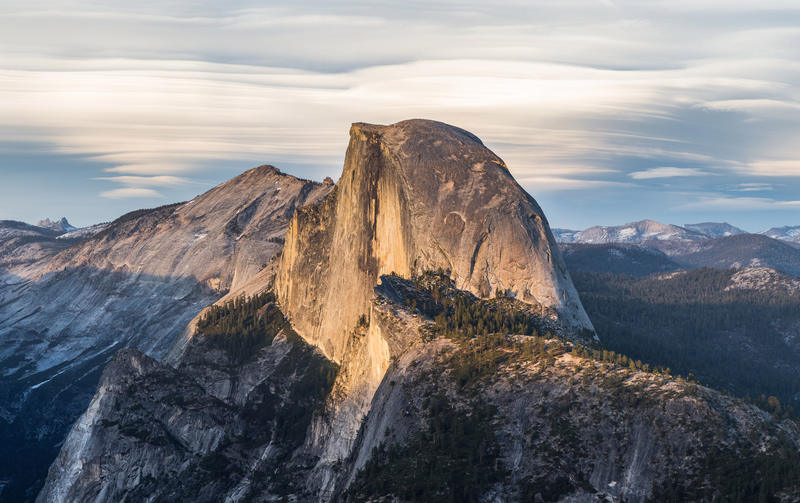 Half Dome CablesYosemite NP · CaliforniaPermitOpens Mar 1fair odds
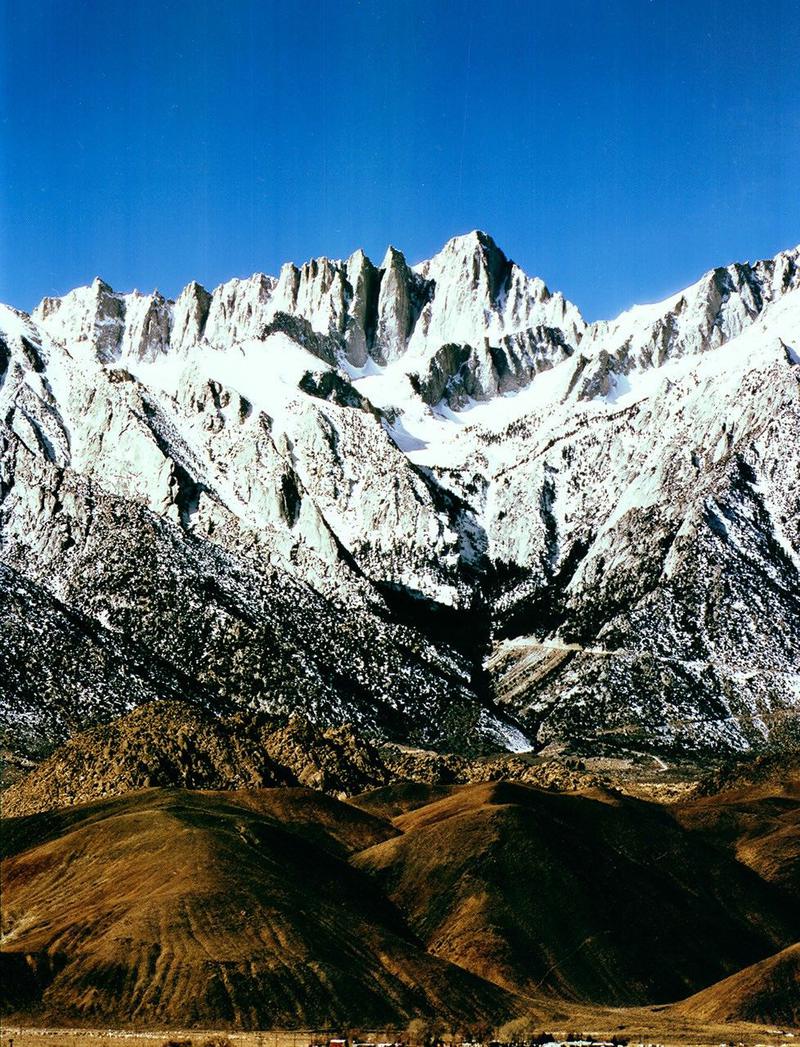 Mt. WhitneyInyo NF · CaliforniaPermitOpens Feb 1tough odds
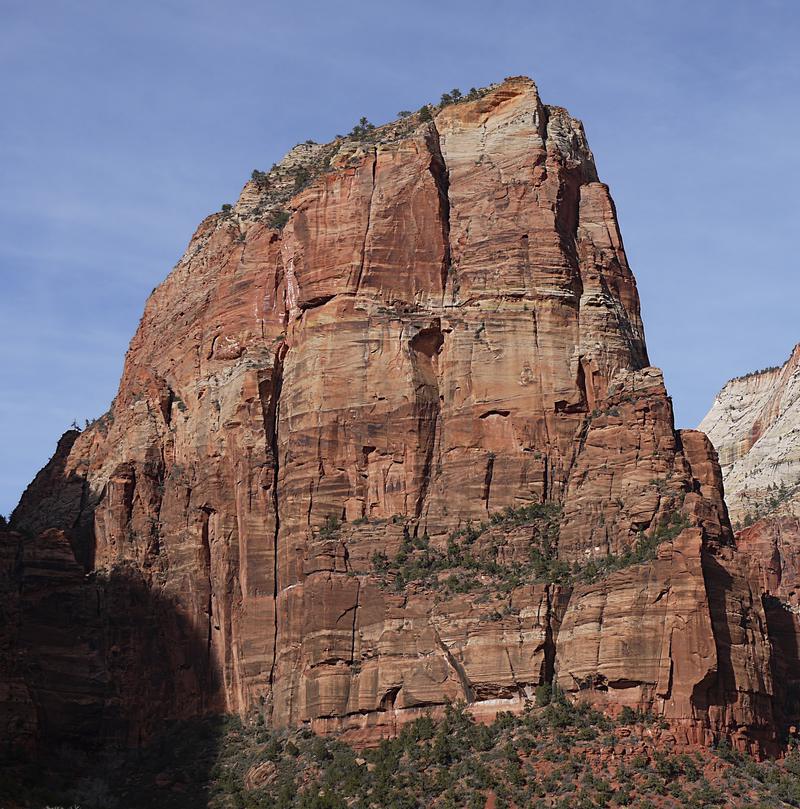 Angels LandingZion NP · UtahPermitLotterytough odds
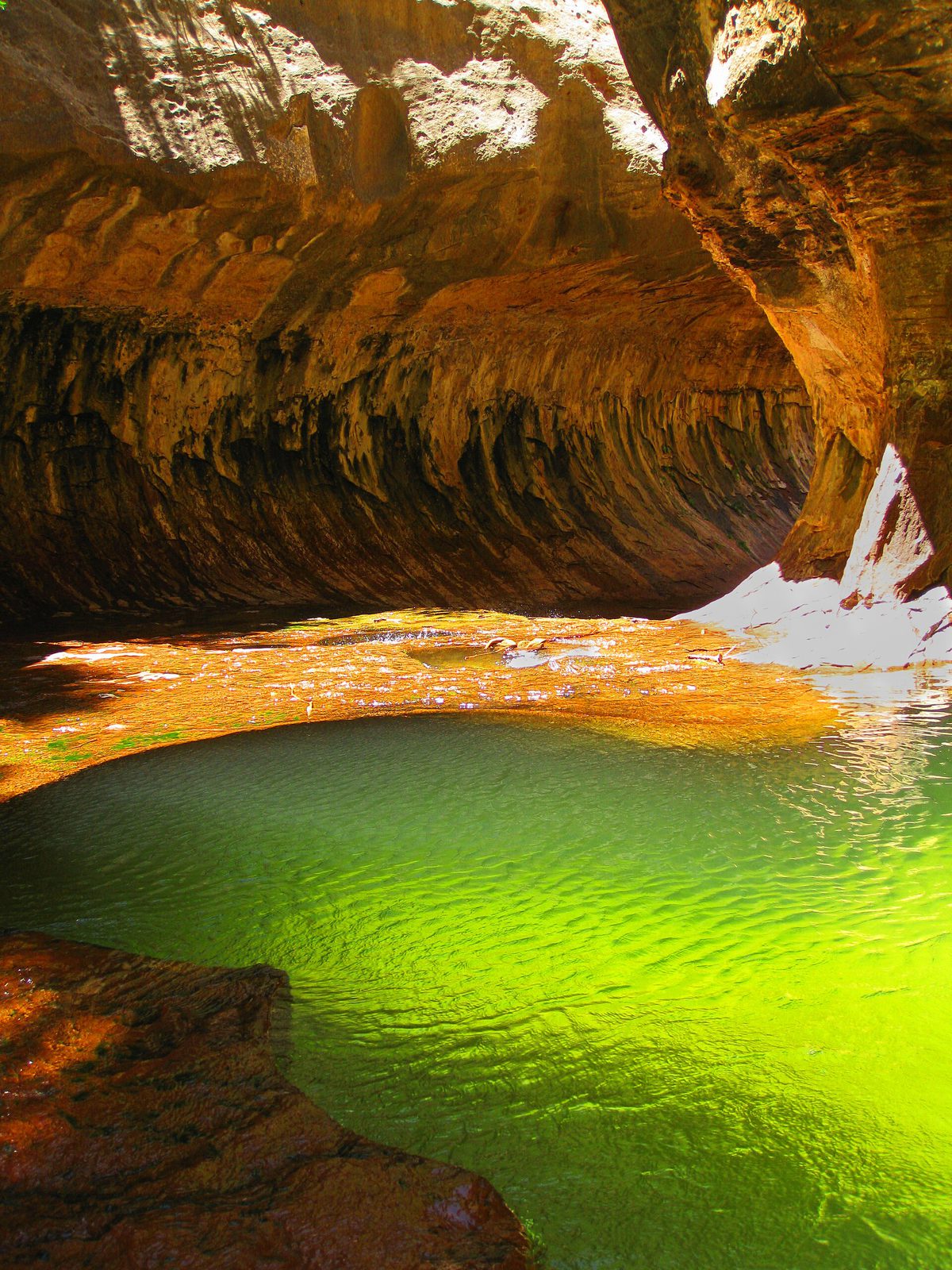 The SubwayZion NP · UtahPermitLotterytough odds
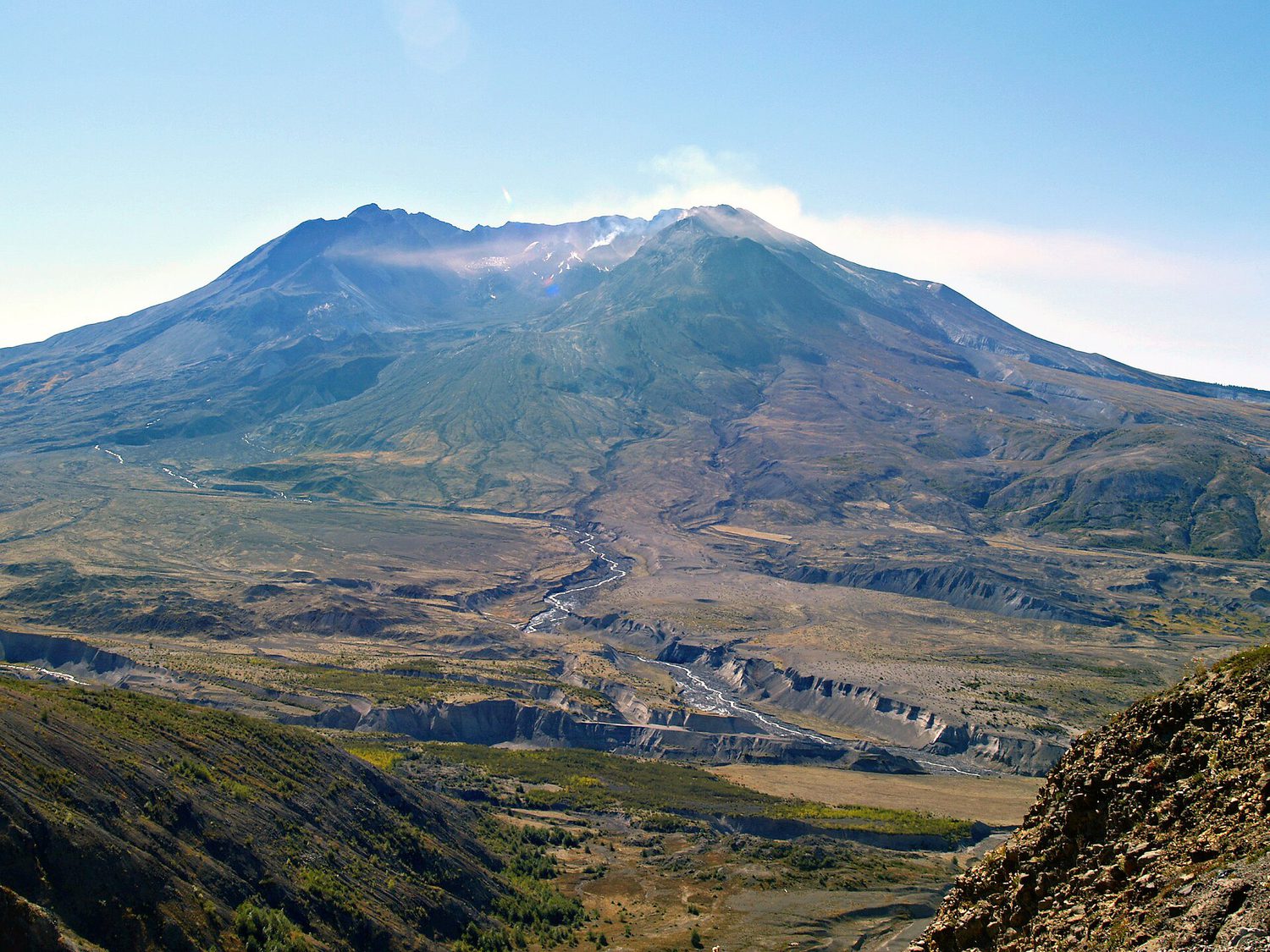 Mount St. Helens Summit ClimbGifford Pinchot NF · WashingtonPermitReservationtough odds
How it works
- An email the morning each window opens, never the day after.
- A 14-day heads-up so you can line up your group and dates.
- Win odds and a ranked backup plan for every trail you pick.
Didn't win? We keep watching. We check recreation.gov every day for The Enchantments, Half Dome and Angels Landing, and email you the moment a sold-out date frees up. Cancellations are the second chance most people never hear about.